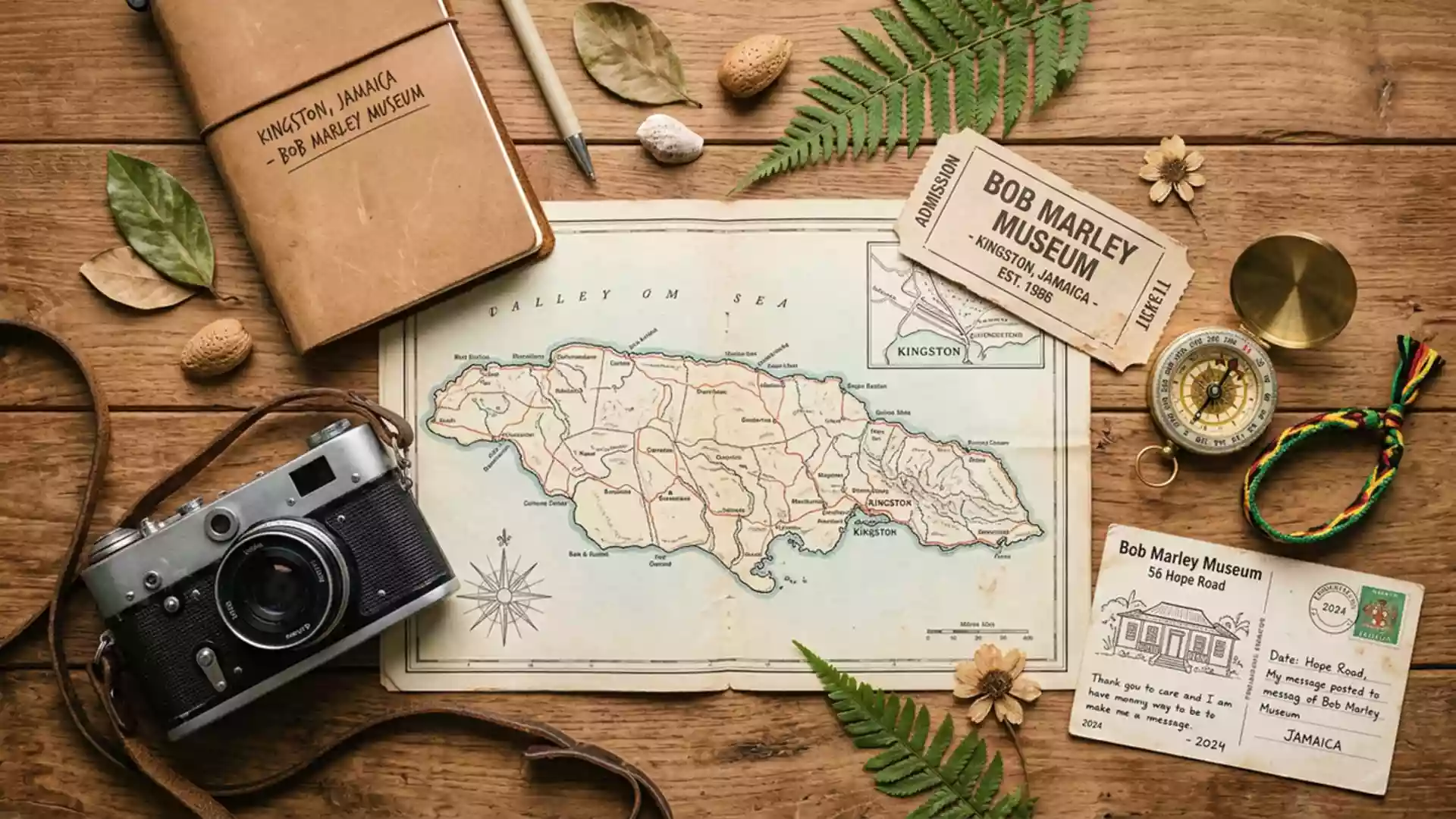
Bob Marley Museum and the house on Hope Road
Published on 09/09/2026 at 13:52 | Editorial responsibility: Rafael Müller, Editor-in-Chief AD HOC NEWS
Bob Marley Museum in Kingston is set in the former home of Robert Nesta Marley at 56 Hope Road, a late nineteenth-century house that now serves as a historic house and music museum dedicated to his life and work.Historic house and music museum The address is closely tied to Marley’s Jamaica years in the 1970s, when reggae moved from local sound systems to a global audience.
The former home at 56 Hope Road
The Bob Marley Museum occupies a substantial villa at 56 Hope Road in Kingston 6, a property Marley purchased in 1975 and used as his main residence until his death in 1981.Marley purchased the house in 1975 The building dates from the nineteenth century and combines timber and masonry construction, giving it the character of an older Jamaican domestic house adapted to urban life.Late nineteenth-century house
Rooms that once served as family living spaces, rehearsal areas and offices now hold displays related to Marley’s career, including photographs, awards and personal objects. The layout keeps the scale of a private home, with corridors, staircases and small rooms arranged around the central spine of the house, so the museum experience unfolds through domestic spaces rather than large exhibition halls. In the courtyard and on the verandas, the transition from private yard to museum setting is visible in the presence of signage, seating and planted areas alongside older structural elements.
From residence to museum of reggae history
After Marley’s death in 1981, the house at 56 Hope Road was converted into a museum by his wife Rita Marley, and the institution in its present form dates from 1986.Converted into a museum six years later That shift fixed the building’s twin identity as both former residence and public museum, with rooms arranged to show the everyday side of Marley’s life alongside material about recording, touring and political events. The museum functions as a historic house and music museum recognised as established in May 1986 at 56 Hope Road in Kingston, Jamaica.Institution established in 1986
The property is also associated with the Tuff Gong label, founded by The Wailers in 1970, which gave the house a role in reggae production in addition to its residential function.Tuff Gong recording studio That connection means parts of the site carry traces of studio and office use, and the museum narrative links these working spaces to Marley’s output during the mid-1970s, when albums such as “Rastaman Vibration” and “Exodus” were recorded and released. The building’s nineteenth-century architecture provides a backdrop for this story of twentieth-century music, setting instruments and stage clothing against timber walls, verandas and period detailing.
Architecture, layout and museum features
The house at 56 Hope Road is described as a late nineteenth-century structure, with features typical of Jamaican domestic architecture of that period: timber elements, masonry walls and verandas that mediate between interior and exterior spaces.Nineteenth-century architecture Inside the museum, the main exhibition areas occupy former living rooms and bedrooms, while the property also contains an 80-seat theatre used for screenings and presentations, a photographic gallery, a record shop and a gift shop centred on Marley-related memorabilia.80-seat theatre and gallery
The courtyard and garden spaces provide outdoor circulation, linking the entrance area to different parts of the museum and giving views back towards the house and its verandas. The museum layout keeps the house’s multi-room structure intact, so visitors move through a sequence of spaces that reflect domestic use, from reception areas to smaller rooms holding specific artefacts. The address at 56 Hope Road in the Kingston 6 district places the museum within a mixed residential and institutional quarter of the city, and the location is signposted on approach routes along Hope Road.Located at 56 Hope Road
Visiting Bob Marley Museum: what travellers from Western Europe should know
- Bob Marley Museum stands at 56 Hope Road in the Kingston 6 district of Kingston, Jamaica, reached by road from other parts of the city along Hope Road.
- The museum occupies a nineteenth-century house on several levels, with interior staircases and narrow corridors that require walking through a sequence of rooms.
- The site lies within the wider Kingston and Saint Andrew area, with Devon House and Emancipation Park in the broader urban surroundings of the Hope Road corridor.
- For visitors from Western Europe, the official language is English and the currency is the Jamaican dollar.
- Entry requirements depend on your nationality; UK travellers can check the FCDO travel advice at gov.uk/foreign-travel-advice, Irish travellers the Department of Foreign Affairs at ireland.ie.
Searching for Bob Marley Museum on social platforms
These links open searches for Bob Marley Museum on each platform.Frequently asked questions about Bob Marley Museum
Where is Bob Marley Museum located in Kingston?
Bob Marley Museum is in Kingston, Jamaica, at 56 Hope Road in the Kingston 6 district within the wider Kingston and Saint Andrew area.
What can visitors expect inside Bob Marley Museum?
Visitors move through Marley’s former home, with domestic rooms holding exhibits, a photographic gallery, an 80-seat theatre, a record shop and a gift shop.
What makes Bob Marley Museum distinctive among music museums?
It combines Marley’s preserved residence, the historic role of Tuff Gong at the address and a recognised historic house museum established in 1986 at 56 Hope Road.