
Bob Marley Museum and the house on Hope Road
Published on 09/01/2026 at 21:27 | Editorial responsibility: Rafael Müller, Editor-in-Chief AD HOC NEWS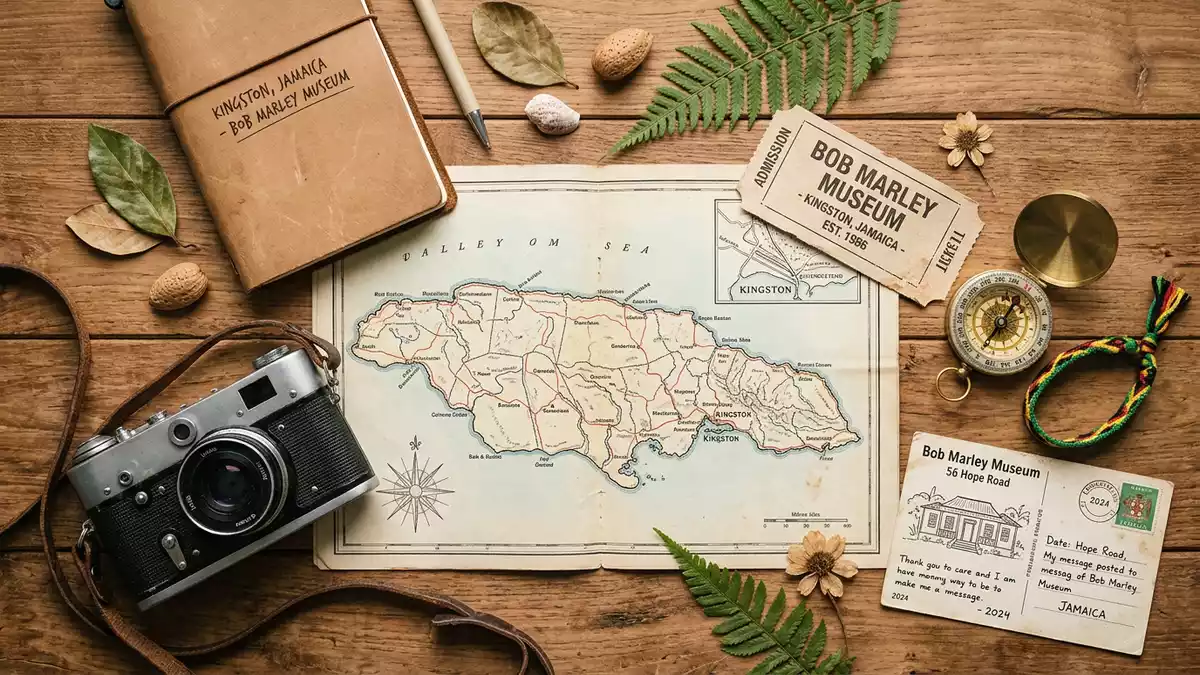
Bob Marley Museum in Kingston occupies Bob Marley’s former home at 56 Hope Road, a late nineteenth-century house with 19th-century architecture. The building links domestic space, music history and the city’s cultural memory in one address.late nineteenth-century house
The house on Hope Road
The museum stands in Kingston 6 and keeps the former residence of Robert Nesta Marley at the centre of its story. The address is tied to Marley’s life in the 1970s and to the years before his death in 1981.56 Hope Road
Bob Marley purchased the property in 1975, and his wife Rita Marley later converted it into a museum. The transformation gave the house a second life while leaving its domestic scale intact, with the old residence still carrying the weight of the musician’s everyday world.converted it into a museum
Reggae history inside a residence
The site was also home to the Tuff Gong label, founded by The Wailers in 1970. That connection gives the house a direct link to reggae production as well as to private residence, and the museum preserves both strands of Marley’s Kingston life.Tuff Gong label
The museum’s setting includes a timber-built house and the rooms associated with Marley’s domestic and working life. Its form suits a historic house museum: visitors move through an ordinary residence that has been kept closely tied to one musician’s story.historic house museum
Marley, Kingston and the museum’s frame
The museum is shaped by two firm dates: Marley bought the house in 1975, and it opened as a museum in 1986. Those dates place the building between Marley’s Kingston years and the later preservation of his legacy.opened in 1986
For English-speaking visitors, the appeal lies in the overlap of place and biography. The house remains the main setting, but the collections tie it to Marley, The Wailers and the wider history of Jamaican reggae.Jamaican reggae
Visiting Bob Marley Museum: what travellers from Western Europe should know
- The museum is at 56 Hope Road in Kingston 6. It is reached by road in the city’s northern corridor, close to other Hope Road landmarks.
- The building is a former house, so the visit centres on domestic rooms rather than a purpose-built gallery. That gives the place a smaller and more intimate plan than a major civic museum.
- The house is tied to Marley’s residence from 1975 and to the museum opening in 1986. Those dates frame the site’s identity without needing any broader explanation.
- The museum is part of Kingston’s reggae landscape, alongside places connected with recording and performance in the city. The address remains the key reference point.
Searching for Bob Marley Museum on social platforms
These links open searches for Bob Marley Museum on each platform.
Frequently asked questions about Bob Marley Museum
Where is Bob Marley Museum?
It is at 56 Hope Road in Kingston 6, in Jamaica’s capital. The house sits in the city rather than in a separate museum district.
What does a visit focus on?
The visit centres on the former home of Bob Marley, with rooms and displays tied to his life and music. It combines domestic setting, memorabilia and reggae history.
What makes Bob Marley Museum distinctive?
Its strength is the house itself: a former residence that remained closely linked to Marley’s Kingston years. The site also carries the Tuff Gong connection and the 1986 museum opening.


