
Blyde River Canyon above Graskop and the Drakensberg edge
Published on 09/19/2026 at 14:32 | Editorial responsibility: Rafael Müller, Editor-in-Chief AD HOC NEWS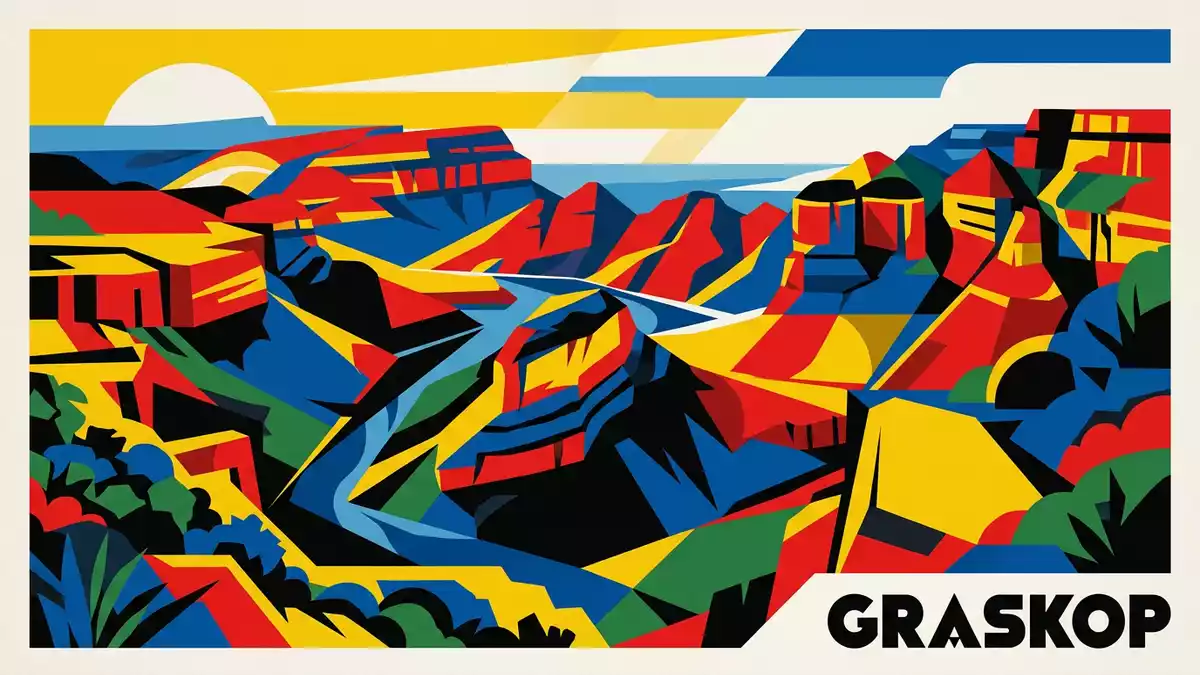
Blyde River Canyon near Graskop in South Africa is a broad gorge cut into the Drakensberg escarpment. The canyon is about 26 km (16 mi) long and is known for the Three Rondavels, quartzite walls and green slopes.
The canyon edge above the Blyde River
The Blyde River has carved a long route through the Transvaal Supergroup, leaving cliffs, terraces and ridges along the canyon walls. Mariepskop rises to 1,944 m (6,378 ft) above sea level, while the Blyde Dam marks the lower end of the gorge. 26 km long canyon Mariepskop is 1,944m
Quartzite is the most visible rock along many sections of the canyon, with sandstone and shale appearing in layered bands. The walls and outcrops give the landscape a banded, broken profile that is easy to read from above.
Three Rondavels and the canyon’s rock forms
The Three Rondavels stand on the far wall of the canyon and are among its most recognisable rock forms. They sit above the river corridor as three rounded peaks, with the shapes of quartzite and shale continuing across the wider escarpment. Three Rondavels rock formations
Elsewhere in the reserve, the Pinnacle rises as a single quartzite column, adding a vertical note to the larger sweep of the gorge. Bourke’s Luck Potholes lie where the Blyde River joins the Treur River, with circular rock pools and polished walls cut into the bedrock.
Graskop, the Panorama Route and the escarpment
The canyon lies above Graskop in Mpumalanga, on the Panorama Route through the escarpment country of eastern South Africa. The broader setting includes forested slopes, high rims and river-cut valleys, with the canyon opening towards the Blyde Dam at its lower end. Blyde River Canyon, Mpumalanga
The rock layers belong to a long geological story, with quartzite, shale and dolerite appearing across the reserve. The visible contrast between the river corridor and the higher rims gives the place its strongest visual character.
Visiting Blyde River Canyon: what travellers from Western Europe should know
- The canyon is reached from Graskop and the Panorama Route in Mpumalanga. The view sites and roads around the escarpment connect the main overlooks with the gorge and the Blyde Dam.
- The terrain includes high rims, steep drops and exposed cliff edges. Some viewpoints sit above the river by a wide vertical separation.
- The landscape belongs to the Drakensberg escarpment and the Blyde River Canyon Nature Reserve. Quartzite, shale and dolerite are part of the visible rock structure.
- Mariepskop, the Pinnacle and Bourke’s Luck Potholes are part of the same canyon landscape. Each shows a different form of erosion and rock layering.
Searching for Blyde River Canyon on social platforms
These links open searches for Blyde River Canyon on each platform.
Frequently asked questions about Blyde River Canyon
Where is Blyde River Canyon?
It lies in Mpumalanga, near Graskop in South Africa, along the Drakensberg escarpment. The gorge is part of the Blyde River Canyon Nature Reserve.
What does a visit involve?
The area is seen from roads and viewpoints above the gorge. The landscape combines high rims, river-cut walls and named rock forms such as the Three Rondavels and the Pinnacle.
What makes it distinctive?
The canyon combines a long river-cut gorge with green slopes and hard quartzite walls. The contrast between the river corridor, the escarpment rim and the rock towers is the place’s clearest visual feature.


