
Bibi-Xonim masjidi and the grand Timurid courtyard of Samarkand
Published on 09/18/2026 at 12:57 | Editorial responsibility: Rafael Müller, Editor-in-Chief AD HOC NEWS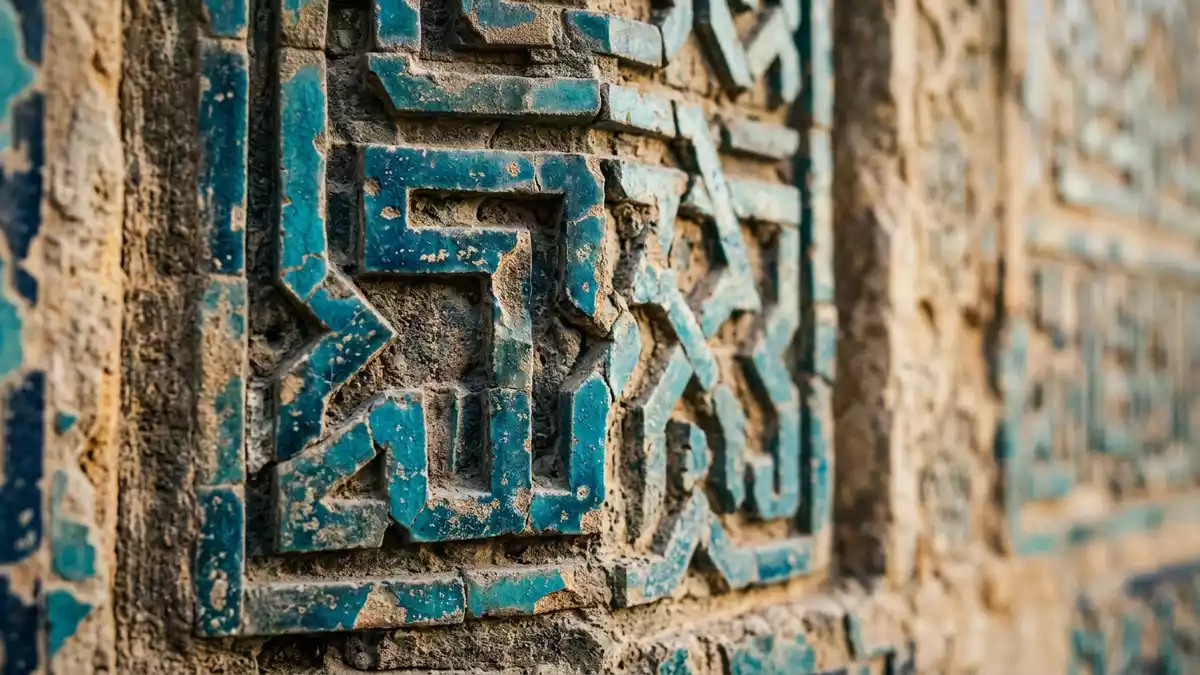
Bibi-Xonim masjidi in Samarkand, known internationally as the Bibi-Khanym Mosque, is a vast Timurid congregational complex dating from the early fifteenth century. Rising over the historic quarters and market streets, it combines baked brick structure with sweeping turquoise tilework to frame an enormous courtyard at the heart of Timur’s imperial capital.
A Timurid imperial project in stone and tile
Bibi-Xonim masjidi belongs to the flowering of Timurid architecture across Central Asia and Iran in the late fourteenth and early fifteenth centuries, when Samarkand served as the principal seat of Amir Timur’s empire.Timurid architecture across Central Asia Historical sources place the construction of the mosque between about 1399 and the first years of the fifteenth century, a period when Timur was consolidating power and directing immense resources towards monumental building in Samarkand.constructed between 1399 and 1405
The complex is closely tied to the reign of Amir Timur, also known in European writing as Tamerlane, who ruled from Samarkand between 1370 and 1405 and turned the city into a major political and cultural centre along the Silk Road.Timur ruled from Samarkand The mosque takes its name from Saray Mulk Khanym, remembered by the honorific Bibi Khanym, Timur’s senior wife, whose nickname in Turkic and Persian usage means “senior princess” or “senior wife”.Bibi-Khanym as senior wife
The courtyard plan and monumental gateways
Bibi-Xonim masjidi is laid out as an expansive Friday mosque with a central open courtyard framed by large iwans and domed halls, a type widely associated with Persian and Central Asian mosque architecture of the Timurid period.courtyard framed by iwans On the eastern side, a tall entrance portal rises above the surrounding roofs, signalling the complex to the streets near the Siab Bazaar and forming a ceremonial threshold from the market into the prayer court.near the Siab Bazaar
Within the enclosure, baked brick walls and structural piers carry domes clad in glazed tiles of turquoise and deep blue, with geometric and calligraphic ornament running across the surfaces. The scale of the courtyard and the height of the main dome hall placed Bibi-Xonim masjidi among the largest congregational mosques of its era in the Islamic world, a role reflected in chroniclers’ descriptions of its capacity for communal prayer.one of the largest mosques Standing under the entrance portal, the alignment of the main axis and the framing iwans gives a clear sense of the Timurid interest in symmetry and monumental perspective.
Ruins, reconstruction and World Heritage Samarkand
Over the centuries after its completion, Bibi-Xonim masjidi suffered structural problems linked to its ambitious dimensions, and later earthquakes and neglect left much of the complex in ruin by the nineteenth century.earthquake damage and ruin During the twentieth century, extensive restoration campaigns rebuilt major parts of the mosque, so that visitors now encounter a combination of surviving Timurid fabric and later reconstruction that restores the outline of the courtyard and its principal domes.restoration in the twentieth century
Bibi-Xonim masjidi stands within the historic centre of Samarkand, which is recognised by UNESCO under the World Heritage inscription “Samarkand – Crossroad of Cultures”.Samarkand – Crossroad of Cultures In this wider setting, the mosque is part of a constellation of Timurid monuments, including the Registan, Shah-i-Zinda and Gur-e-Amir, that together illustrate the city’s role as an artistic and architectural centre in the late medieval Islamic world.Registan and Gur-e-Amir ensemble
Visiting Bibi-Xonim masjidi: what travellers from Western Europe should know
- Bibi-Xonim masjidi stands in the historic centre of Samarkand in Uzbekistan, close to the Siab Bazaar and within walking distance of Registan Square.
- The mosque complex is organised around a large open courtyard, with access through monumental gateways and passages that involve steps and uneven historic paving.
- The official language is Uzbek and the currency is the Uzbekistani som.
- Entry requirements depend on your nationality; UK travellers can check the FCDO travel advice at gov.uk/foreign-travel-advice, Irish travellers the Department of Foreign Affairs at ireland.ie.
Searching for Bibi-Xonim masjidi on social platforms
These links open searches for Bibi-Xonim masjidi on each platform.Frequently asked questions about Bibi-Xonim masjidi
Where is Bibi-Xonim masjidi located?
Bibi-Xonim masjidi is located in the historic centre of Samarkand in Uzbekistan, close to the Siab Bazaar and within the wider World Heritage zone.
What can visitors expect when entering the complex?
Visitors enter through a high Timurid gateway into a vast courtyard framed by domed halls and iwans, with extensive brick structure and turquoise tilework visible on all sides.
What makes Bibi-Xonim masjidi distinctive among Samarkand’s monuments?
The mosque’s early fifteenth-century date, association with Amir Timur and Saray Mulk Khanym, and its enormous courtyard scale make it a central example of Timurid architecture in Samarkand.


