
Aoi Ike in Biei, a blue pond of trees and light
Published on 09/16/2026 at 08:02 | Editorial responsibility: Rafael Müller, Editor-in-Chief AD HOC NEWS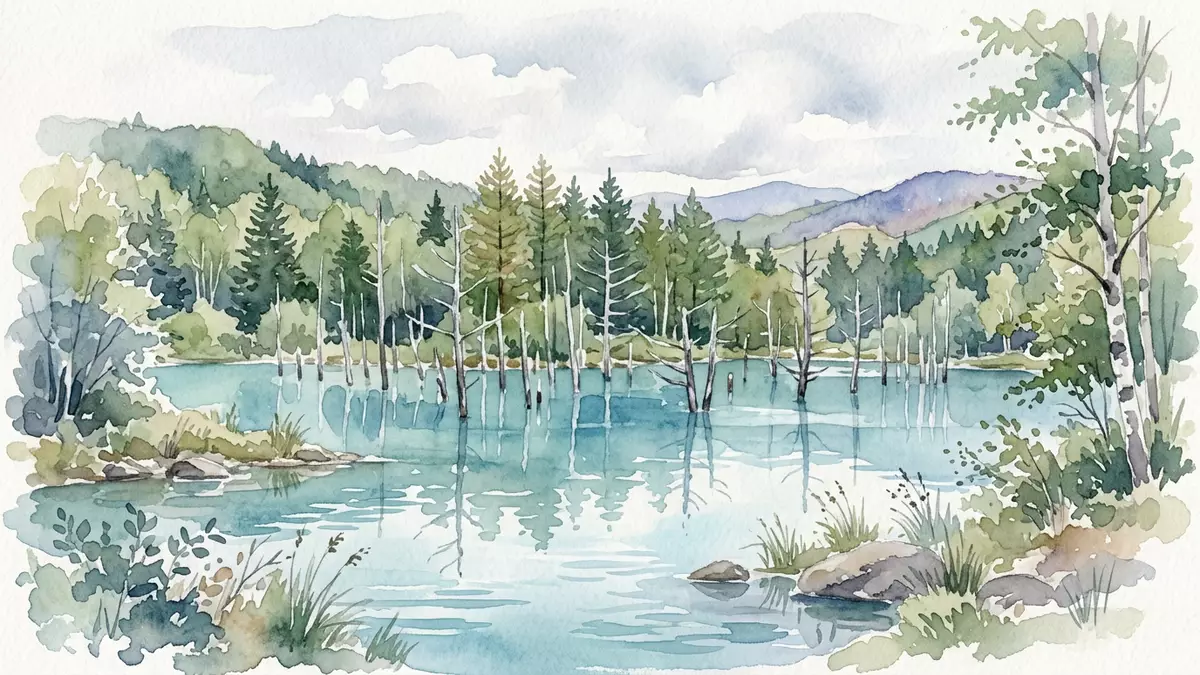
Aoi Ike in Biei is a small man-made pond in Hokkaido where pale tree trunks stand in still, blue water, forming a quiet landscape of colour and vertical lines in the Shirogane forest belt. The Japanese name “Aoi Ike” means “blue pond”, and the site lies in Biei Town in Hokkaido’s Kamikawa District, beside the Biei River in northern Japan.
A man-made pond on the Biei River
Aoi Ike is not a natural lake but a pond that formed as part of an erosion control system on the Biei River in central Hokkaido. The pond sits in the Shirogane area of Biei Town, along a forested reach of the river with the Tokachi mountain group rising to the south.Aoi Ike is a man-made pond feature in Biei, Hokkaido The Japanese Tourism Organisation and local guides describe Aoi Ike as part of a chain of dams and basins built on the river as protection against volcanic mudflows associated with Mount Tokachi after an eruption in 1988.the pond forms part of an erosion control system to prevent damage to Biei in case of an eruption by Mount Tokachidake
The pond lies close to the hot spring settlement of Shirogane Onsen, with local maps placing it within the Shirogane area of Biei Town in Kamikawa District. The Biei Tourism Association lists its address at Shirogane, Biei-cho, Kamikawa-gun, Hokkaido, marking it as one basin within a wider river engineering landscape rather than a standalone natural lake.the Shirogane Blue Pond is recorded at Shirogane, Biei-cho, Kamikawa-gun, Hokkaido In travel use the English name “Blue Pond” is widely used alongside the Japanese “Aoi Ike”, and both refer to this same man-made water body near Biei.
Blue water and bare tree trunks
The visual character of Aoi Ike comes from the combination of still, coloured water and the pale trunks of trees rising from its surface. Visitors see a basin where water of a striking blue or turquoise tint fills the space between upright, leafless trunks, creating a dense pattern of vertical lines reflected on calm days.the turquoise blue of the water against the white of dead birch trees creates a distinctive scene Around the pond, forest extends along the river corridor, and simple paths lead through the trees to viewpoints on the bank.
Guides describe the blue colour of the water as linked to minerals or fine particles suspended in the pond, interacting with sunlight to give the surface a blue appearance.the deep blue colour is attributed to natural minerals dissolved in the water Explanations mention aluminium and water from Shirogane Onsen combining with river water in what chemists call a colloid mixture, though the detailed mechanism is not formally confirmed and descriptions stress that this is a suggested process rather than a proven formula.local accounts refer to aluminium-rich water creating a colloid mixture whose interaction with sunlight makes the water look blue The visible result for visitors is a basin where the colour of the water contrasts with the pale timber and the darker forest beyond.
Aoi Ike in its Hokkaido landscape
Aoi Ike sits in northern Japan on the island of Hokkaido, in a rural part of Kamikawa District where agriculture, forest and volcanic foothills meet. Biei Town is known for rolling fields and patchwork farmland, and Aoi Ike lies to the south-east of the town centre in a more heavily wooded belt along the Biei River.Aoi Ike lies in the Shirogane area of Biei along the Biei River, with the Tokachi mountain group rising to the south The Tokachi mountain group, including Mount Tokachi, forms part of the volcanic highlands to the south of Biei and gives the wider area its combination of hot springs, river gorges and engineered erosion control structures.
Road maps show prefectural road 966 running along the valley floor past Shirogane Onsen and the Blue Pond, linking central Biei with the higher hot spring areas at Tokachidake Onsen.Blue Pond is located along prefectural road number 966, which connects central Biei to Tokachidake Onsen via Shirogane Onsen This places Aoi Ike within an accessible corridor of river-side forest and hot spring resorts, under the broader backdrop of Hokkaido’s central ranges. The pond’s setting beside a working river, within a landscape shaped by both volcanic activity and human engineering, is an integral part of its identity as a place where infrastructure and scenery intersect.
Visiting Aoi Ike: what travellers from Western Europe should know
- Aoi Ike is in the Shirogane area of Biei Town in Hokkaido’s Kamikawa District, beside the Biei River and along prefectural road 966; it is reached by local roads or buses from Biei Station and from regional centres such as Asahikawa.
- The terrain around the pond consists of forested riverbank reached by a short approach on foot from the parking area, with level paths and viewpoints on the bank where visitors stand among trees looking across the water.
- In winter snow can lie on the surrounding forest and paths, and the wider Biei landscape experiences cold temperatures; seasonal conditions affect underfoot surfaces and clothing needs more than the basic layout of the site.
- Nearby lie Shirogane Onsen and the upper hot spring resorts of Tokachidake Onsen, so Aoi Ike can be combined with visits to volcanic foothills, hot spring facilities and viewpoints over Biei’s agricultural hills.
- The official language is Japanese and the currency is the yen; entry requirements depend on your nationality, UK travellers can check the FCDO travel advice at gov.uk/foreign-travel-advice, Irish travellers the Department of Foreign Affairs at ireland.ie.
Searching for Aoi Ike on social platforms
These links open searches for Aoi Ike on each platform.Frequently asked questions about Aoi Ike
Where is Aoi Ike located in Japan?
Aoi Ike is in Biei Town in Hokkaido’s Kamikawa District, in the Shirogane area beside the Biei River and along prefectural road 966 in northern Japan.
What can visitors expect when they reach Aoi Ike?
Visitors find a man-made pond where blue-tinted water fills a basin among bare, pale tree trunks, with forested riverbank paths and viewpoints looking across the surface.
What makes Aoi Ike distinctive among Hokkaido’s river landscapes?
The combination of engineered river basin, blue water colour, upright dead tree trunks and a backdrop of Shirogane forest under the Tokachi mountain group gives Aoi Ike a recognisable character.


