
Aoi Ike in Biei, a blue pond of trees and light
Published on 08/26/2026 at 13:00 | Editorial responsibility: Rafael Müller, Editor-in-Chief AD HOC NEWS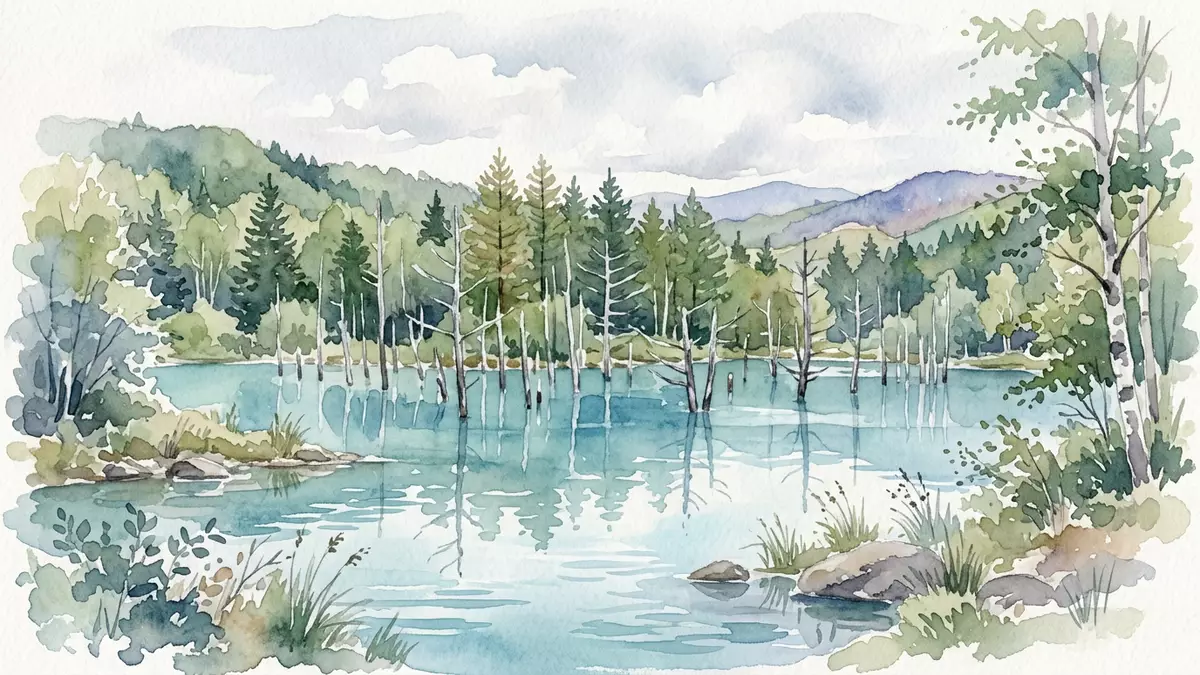
Aoi Ike in Biei is a small man-made pond where pale tree trunks stand in still, blue water, creating a quiet landscape of vertical lines and colour in central Hokkaido. Set in the Shirogane area beside the Biei River, it forms part of an erosion control system developed after the 1988 eruption of Mount Tokachi to protect the town from volcanic mudflows, and its name in Japanese simply means “blue pond”, a reference to the striking tint that visitors see on clear days.
A volcanic landscape shaped into a pond
Aoi Ike lies in Biei, a town in Hokkaido’s Kamikawa District, in a forested belt known as Shirogane along the course of the Biei River, with the volcanic Tokachi mountain group rising to the south.Biei, Hokkaido location The pond took shape in the late twentieth century when works were carried out on the river after the 1988 eruption of Mount Tokachi, and it now forms one basin within a wider chain of dams and channels built as an erosion control system for the valley.erosion control system after 1988
The surrounding landscape is shaped by this volcanic setting, with forested slopes, river terraces and hot spring areas such as Shirogane Onsen lying upstream in the same valley.Shirogane Onsen upstream Aoi Ike sits beside a minor road, prefectural route 966, which links central Biei with Shirogane and the Tokachi area, and the pond is approached on foot through trees, where glimpses of blue water and pale trunks appear between the branches before the full surface comes into view.location along prefectural road 966
Blue water, pale trunks and changing colour
The most striking feature of Aoi Ike is the colour of its water, a vivid blue or turquoise tone that can take on milky or clear shades depending on light and weather.turquoise-blue hue The tint is linked to minerals dissolved in the water, including aluminium compounds carried from upstream springs and cliffs around Shirogane, which mix with river water to form a fine suspension that affects how sunlight is scattered at the surface.aluminium particles from Shirogane Onsen On clear days, the pond can appear an intense blue that stands out against the green of nearby trees and the muted colours of volcanic rock; when conditions change, the shade may look softer, with ice, cloud or seasonal vegetation altering the way the surface reflects the sky.
Across this coloured water rise the trunks and branches of trees that once grew on the river banks, now bleached and weathered so that they form pale vertical lines against the horizontal plane of the pond.pale tree trunks in blue water In some areas, the trunks stand close together, while in others they are more scattered, giving visitors a series of perspectives where the blue surface is partly screened by branches or opens out into broad bands of colour. The trees include species such as birch and larch, whose wood takes on a light tone as it weathers, and their presence turns the pond into a forest scene interrupted by water rather than a simple basin in open ground.
Aoi Ike within the wider Shirogane valley
Aoi Ike is only one element within the Shirogane valley, a corridor where the Biei River flows from the Tokachi mountain group through forest and hot spring areas towards the town.Shirogane Aoi Ike in Biei Town Upstream, Shirogane Onsen has long been known for its hot spring baths, and the same waters help create the conditions that give Aoi Ike its colour when minerals carried downstream mix with river water in the dam basin. Downstream, the valley opens towards Biei’s agricultural land, with patchwork fields and low hills that give a very different impression from the compact forest setting around the pond.
The practical arrangements of the erosion control system mean that Aoi Ike is connected to other dams and channels along the river, though from the footpaths around the pond the main visible features are the blue surface, the trees and the embankments around the basin.dam on the Biei River The pond lies close to a forest road and is bordered by woodland, so views shift between more enclosed sections, where trunks and branches frame the water, and more open points where visitors can look along the length of the basin with the Tokachi mountains rising in the distance.
Visiting Aoi Ike: what travellers from Western Europe should know
- Aoi Ike is located in the Shirogane area of Biei Town in Hokkaido’s Kamikawa District, beside the Biei River and along prefectural road 966, and is reached by local roads or buses from Biei Station and Asahikawa Station.
- The terrain around the pond consists of forest paths and embankments, with sections of unpaved ground and gentle gradients; visitors walk a short distance from the nearest parking and bus stops to reach the viewpoints along the shore.
- The site lies in central Hokkaido, where winters bring snow and ice to the valley and summers are relatively mild; the pond itself can freeze and take on different surface appearances between seasons.
- Japanese is the official language and the currency is the yen.
- Entry requirements depend on your nationality; UK travellers can check the FCDO travel advice at gov.uk/foreign-travel-advice, Irish travellers the Department of Foreign Affairs at ireland.ie.
Searching for Aoi Ike on social platforms
These links open searches for Aoi Ike on each platform.
Frequently asked questions about Aoi Ike
Where is Aoi Ike located in Japan?
Aoi Ike is in the Shirogane area of Biei Town in Hokkaido’s Kamikawa District, beside the Biei River and along prefectural road 966 in central Hokkaido.
What can visitors expect when they reach Aoi Ike?
Visitors find a small man-made pond framed by forest where pale trunks rise from blue water, with footpaths along the embankments offering different viewpoints over the surface and surrounding landscape.
What makes Aoi Ike distinctive among Hokkaido’s landscapes?
The pond’s blue colour, created by minerals in the water, and the presence of weathered tree trunks emerging from the surface give Aoi Ike a characteristic scene of vertical lines and changing shades that contrasts with nearby fields and hills.


