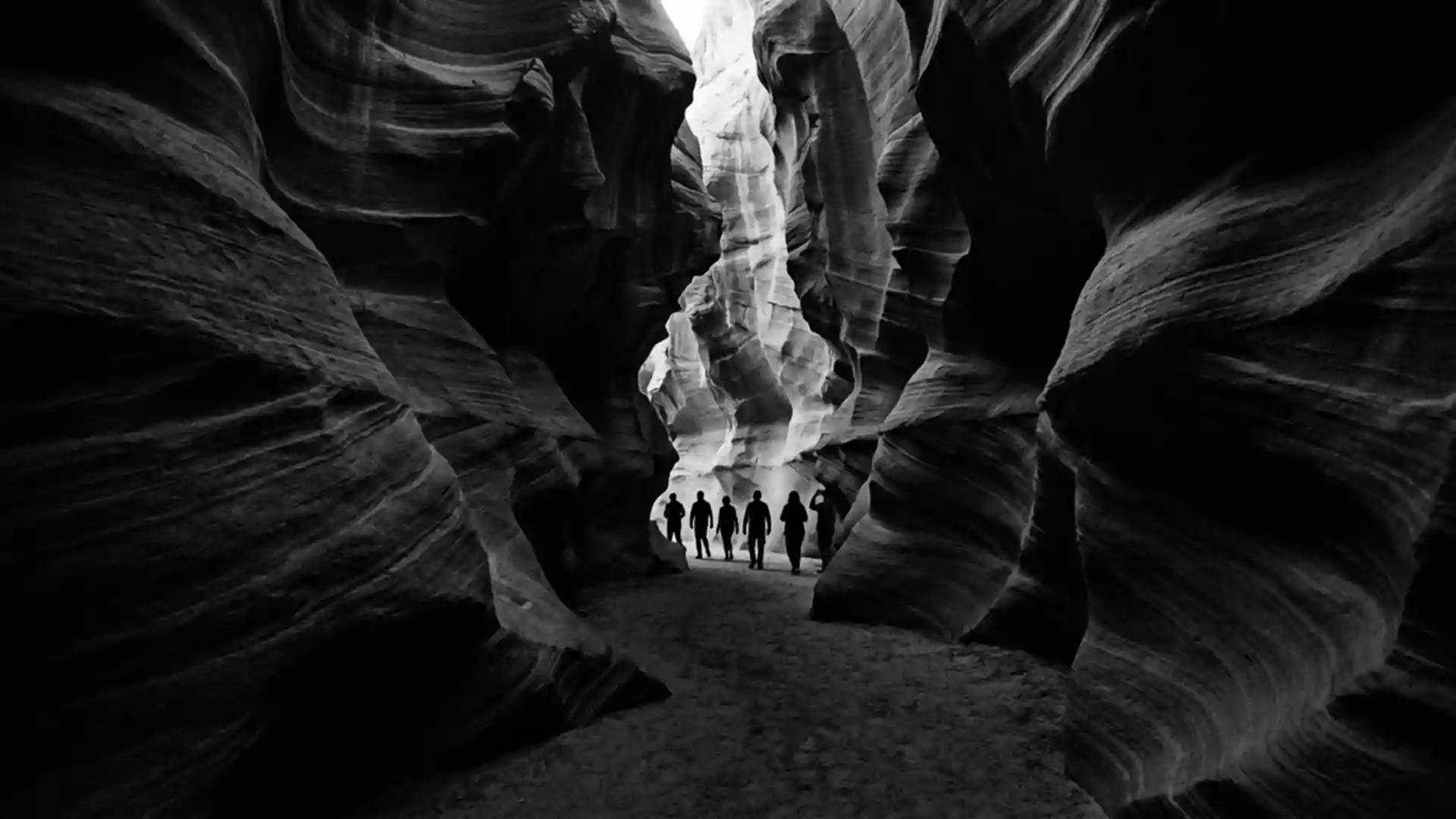
Antelope Canyon’s sculpted sandstone corridors near Page
Published on 09/14/2026 at 19:13 | Editorial responsibility: Rafael Müller, Editor-in-Chief AD HOC NEWS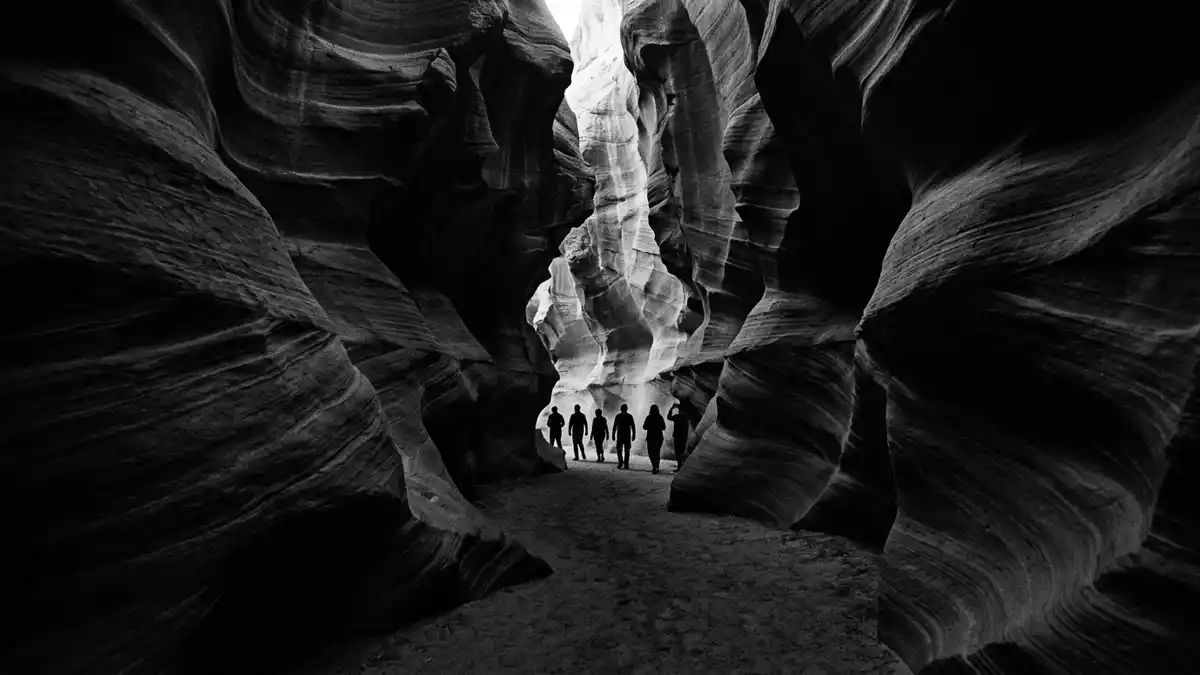
East of Page in northern Arizona, Antelope Canyon cuts a winding corridor through Navajo Sandstone on Navajo Nation land, turning desert rock into confined passages of light and shadow. This sandstone slot canyon lies within Lake Powell Navajo Tribal Park on the Colorado Plateau, and its walls descend tens of metres from the desert surface into a maze-like ravine.
A Navajo Sandstone slot canyon on the Colorado Plateau
Antelope Canyon lies a few miles east of Page, Arizona, on land managed by the Navajo Nation within the wider Lake Powell Navajo Tribal Park, part of the high desert Colorado Plateau landscape.Antelope Canyon lies in northern Arizona near the town of Page The canyon forms a tributary of Antelope Wash, which drains towards Lake Powell and the Colorado River, and sits close to Highway 98 near the Arizona–Utah border.Antelope Canyon is a tributary of the Colorado River that empties into Lake Powell
Geologically the canyon is carved entirely into Navajo Sandstone, a Jurassic-era formation that extends across large areas of the Colorado Plateau.Navajo sandstone is a Jurassic-era formation The rock is typically light red or orange, and the canyon walls consist of fine-grained sandstone whose layers were originally laid down as desert dunes before being cemented into stone.Antelope Canyon is carved into Navajo sandstone on Navajo Nation land near Page
Frozen waves and cross-bedded layers in the canyon walls
Antelope Canyon’s character comes from the way flash floods have carved narrow, sinuous corridors into the Navajo Sandstone over millions of years, scouring and polishing the rock into smooth surfaces.Antelope Canyon was formed by erosion of Navajo Sandstone due to flash flooding Rainwater collects in a basin on the plateau above, gathers speed as it drops into the canyon and carries sand and debris that abrade the walls, leaving behind undulating forms that resemble frozen waves.Water rushing from the basin above Page gathers sand and debris
The sandstone itself formed from massive wind-blown sand dunes during the Jurassic period, and cross-bedded layers in the walls preserve changes in wind direction from the time when the material lay as unconsolidated sand.Navajo Sandstone originated from ancient desert sand dunes Bands and flutings on the rock record shifts in sediment supply and water flow during successive floods, giving each surface a layered, rippled character that makes the canyon a compact textbook of desert and fluvial processes.
Upper, Lower and the wider Antelope Wash system
Though often treated as a single destination, Antelope Canyon belongs to a wider drainage system called Antelope Wash, and includes several distinct slot canyons carved into the same Navajo Sandstone formation.Antelope Canyon is a network of slot canyons within Antelope Wash Among these are Upper Antelope Canyon and Lower Antelope Canyon, together with other short slots that branch from the main wash and share the same geological story.
Upper Antelope Canyon is a relatively short slot whose deepest sections extend to around 120 ft (about 36.5 m) below the plateau surface.The canyon is approximately 660 feet long and about 120 feet at its deepest Lower Antelope Canyon, sometimes referred to by its Navajo name Hasdeztwazi, occupies another branch of the drainage and is accessed from a different point near Highway 98, but its walls show the same fine-grained sandstone fabric and flash-flood carving.
Visiting Antelope Canyon: what travellers from Western Europe should know
- Antelope Canyon lies east of Page in northern Arizona, on Navajo Nation land near the Arizona–Utah border, with access points close to Highway 98 and Lake Powell.
- The approach to both main canyon sections involves walking on uneven desert ground and descending stairways or ramps into confined sandstone corridors with limited sky above.
- The surrounding region is part of the high desert Colorado Plateau, where summer temperatures can be high and shade comes mainly from the canyon walls rather than vegetation.
- The official language in this part of Arizona is English and the currency is the US dollar.
- Entry requirements depend on your nationality; UK travellers can check the FCDO travel advice at gov.uk/foreign-travel-advice, Irish travellers the Department of Foreign Affairs at ireland.ie.
Searching for Antelope Canyon on social platforms
These links open searches for Antelope Canyon on each platform.Frequently asked questions about Antelope Canyon
Where is Antelope Canyon?
Antelope Canyon is in northern Arizona near Page, within Navajo Nation land east of town, close to Highway 98 and the Arizona–Utah border.
What should visitors expect inside the canyon?
Visitors follow guided routes through narrow sandstone corridors, walking on uneven ground beneath high walls where daylight enters mainly from above.
What makes Antelope Canyon distinctive among slot canyons?
Antelope Canyon stands out for its fine-grained Navajo Sandstone walls shaped by flash floods into smooth, wave-like surfaces that reveal cross-bedded dune layers.