
Al Jabal al Akhdar above Nizwa in limestone and terraces
Published on 09/17/2026 at 16:26 | Editorial responsibility: Rafael Müller, Editor-in-Chief AD HOC NEWS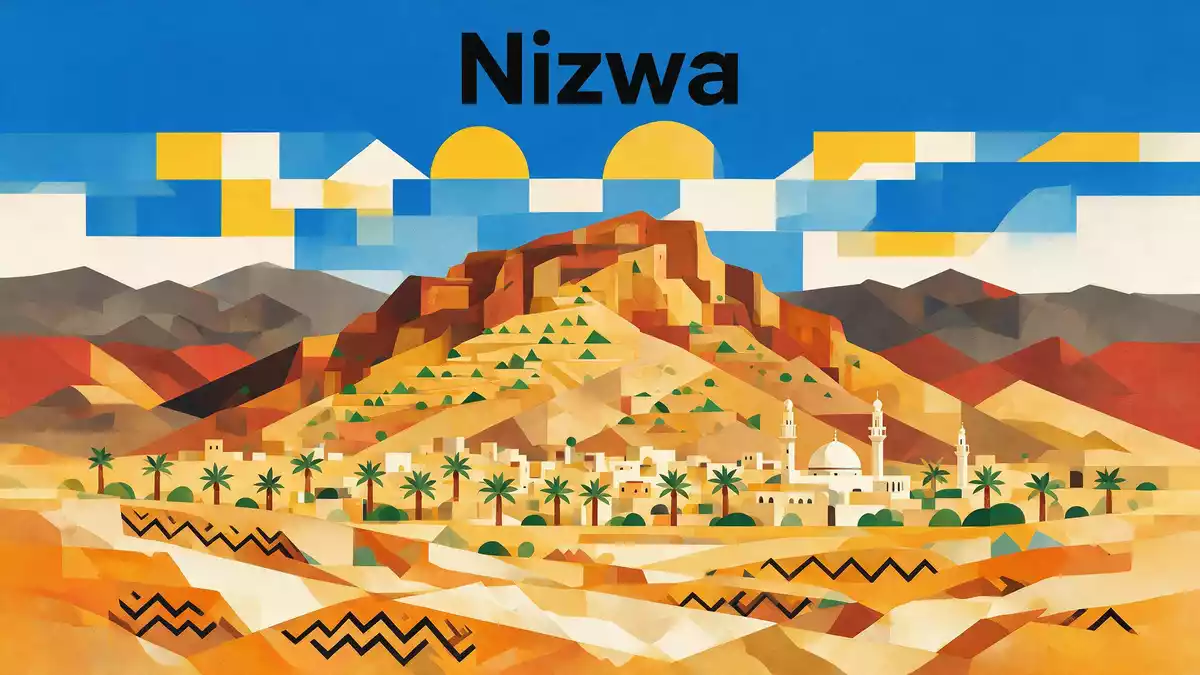
Al Jabal al Akhdar, “the Green Mountain”, rises north of Nizwa as a high limestone massif within Oman’s Western Hajar Mountains, with broad uplands cut by deep wadis and stepped terraces.
Limestone highlands of the Western Hajar
Al Jabal al Akhdar forms part of the Al Hajar range, the mountainous spine that runs across northern Oman and separates the coastal lowlands from the interior.part of the Hajar Mountains In the segment above Nizwa the massif reaches elevations that exceed 3,000 m (9,843 ft), making this one of the highest highland areas in the country.altitudes of over 3,000 m Within this broad structure, the Saiq Plateau sits at around 2,000 m (6,600 ft) above sea level, a relatively level high surface framed by steeper slopes and summits.
The geology of Al Jabal al Akhdar is dominated by limestones and dolomites that form the central carbonate dome of the Al Hajar Mountains.central carbonate dome Over geological time, surface processes have carved canyons and valleys into this massif, leaving steep rock faces above floodplains and fluvial terraces. In places, wadis cut into the plateau edges, creating sudden drops where cultivated shelves give way to bare stone and scree.
Terraces, orchards and villages on the slopes
Across the edges of the Saiq Plateau and neighbouring slopes, villages occupy shelves and pockets where thin soils and access to groundwater made settlement possible.settlements have occupied pockets and terraces Below and between them, terraces step down the mountain, built in stone to hold earth and water on gradients that would otherwise shed both. These terraced systems support orchards of pomegranates, walnuts, apricots, peaches and grapes, alongside other crops adapted to the cooler highland climate.pomegranates, walnuts, apricots
Traditional agriculture on Al Jabal al Akhdar has long depended on harnessing spring water and seasonal rainfall, channelling it through falaj irrigation channels to reach terraces and orchards. In some villages rose gardens occupy plots on these shelves, linked to the extraction of rose water that the area is known for.traditional rose water extraction The combination of steep rock, stone-built terraces and bands of cultivated trees gives many slopes a layered appearance, with patches of greenery standing against pale limestone cliffs.
Al Jabal al Akhdar in Nizwa’s interior landscape
Al Jabal al Akhdar lies within the Wilayat of Nizwa in Ad Dakhiliyah Governorate, forming part of the interior-facing highlands of northern Oman.interior-facing slopes lie Nizwa The massif rises north of Nizwa, where the town sits below the mountains on the inland side of the Al Hajar range.lies north of Nizwa From the lowlands around Birkat al Mawz and other foothill settlements, mountain roads climb towards the Saiq Plateau, following contours and traversing steep slopes to reach the high uplands.mountain roads that climb from lowland towns such as Birkat al Mawz
Part of the highland area is formally protected as the Al Jabal al Akhdar Natural Landscapes Reserve, established in 2011 and covering 122 km² of plateau and slopes, much of it above 2,000 m (6,562 ft).Natural Landscapes Reserve created in 2011 Within this area springs, cliffs, wadis and terraced fields sit alongside patches of natural vegetation that benefit from the relatively higher rainfall at altitude compared with the surrounding lowland deserts.
Visiting Al Jabal al Akhdar: what travellers from Western Europe should know
- Al Jabal al Akhdar lies north of Nizwa in Oman’s interior, reached by paved mountain roads from lowland towns such as Birkat al Mawz on the Nizwa side of the Al Hajar range.
- The terrain on the mountain is steep and rocky, with villages and orchards linked by roads and paths that follow gradients and, in places, stairways that climb between terraced levels.
- The highland sits at elevations well above 2,000 m (6,562 ft), so approaches involve sustained climbs in altitude between the lowland around Nizwa and the Saiq Plateau.
- The wider area lies within Oman, where the official language is Arabic and the currency is the Omani rial.
- Entry requirements depend on your nationality; UK travellers can check the FCDO travel advice at gov.uk/foreign-travel-advice, Irish travellers the Department of Foreign Affairs at ireland.ie.
Searching for Al Jabal al Akhdar on social platforms
These links open searches for Al Jabal al Akhdar on each platform.
Frequently asked questions about Al Jabal al Akhdar
Where is Al Jabal al Akhdar in relation to Nizwa?
Al Jabal al Akhdar rises north of Nizwa within the Wilayat of Nizwa in Ad Dakhiliyah Governorate, forming part of Oman’s interior-facing Al Hajar Mountains.
What should visitors expect when they reach the highland?
Visitors encounter a high limestone massif with steep slopes, wadis, terraced orchards and villages on shelves around the Saiq Plateau, many areas lying above 2,000 m (6,562 ft).
What makes Al Jabal al Akhdar distinctive among Oman’s mountain areas?
Its combination of high-altitude limestone geology, formal protection as a Natural Landscapes Reserve and long-established terraced agriculture with orchards and rose cultivation gives the massif a distinctive character.


