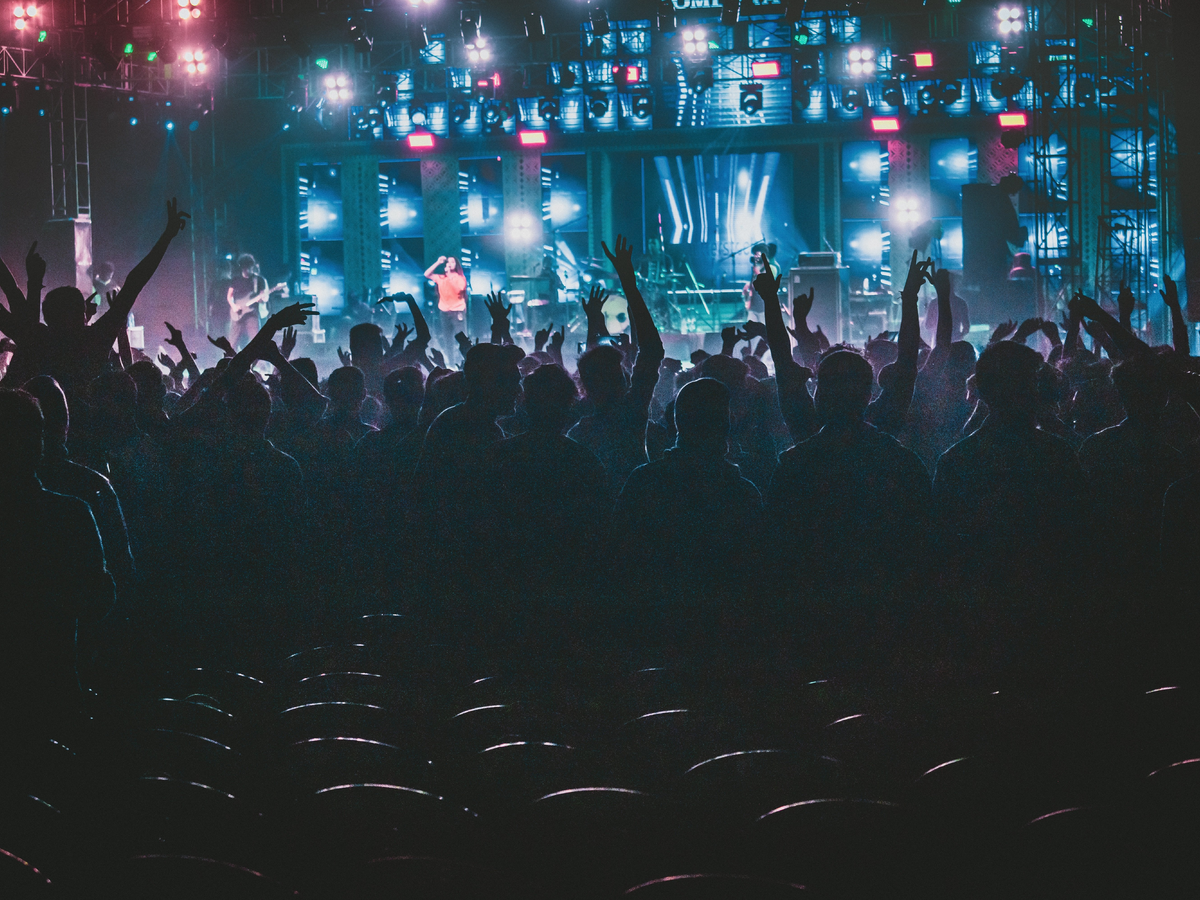
Queen announce 2026 North American return with big arena run
25.05.2026 - 00:53:37 | ad-hoc-news.de
Queen are gearing up for another major North American run in 2026, extending one of classic rock’s most successful modern live comebacks and giving U.S. fans another chance to hear some of the most enduring anthems in arena history performed at full volume. The Rock and Roll Hall of Famers will once again team with Adam Lambert, continuing a touring partnership that has already packed U.S. venues from coast to coast and introduced a new generation to the band’s catalog.
As of May 25, 2026, the group have begun rolling out dates and routing details on Queen's official website, with additional cities expected to follow. The new shows arrive after the group’s previous “Rhapsody” tours helped push Queen’s streaming numbers and catalog sales to fresh heights in the United States, according to Billboard, and kept their songs in heavy rotation across rock and pop playlists, per Rolling Stone.
What’s new: Queen’s 2026 North American arena return
The key development for U.S. fans is that Queen are formally plotting a fresh run of North American arena dates for 2026, again featuring Brian May and Roger Taylor with Adam Lambert on lead vocals. While full routing and on-sale information are still being phased in as of May 25, 2026, early announcements signal another large-scale production focused on the band’s biggest hits and deeper fan favorites.
Per Billboard’s touring coverage, the most recent leg of the “Rhapsody” tour grossed well into the tens of millions of dollars across North America, underscoring the staying power of the Queen name in the U.S. live market. Variety has also noted that Queen + Adam Lambert have become a reliable arena headliner draw, often selling out multiple nights in major cities and competing with contemporary pop and rock acts at the box office.
This new 2026 chapter is being positioned not as a farewell but as a continuation of a long-running celebration of Queen’s legacy, with May and Taylor repeatedly stressing that they only tour when they feel physically and creatively up to delivering a show that meets their own high bar. That approach has helped maintain both fan trust and strong word of mouth on social media and among U.S. concertgoers.
Why Queen’s return still matters in the U.S. in 2026
Nearly five decades after “Bohemian Rhapsody” first cracked American radio, Queen’s influence on U.S. rock and pop culture remains unusually visible. Songs like “We Will Rock You,” “We Are the Champions,” “Another One Bites the Dust,” and “Don’t Stop Me Now” continue to anchor sports arenas, movie soundtracks, and TikTok trends, making the band a living presence in American daily life.
According to Luminate data cited by Billboard, the band’s catalog saw a significant U.S. spike following the 2018 “Bohemian Rhapsody” biopic, with streaming and album-equivalent units surging for younger demographics. NPR Music has pointed out that Queen’s hooks and theatricality have helped bridge classic rock, mainstream pop, and even musical theater, making their songs unusually adaptable for new formats and audiences.
Against that backdrop, a 2026 tour isn’t just a nostalgia play — it’s a live extension of a catalog that is still actively growing its American footprint. Each U.S. run has historically nudged Queen’s digital numbers higher, and promoters like Live Nation and AEG Presents have leaned on the band’s multi-generational appeal to fill arenas in markets where classic rock can sometimes skew older.
For U.S. fans who first met Queen through streaming playlists, TikTok edits, or the biopic, the new dates offer a chance to experience the songs in the environment that originally made them iconic: a loud, communal, high-drama rock show where thousands of voices sing the choruses together.
Queen’s modern live era with Adam Lambert
Queen’s decision to tour with Adam Lambert, first in limited form in 2012 and then on larger global runs from 2014 onward, redefined what a legacy rock band can look like without its original frontman. As Variety and The New York Times have both observed, Lambert’s vocal range and theatrical style allow him to honor Freddie Mercury’s presence without attempting to impersonate him, striking a balance that many U.S. critics and fans have praised.
Lambert’s background on “American Idol” — a show with a deep American audience footprint — also helped bridge generations and geographies. When Queen and Lambert first teamed up on the “Idol” finale in 2009, U.S. viewers saw a proof-of-concept performance that would eventually evolve into full-scale worldwide tours, with North American legs consistently among the strongest.
The 2026 North American dates continue this partnership, with May and Taylor frequently calling Lambert a “gift” for the band in press interviews. According to Rolling Stone, the lineup’s ability to sell out major U.S. arenas from Los Angeles to New York has made Queen one of the most commercially successful classic rock touring outfits of the past decade.
From a performance standpoint, recent setlists — which often stretch to two and a half hours — have mixed hits with album cuts like “’39” and “In the Lap of the Gods… Revisited.” U.S. reviews from outlets such as the Los Angeles Times have highlighted the balance of spectacle (elaborate lights, video, and staging) with surprisingly intimate moments, like stripped-down acoustic segments where May takes center stage.
What to expect from Queen’s 2026 U.S. shows
As of May 25, 2026, Queen have not formally published fixed 2026 U.S. setlists, but recent tours give a clear blueprint for what American fans are likely to hear. According to setlist data summarized by Billboard and concert reports in Rolling Stone, the band’s shows typically feature:
- A climactic “Bohemian Rhapsody” segment, often with video elements referencing the original promo clip and Mercury’s image.
- Sports staples “We Will Rock You” and “We Are the Champions” as a one-two closing punch, turning the arena into a sing-along.
- Disco and funk-leaning tracks like “Another One Bites the Dust” that play especially well over U.S. PA systems.
- Ballads such as “Somebody to Love” and “Love of My Life,” the latter frequently becoming an emotional highlight as May leads the crowd in honoring Mercury.
- Rotating deep cuts and surprises, which on past runs have included “’39,” “Tie Your Mother Down,” and “Innuendo”-era songs.
Production-wise, Variety has described the recent stage design as a “multi-level, LED-heavy playground” that allows the band to move between bombastic full-band moments and stripped-back segments. Fans attending the 2026 U.S. shows can expect a similar mix of cutting-edge visuals and old-school rock staging, with towering lighting rigs, extended catwalks, and dynamic video backdrops.
U.S. audiences are also likely to see the continuation of tributes to Freddie Mercury, including archival footage and vocal stems that let him “duet” with the current lineup on certain songs. For many fans, these moments are a key emotional core of the show, aligning with what The Washington Post once called the band’s “careful blend of homage and forward motion.”
Venue-wise, promoters in recent years have favored major U.S. arenas such as Madison Square Garden in New York, the Kia Forum in Los Angeles, the United Center in Chicago, and newer complexes like SoFi Stadium when logistics and demand justify an upgrade. As of May 25, 2026, individual venue confirmations are still coming online, but the scale of the production suggests that Queen will again focus on large-capacity rooms, possibly with a few festival-style appearances folded in where routing works.
Tickets, presales, and U.S. demand
For American fans, the main practical question is how and when to secure tickets. As of May 25, 2026, Queen’s camp and U.S. promoters have begun outlining presale windows, VIP packages, and general on-sale dates city by city. Based on recent tours reported by Billboard Boxscore and Pollstar, demand is likely to be intense, especially in coastal markets and major Midwest hubs.
On previous North American runs, Queen’s ticketing strategy has often included:
- Fan club or email list presales that open before general on-sale, rewarding longtime followers.
- Credit-card partner presales hosted by major U.S. financial brands.
- A mix of standard seats and premium VIP experiences, which have sometimes bundled early entry, exclusive merchandise, or on-stage photo opportunities.
- Dynamic pricing in certain sections, reflecting real-time demand in larger U.S. markets.
Given widespread concern over ticketing practices in the United States, particularly around service fees and resale markups, Queen’s 2026 tour will unfold in a climate of heightened scrutiny. According to recent reporting from The New York Times and The Wall Street Journal, regulatory conversations in Washington, D.C. over ticketing transparency and competition are ongoing, which could influence how fees and disclosures are presented to fans by the time the tour reaches U.S. arenas.
Fans looking to stay ahead of announcements and avoid confusion around dates and on-sale times can monitor tour updates through more Queen coverage on AD HOC NEWS at this dedicated search page, as well as official promoter channels. As always, buying directly from primary ticket vendors linked via promoters or venues is the safest way to minimize risk of fraud and inflated prices.
Queen’s continuing U.S. chart and streaming presence
Even without new rock radio hits in the traditional sense, Queen remain a chart and streaming presence in the U.S. market. According to the RIAA, the band’s “Greatest Hits” compilation is one of the best-selling albums in American history, with multi-platinum certifications reflecting decades of catalog durability. Billboard has likewise reported that “Bohemian Rhapsody” has re-entered the Hot 100 multiple times, most recently in the wake of the biopic and viral user-generated content.
On streaming platforms, Luminate’s data show that Queen has consistently ranked among the most-played classic rock acts in the United States, competing not only with peers from the 1970s and 1980s but also with younger rock and pop bands. Rolling Stone has attributed this staying power to the band’s wide stylistic range — from hard rock to pop, disco, and quasi-operatic ballads — which fits seamlessly into modern playlist culture.
These U.S. numbers matter directly for the live business. Promoters and agents track regional streaming and catalog performance when deciding where to route tours and how aggressively to scale the production. That Queen can still anchor major playlists, TikTok trends, and sports soundtracks in 2026 makes it easier to justify large-scale American runs, from big arenas to marquee festivals like Lollapalooza Chicago or Austin City Limits if those opportunities arise.
In a U.S. rock landscape where few newer guitar-based acts can reliably fill arenas, Queen’s continued ability to move tickets underscores both the power of their catalog and the scarcity of true cross-generational rock headliners.
How Queen connect with younger American fans
One of the most important storylines around Queen in the United States is the band’s ongoing connection with fans who were born long after their 1980s heyday. NPR Music and Vulture have both noted how the 2018 “Bohemian Rhapsody” film, along with consistent exposure in sports arenas, video games, and social media, has made Queen feel contemporary to Gen Z and younger millennials.
From a cultural standpoint, songs like “Don’t Stop Me Now” and “Under Pressure” have become ubiquitous in American film and television, turning them into shared touchstones for viewers who might not recognize the album art but instantly know the hooks. On TikTok and Instagram Reels, snippets of “Another One Bites the Dust” and “Bohemian Rhapsody” regularly soundtrack comedic edits, dance clips, and nostalgic content.
On the road, Queen have responded to this demographic shift by leaning into big, inclusive moments — coaxing American audiences to sing multi-part harmonies, highlighting diverse fans on arena video screens, and encouraging costume play that taps into the band’s theatrical roots. According to reviews in USA Today and local U.S. dailies, it’s increasingly common to see three generations of the same family attending a Queen show, with grandparents, parents, and teenagers sharing the same anthems.
In that context, the 2026 U.S. run isn’t just a chance for older fans to relive their youth; it’s an opportunity for younger listeners to build their own concert memories around songs they first heard on phones and laptops. That generational handoff is a core reason why Queen’s American tours continue to matter, both culturally and commercially.
FAQ: Queen’s 2026 North American plans
Is Queen releasing new studio music to go with the tour?
As of May 25, 2026, Queen have not announced a new traditional studio album to coincide with the 2026 North American dates. Brian May and Roger Taylor have expressed, in various interviews cited by outlets such as Rolling Stone and Classic Rock, that they are cautious about recording new material under the Queen name, particularly without Freddie Mercury and John Deacon as active contributors. Instead, the focus has remained on archival projects, reissues, live releases, and special-edition box sets, along with continued touring with Adam Lambert.
Will every major U.S. city get a Queen date in 2026?
Not every American market is guaranteed a stop. Historically, Queen’s recent U.S. routing has concentrated on major metropolitan areas and high-density regions — think New York, Los Angeles, Chicago, Boston, Dallas, Atlanta, Denver, and the San Francisco Bay Area — with select secondary markets added where demand and venue availability align. As of May 25, 2026, only some cities have been publicly outlined, and more may be announced over time. Fans in smaller markets should be prepared to travel a reasonable distance to the nearest large arena if Queen doesn’t hit their local city directly.
How does Adam Lambert handle Freddie Mercury’s parts live?
U.S. reviews from outlets like Variety and The Washington Post generally agree that Adam Lambert approaches Freddie Mercury’s vocals with a blend of respect and individuality. He tackles the demanding upper-register lines and theatrical flourishes that define Queen’s music while infusing his own stylistic touches and stage persona. The show also incorporates archival footage and audio of Mercury in key moments, reinforcing that Lambert is a collaborator and steward of the material rather than a replacement. Many American fans have embraced this balance, praising the lineup for keeping the songs alive on stage without turning the performance into a tribute-act impersonation.
Will Queen play U.S. festivals like Coachella or Lollapalooza?
Queen have not confirmed any 2026 U.S. festival appearances as of May 25, 2026. However, given their proven ability to headline large outdoor events — and the continued interest from major American promoters such as Goldenvoice (which runs Coachella and Stagecoach) and C3 Presents (behind Lollapalooza Chicago, ACL, and Bonnaroo) — it remains a plausible option if routing and logistics line up. Fans should keep an eye on festival lineups as they roll out over the coming months; if Queen are added, it would likely be as a marquee headliner slot rather than a mid-bill appearance.
How long do Queen’s U.S. shows usually last?
Based on recent North American tours documented by Billboard and Pollstar, Queen’s concerts with Adam Lambert typically run between two and two and a half hours, depending on the night and venue curfews. The show is usually presented without an opening act, allowing the band to deliver an extended, career-spanning set. American fans can expect a carefully paced arc, with multiple peaks built around the biggest hits and a few quieter segments that spotlight storytelling from May and Taylor.
Is this Queen’s final U.S. tour?
As of May 25, 2026, Queen have not labeled the upcoming North American dates as a farewell tour, and both May and Taylor have avoided making definitive pronouncements about “last time ever” runs in the U.S. Interview comments cited by Rolling Stone and BBC Radio suggest that the band evaluates touring opportunities one cycle at a time, weighing their health, interest, and audience demand. While the members are candid about the realities of aging, the current messaging around 2026 leans toward celebration rather than closure — meaning American fans should treat these shows as a major event, but not necessarily as a guaranteed final goodbye.
For now, what’s certain is that Queen’s 2026 return will once again turn U.S. arenas into giant choirs, with tens of thousands of voices belting out hooks that have colored American life for generations. Whether you discovered the band through vinyl, MTV, or a viral clip on your phone, the upcoming shows promise a rare chance to stand in the middle of that sound and feel the full weight of the songs in real time.
By the AD HOC NEWS Music Desk » Rock and pop coverage — The AD HOC NEWS Music Desk, with AI-assisted research support, reports daily on albums, tours, charts, and scene developments across the United States and internationally.
Published: May 25, 2026 · Last reviewed: May 25, 2026
Share this article
Send this story to a friend who still knows every word of “Bohemian Rhapsody,” post it in your concert-planning group chat, or save it to revisit when Queen’s 2026 U.S. dates hit your nearest arena.
So schätzen die Börsenprofis Aktien ein!

Für. Immer. Kostenlos.