
Michael Burry Bets Against Nvidia as Beijing Signals a Million-Chip Appetite
Published on 09/28/2026 at 11:30 | Editorial boerse-global.de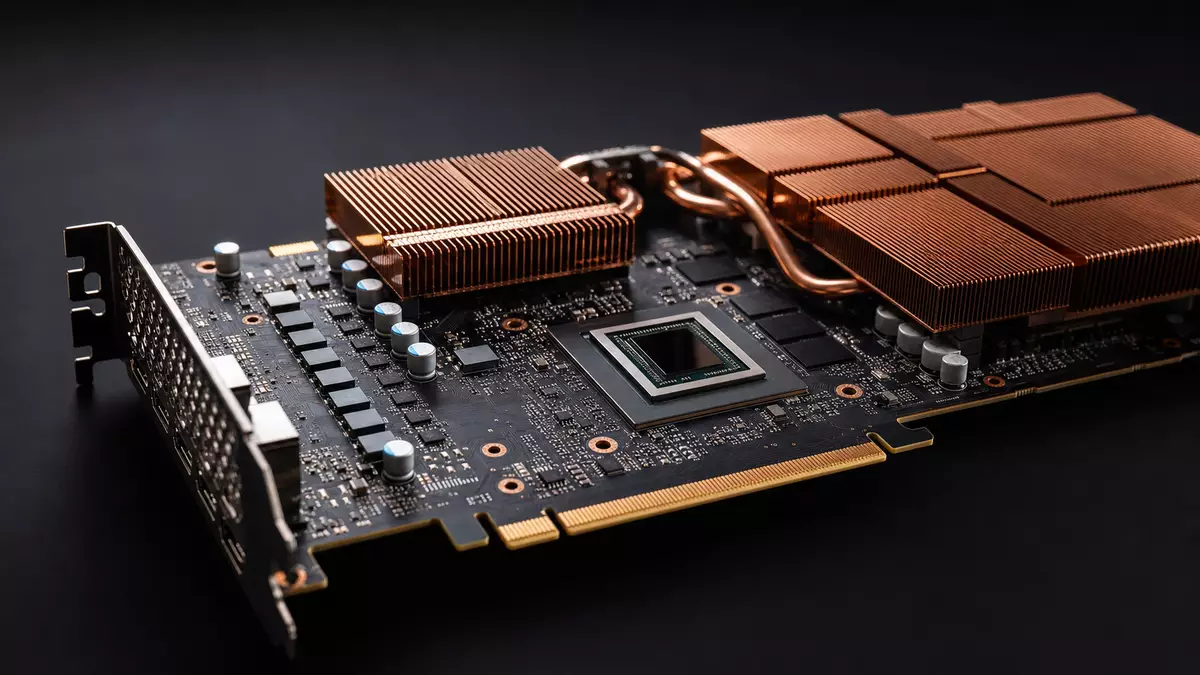
Michael Burry has never been shy about picking fights with crowded trades. The investor who made his name during the financial crisis has now disclosed fresh short positions against Nvidia and several other technology heavyweights, and his reasoning deserves more than a reflexive dismissal.
His central claim is that artificial intelligence has grown into a load-bearing pillar of the entire US economy — which, in his view, means Washington can hardly afford to let the boom collapse. It is a useful warning against stretched expectations. It also, arguably, underestimates how deeply entrenched Nvidia has become.
The $573 Billion Web Beneath the Boom
Burry's skepticism draws heavily on a recent study from Ares Management, which maps out an intricate financing network worth roughly $573 billion, spread across 26 transactions over the past twelve months. Loans, leasing arrangements and guarantees bind together names like Microsoft, Meta, Google and Nvidia.
What Ares flags as particularly troubling is the pace of depreciation. The residual value of Nvidia's H100 accelerators, the asset manager found, dropped 51 percent over a three-year span. When processors lose value faster than the debt taken on to buy them can be paid down, the balance sheets of the companies running them start to wobble.
That risk, though, cuts both ways for the chip designer itself. Hyperscalers cannot afford to sit on aging hardware — staying competitive means continuously buying into Nvidia's newest generations. The very depreciation curve that worries creditors keeps the order book full.
Should investors sell immediately? Or is it worth buying Nvidia?
Demand Keeps Arriving From Every Direction
Concentration among a handful of large buyers is a genuine vulnerability. It is also, for now, a machine that keeps running. Meta and Elon Musk's xAI are preparing to bring another 220,000 GB300 processors online shortly, and the queue shows no sign of thinning.
To keep pace on the manufacturing side, chief executive Jensen Huang is actively deepening ties with the leading memory suppliers. On Monday he meets with the top brass of Samsung and SK Group in New York to discuss deliveries of future HBM4E and HBM5 memory generations — a move that raises the technological barriers for would-be rivals in components Nvidia cannot do without.
Musk has already demonstrated the scale of the Western buildout: the Colossus 2 supercluster houses 110,000 GB200 units alongside 440,000 GB300 chips, with further expansion planned in the months ahead. Nvidia is also widening its profile beyond graphics processors. Finance chief Colette Kress has held out $20 billion in revenue from the pure CPU segment for the current year, a sign the company intends to occupy the entire data center value chain rather than rest on its GPU monopoly.
Washington's Walls, Beijing's Windows
Geopolitical lines can be drawn with the stroke of a pen. Economic realities are harder to erase. Since Washington's export controls sharply curtailed sales of cutting-edge accelerators to the Far East, China had been treated as effectively closed for Nvidia's largest hardware deals — the company's guidance for the current quarter, built on $108 billion in revenue, prudently assumed zero earnings from Chinese data centers.
Technology's gravitational pull, however, has a way of finding gaps. According to the US industry outlet The Information, China's Ministry of Industry and Information Technology is now examining whether domestic tech giants such as Alibaba and ByteDance may procure new workstation chips of the RTX Pro 5500 type. The ministry reportedly asked for specific unit counts and intended applications, while ByteDance is already weighing a preliminary requirement of roughly one million units. No approval has been granted and no confirmation is forthcoming — but the signal carries weight.
The choice of the RTX Pro 5500 is no accident. Built on the modern Blackwell architecture with 84 gigabytes of GDDR7 memory, it is formally aimed at professional workstations, and industry observers speculate that such cards may not fall under the same rigid US export bans as full-fledged high-performance server chips. Sales of the heavily throttled H200 to China currently account for less than one percent of Nvidia's data center revenue, according to Susan Li. Officially sanctioned access to workstation accelerators would offer Chinese AI firms meaningful relief.
Nvidia at a turning point? This analysis reveals what investors need to know now.
For Nvidia, the pattern is familiar: what is sealed off at the front door tends to re-enter through whatever narrow window remains open.
What the Tape Actually Says
Friday's close put the stock at EUR 197.76, up 23 percent since the start of the year and just 2.3 percent below its 52-week high. Burry's attack produced a modest decline of 0.9 percent to EUR 195.94 — hardly the stuff of panic, with the shares still trading in the immediate vicinity of their EUR 202.50 peak.
Burry's warnings about systemic risk in the second tier of AI infrastructure have merit. For the undisputed industry leader, though, the balance still tilts toward opportunity. Should Beijing greenlight the workstation purchases and Washington decline to intervene, Nvidia gains demand that its current outlook values at precisely zero. And even if the approval dies in bureaucratic thickets, the underlying truth stands: the world is hungry for computing power, and for now the key to it remains in Silicon Valley.
Ad
Nvidia Stock: New Analysis - 28 September
Fresh Nvidia information released. What's the impact for investors? Our latest independent report examines recent figures and market trends.


