Indian Supreme Court Ruling Puts Lift Safety Under the Spotlight
Published on 08/02/2026 at 21:47 | Redaktion boerse-global.de
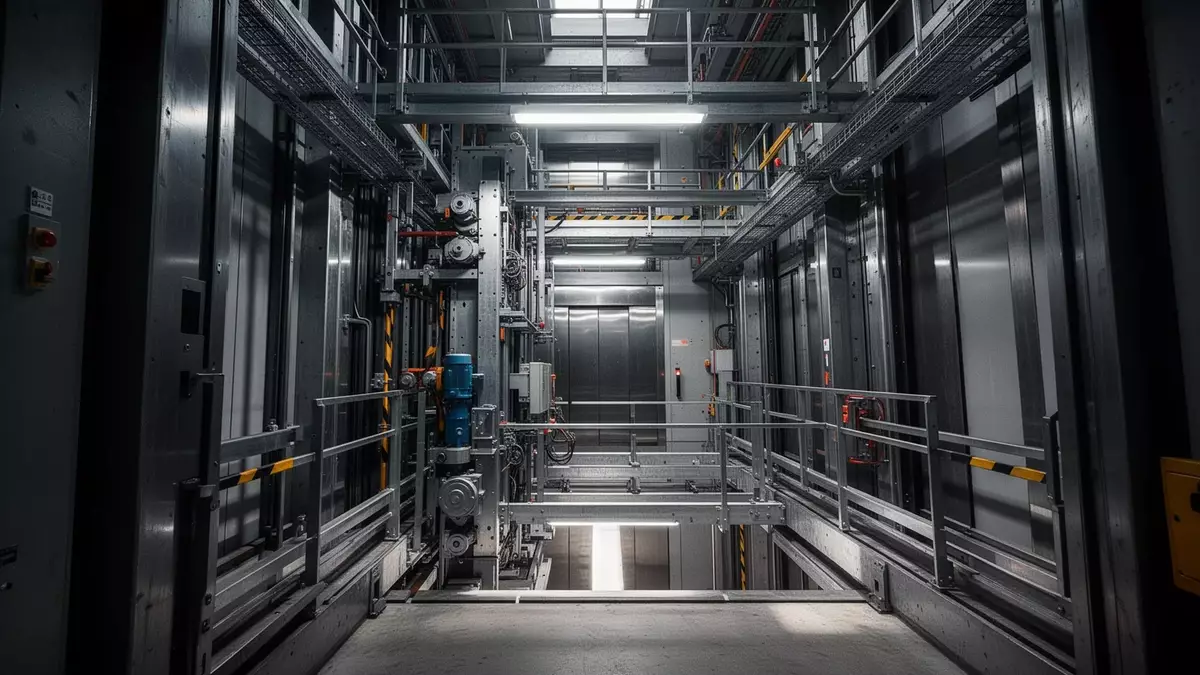
A landmark judgment in India has established that elevator manufacturers, maintenance firms, and building owners share joint liability for lift-related accidents — a decision that carries implications for global operators and safety standards. The ruling, delivered in early August 2026, classifies elevators as common carriers, imposing a higher duty of care on all parties responsible for their operation and upkeep.
The case dates back to the 2003 death of Vipin Handa, an officer with India's Research and Analysis Wing (R&AW), who was killed in a lift malfunction in New Delhi. The court apportioned 70% of the liability to the Otis Elevator Company, 25% to the Military Engineering Service, and 5% to the R&AW. Handa's family was awarded compensation of Rs 3.01 crore plus interest.
This ruling is a stark reminder that courts worldwide are holding companies to a higher standard when it comes to duty of care. Yet many UK employers still have gaps in their safety documentation that could prove costly in the event of an incident. A free toolkit with 41 ready-to-use checklists and templates can help you document workplace risks properly and stay on the right side of the law. Download the free Risk Assessment Toolkit
Global Crackdown on Industrial Failures
The Indian ruling comes amid a wave of enforcement actions worldwide targeting failures in duty of care.
In China, an investigation report released on August 2, 2026, detailed a series of failings that led to a fatal explosion at the Baotou Steel plant earlier this year. The blast killed 10 people and injured 84 others. Corrosion in a steam pressure vessel was identified as the trigger, with design flaws and inadequate maintenance cited as primary causes. Seven employees have been arrested and 62 individuals face disciplinary action.
Meanwhile, the U.S. Chemical Safety Board (CSB) published its final report in early August on the September 2024 fire at the Bio-Lab facility in Conyers. Investigators found that a water leak from a corroded sprinkler system came into contact with nearly 14 million pounds of unsafely stored reactive chemicals. The toxic gas release forced the evacuation of 17,000 people, with a further 90,000 residents told to shelter in place.
Criminal Charges Across Infrastructure and Maritime Sectors
Federal prosecutors in the United States have filed charges over the collapse of the Key Bridge in Baltimore on March 26, 2024. The 18-count indictment includes conspiracy and obstruction, naming Synergy Marine and technical superintendent Radhakrishnan Karthik Nair. Investigators discovered that the ship, the Dali, lost power twice before the collision, pointing to a faulty fuel pump system.
In Greece, an electrical engineer and a contractor were arrested on August 2, 2026, in connection with a wildfire that began the previous day. The blaze consumed roughly 16,000 acres across the Boeotia and Attica regions and is suspected to have been sparked by a wind park power line. Both individuals face charges of arson with possible intent.
Structural Failures Expose Maintenance Gaps
Recent residential incidents have also highlighted the dangers of unauthorized modifications and neglected upkeep.
- Bhiwandi, India: At least 10 people died when the Kohinoor building collapsed on July 30-31, 2026. Police are investigating reports that unauthorized repairs were being made to a supporting pillar. An arrest warrant has been issued for the building's owner, who is currently abroad.
- Clementi, Singapore: A fire in an HDB apartment on July 31, 2026, claimed one life. Emergency responders found that a dry rising main was not in proper working condition, reducing water pressure during firefighting operations. The town council had last maintained the equipment in March 2026.
- Cox's Bazar, Bangladesh: Authorities suspended all parasailing activities on August 2, 2026, after a tourist died falling into the sea. A complaint was filed against the operator for allegedly running the service without the necessary permits.
The Clementi fire is a sobering example of how neglected maintenance can turn a manageable incident into a tragedy. Fire safety is a legal duty for every UK employer, yet many only discover gaps in their fire risk assessments after it's too late. A free Fire Safety Toolkit provides everything you need — from risk assessments to evacuation plans — to protect your employees and premises. Get the free Fire Safety Toolkit
Shifting Legal Landscape for Corporate Liability
The boundaries of corporate responsibility are also being redrawn in the United States. In Montgomery v. Caribe Transport, the Supreme Court ruled that federal law does not preempt state court negligence lawsuits against freight brokers — a decision expected to increase liability exposure for shippers and brokers over carrier vetting.
In the United Kingdom, a ruling involving Crest Nicholson and Ardmore has clarified how the Building Safety Act 2022 applies in practice. The court allowed for anticipatory Building Liability Orders, determining that a company's insolvency does not shield it from liability for fire safety remediation costs. The judgment follows other domestic enforcement actions, including a £30,000 fine for Samson Containers Ltd. for exposing welders to hazardous fumes throughout 2024 and 2025.
Disclaimer regarding our articles: No investment advice, no buy or sell recommendation. Information on prices, companies, and markets is provided without guarantee; changes are possible at any time. Stock market transactions can lead to substantial losses. Our articles are created and reviewed in whole or in part automatically with the support of AI.