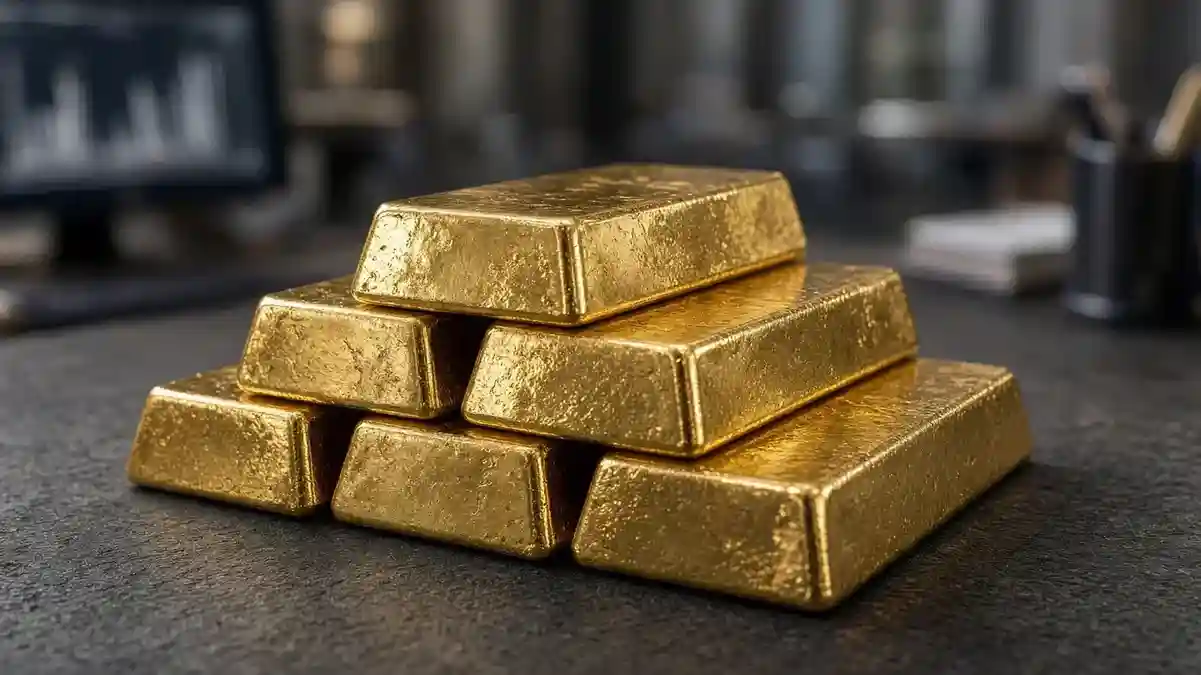
Gold Slips as Crude Oil Nears Five-Month High, but Official Buyers Refuse to Fold
Published on 10/20/2026 at 12:10 | Editorial boerse-global.de
Gold ran into a wall of energy-driven inflation anxiety on Tuesday, with crude prices hovering near a five-month peak that has revived bets on further US rate hikes and sapped appetite for the non-yielding metal.
The spot price settled at 4,121.06 USD per troy ounce, down 0.4% on the day. That followed a weaker prior session, when a firmer dollar and rising Treasury yields — as reported by Reuters — pushed bullion to a close of 4,138.95 USD, a drop of 0.7%. A durable rebound has yet to take hold.
The mechanics are straightforward. Costlier energy feeds inflation expectations, which in turn harden the case for tighter Federal Reserve policy. Higher rates raise the opportunity cost of holding an asset that pays no coupon, and gold pays the price.
A Fed Decision Still Up in the Air
All eyes now turn to the Federal Open Market Committee meeting on 27–28 October. The central bank already lifted its benchmark rate in September, so the debate is less about the direction of travel than about the pace of the tightening path. US PCE data due next week looms as the next major catalyst, per Reuters.
Should investors sell immediately? Or is it worth buying Gold?
The market has been here before. On 14 October, hotter-than-expected US inflation figures weighed on the metal, after which Deutsche Börse data showed a rate hike at the upcoming meeting being priced in with roughly 50% probability. That is a market expectation, not a foregone decision — a distinction that matters when reading the current oil-driven pressure.
Official Buyers Keep the Floor
Against that short-term headwind sits a longer-term prop. China's central bank added 23 tonnes of gold in September, lifting its holdings to 2,410 tonnes, according to the World Gold Council — the largest monthly inflow since October 2023.
Goldman Sachs sees the same structural support. The bank estimates global central bank purchases at 79 tonnes in August, while the World Gold Council reported net buying of 39 tonnes for the same month. The gap stems from methodology: Goldman draws on derived trade and capital flows rather than timely official disclosures, so its figures can diverge from reported holdings and may be revised later. In Goldman's view, official demand is far less price-sensitive than investor demand, and can cushion pullbacks driven by speculators or gold ETFs — though the bank stops well short of promising higher prices.
Consolidation, Not a Bear Market
Metals Focus director Matthew Piggott reads the softness as consolidation rather than the start of a bear market. The missing rally, he argues, reflects competition for investment capital, not a deterioration in the long-term outlook. Institutional investors, in his assessment, return to the market at prices near 4,000 USD per ounce — and that flow, alongside central bank buying, could underpin prices. It is a case for potential support, not a guaranteed floor.
The consultancy projects an average gold price of 5,330 USD per ounce for 2027, with the final quarter of that year averaging 5,600 USD. Those forecasts come with strings attached: fresh investor inflows and geopolitical de-escalation are the key conditions, and central bank purchases alone cannot substitute for the confidence of private and institutional investors.
Gold at a turning point? This analysis reveals what investors need to know now.
Mixed Signals From Bonds and Safe-Haven Flows
The World Gold Council painted a mixed picture on Monday. Falling bond yields could lend gold a hand, yet fixed income also competes with the metal for the same safe-haven capital — hardly a decisive counterweight to inflation worries. Nor has the Iran conflict delivered a lasting safe-haven bid, with Bloomberg emphasizing the rate-sapping effect of expensive energy instead.
What emerges is a market pulled in two directions. Reserve buying and the prospect of softer yields argue for a longer-term demand base; energy inflation, the dollar and Treasury yields set the near-term tone. Whether investors step back in on a broader scale — the condition Metals Focus places on any real recovery — will be tested by the Fed's decision and the US price data still to come.
Ad
Gold Stock: New Analysis - 20 October
Fresh Gold information released. What's the impact for investors? Our latest independent report examines recent figures and market trends.