
Gold Miners Feel the Squeeze as Royalty Bills Surge While Bullion's Rally Takes a Breather
Published on 08/29/2026 at 20:02 | Editorial boerse-global.de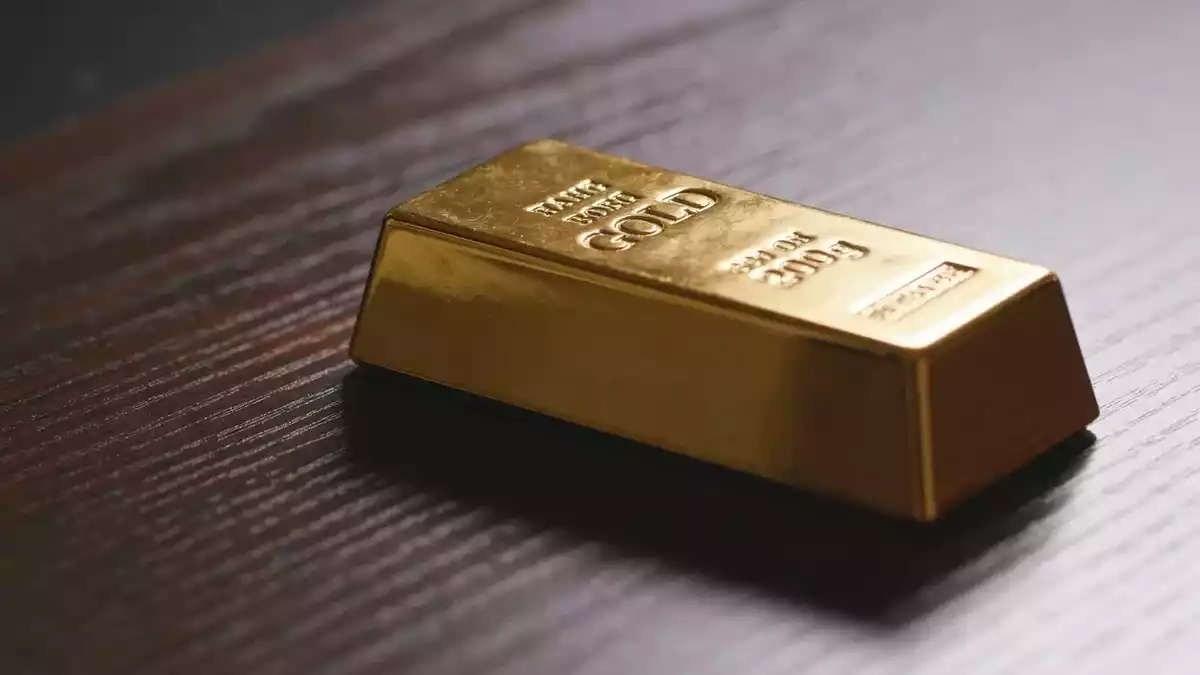
The glittering rally in gold has a less glamorous underside for the companies that dig it out of the ground. Even as bullion trades at levels that would have seemed fanciful just a couple of years ago, producers are watching a growing slice of their revenue get siphoned off by governments eager to cash in on the boom.
Data from the World Gold Council's latest industry report shows first-quarter 2026 margins hit record highs for miners, yet the average all-in sustaining costs (AISC) jumped 16 percent year-on-year to $1,785 per ounce. That widening gap between revenue and expenses is becoming the defining challenge for the sector — even if absolute profitability remains comfortable for now.
Nowhere is that pressure more acute than in West Africa. IAMGOLD reported a 220 percent surge in royalty payments at its Essakane mine in Burkina Faso compared with the same period last year, with those levies now accounting for 35 percent of the operation's total cash costs. The situation is set to intensify: Ghana introduced a sliding-scale royalty regime on March 10 that allows charges of up to 12 percent when gold prices exceed $4,500 per ounce.
For resource-rich nations, the calculus is simple — a share of the price rally flows directly into state coffers. For miners, it means navigating an increasingly complex web of fiscal demands across different jurisdictions, where political intervention can erode the benefits of a buoyant market.
Central Banks Talk Big but Buy Cautiously
The demand side of the equation tells a story of its own. The World Gold Council's "Central Bank Gold Reserves Survey 2026" found that 45 percent of central banks intend to increase their holdings within the next twelve months. Yet actual purchases in the first half of 2026 came in at just 345 tonnes — the weakest six-month figure since 2022.
Should investors sell immediately? Or is it worth buying Gold?
That gap between stated intention and realized volume suggests many institutions are stretching out their buying programs or waiting for more favorable entry points. Given the recent price action, their caution is understandable. Gold surged 9.5 percent in just 30 days from the start of August, a move that gave latecomers little chance to build positions at attractive levels.
The metal closed Friday at $4,454.60 per ounce, down 3.2 percent over seven days, but still 32 percent above its 52-week low of $3,384.54. The pullback followed hawkish signals from Federal Reserve Chair Kevin Warsh last week and last Wednesday's announcement of expanded US Treasury buybacks, which have lured investors toward fixed-income alternatives.
A Market Caught Between Two Forces
The consolidation that began in mid-August reflects a genuine tug-of-war at the futures exchanges. Hopes for declining long-term real interest rates are colliding with fresh inflation fears stoked by rising oil prices — a combination that leaves gold investors uncertain which way to lean.
Lower real rates typically enhance the appeal of gold as a non-yielding store of value. But if energy costs reignite inflation, central banks may be forced into a more restrictive stance, pushing real rates back up and undermining the metal's attractiveness. That interplay has kept many participants on the sidelines.
The Treasury announcement from roughly ten days prior initially gave gold a powerful boost, compressing yields and weighing on the dollar. That impulse has since faded — the metal now trades below its immediate post-announcement level — though the broader uptrend remains intact. The August technical recovery, which carried prices through key resistance levels, was driven largely by institutional buying and sustained central bank engagement, according to Reuters.
Producers Still Have Room to Maneuver
Despite the cost pressures, the operational foundation of major miners looks solid. Newmont, in a sector analysis, confirmed $4.3 billion in remaining share buyback authorization and expects robust free cash flows as long as gold stays above $4,000. That underscores a crucial point: even with elevated AISC figures, current prices sit well above the threshold where producers would slip into losses.
For investors, the picture is increasingly bifurcated. Gold itself benefits structurally from central banks diversifying away from the US dollar, while mining companies must contend with rising royalties, higher extraction costs, and political interventions in individual producing countries. Those choosing producers over physical bullion would do well to monitor cost developments jurisdiction by jurisdiction — not just the spot price.
Technical indicators suggest a market searching for equilibrium rather than one in distress. Gold remains comfortably above its 50-day moving average of $4,214.49, while its distance from the 200-day average is a modest minus 2.0 percent. The relative strength index of 54.8 signals neither overbought nor oversold conditions. With US inflation data on the horizon, the next significant move may well depend on which of the two competing forces — rate-cut hopes or energy-driven price pressures — gains the upper hand.
Ad
Gold Stock: New Analysis - 29 August
Fresh Gold information released. What's the impact for investors? Our latest independent report examines recent figures and market trends.


