
AMD's Agentic AI Bet: Desktop Alliances, Insider Sales, and a Stock Priced for Perfection
Published on 09/27/2026 at 06:50 | Editorial boerse-global.de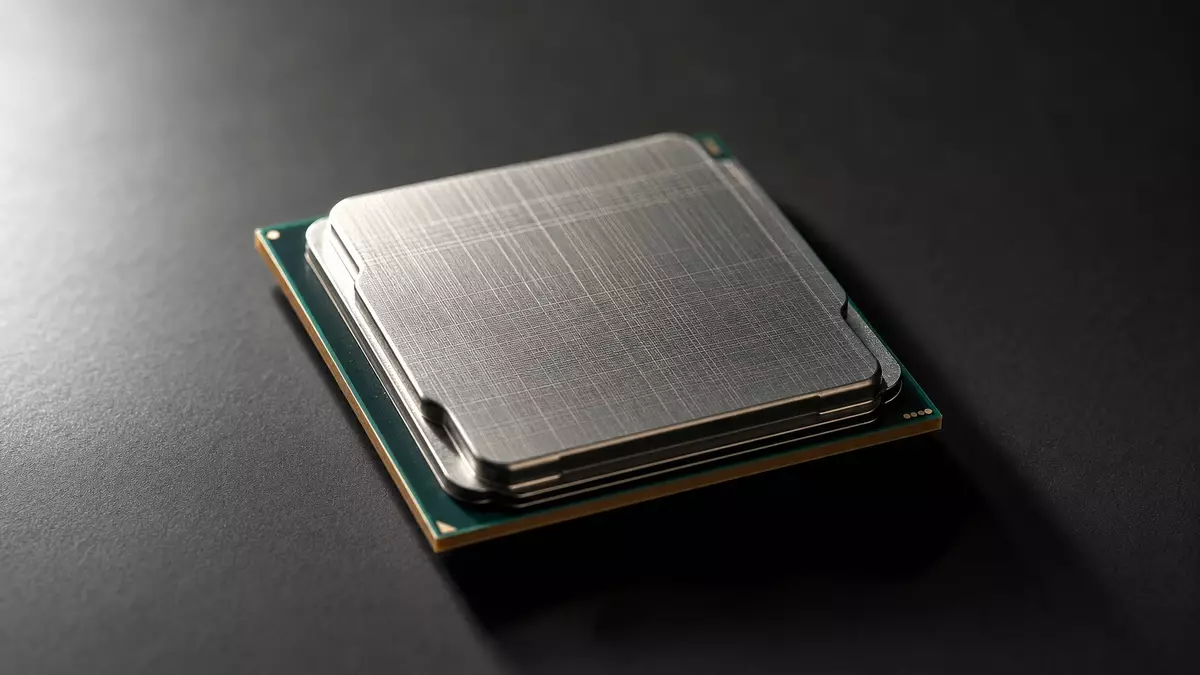
Advanced Micro Devices has become a case study in how quickly sentiment can swing in the semiconductor arena. One week, investors punish chipmakers on fears that AI spending is cooling; the next, they pile back in as risk appetite returns. Through it all, the stock has delivered a gain of 201 percent since the start of the year — a run that has left little room for missteps.
The latest chapter unfolded across a handful of trading sessions. On September 15, warnings from industry figures about a slowing AI development cycle triggered a broad selloff across chip equities. AMD shed more than 4 percent that day, according to Reuters, as anxiety over a possible slowdown in multi-billion-dollar investment cycles briefly took hold. The gloom proved short-lived. By Thursday, buyers were back, lifting the shares 2.4 percent on renewed optimism, helped along by excitement over Meta's new AI assistant Muse and the computing demand it implies.
From Server Racks to Robot Floors
Beneath the daily noise, the more consequential question is whether the infrastructure buildout can actually sustain the market's towering expectations. AMD is answering on the technology front. Its EPYC processors — notably the EPYC 9006 series — are aimed squarely at agentic AI workloads spanning cloud environments, enterprise applications, high-performance computing, and general-purpose tasks.
The company is also looking past the data center. At the ROSCon 2026 specialist conference, AMD plans demonstrations centered on physical AI and robotics, showing how compute and software can mesh from the data center all the way to the network edge. It is an early land grab in application areas beyond traditional server farms.
Agentic Systems Move Onto the Desktop
Closer to the user, the industry is shifting from simple language models toward agentic systems that independently execute complex task sequences. On Wednesday, Mark Papermaster and Mike Clark walked through how the established x86-based Zen architecture is being tuned for this agentic era — a focus that pulls main processors out of the shadow of pure accelerator cards and hands them a leading role in orchestrating future AI workloads.
Should investors sell immediately? Or is it worth buying AMD?
That thinking moved from theory to product on Thursday, when AMD unveiled a partnership with Perplexity. Machines running Ryzen AI Max processors, including the Ryzen AI Halo developer platform, can now run the Portable Computer on Windows for Perplexity subscribers. The tie-up builds a direct bridge to software developers and end users — and whoever occupies those platforms gains a foothold in the next generation of applications.
Pricing Power and a Fresh Street Target
Technology leadership counts for little on the stock market if it never reaches the income statement. Media reports suggest the chipmaker plans price increases of roughly 10 percent on selected graphics and main processors. Should that materialize, it would offer investors welcome evidence of genuine pricing power — the very trait that separates the front-runners from the rest of the industry when manufacturing costs are high and inflation lingers.
More tailwind arrived Friday from Bank of America. Analyst Vivek Arya raised his price target to $720 and called the stock his favorite in the main processor market. The bank estimates the total server CPU market could swell to $211 billion by 2030, with roughly $180 billion of that tied to AI applications. Stifel, for its part, reaffirmed its buy rating and $635 target on September 21.
Insider Selling and a Stretched Valuation
Not every signal points in the same direction. Forrest E. Norrod filed a Form 144 on September 15 covering the planned sale of 17,261 AMD shares, a transaction valued at $8,683,128.62 according to the filing. Such moves are hardly unusual after steep rallies, though market watchers caution against ignoring them.
Valuation itself argues for sobriety. At a closing price of EUR 554.30, the stock sits just shy of its 52-week high of EUR 566.50 — a level at which a good deal of investor euphoria is already baked in. Any delay in future product generations, or a slowdown in spending by the major cloud providers, could trigger sharp setbacks.
Even so, the recent initiatives point to an intact growth story. AMD is proving it is more than a follower in the chip sector, and its deliberate push into agentic AI applications and software integration strengthens that profile. For committed investors, the stock remains a pillar of the semiconductor space — though the current valuation leaves precious little margin for operational error.
Ad
AMD Stock: New Analysis - 27 September
Fresh AMD information released. What's the impact for investors? Our latest independent report examines recent figures and market trends.


