Why Everyone Is Suddenly Talking About Björk Again
Veröffentlicht am: 27.02.2026 um 11:53 Uhr | Redaktionelle Verantwortung: Rafael Müller, Chefredakteur AD HOC NEWS
If it feels like Björk is suddenly everywhere on your feed again, you’re not imagining it. Between fresh live dates, deep-dive interviews, and fans decoding every aesthetic shift on TikTok, the Björk-verse is buzzing like it’s 1997 and 2026 at the same time. For a lot of Gen Z and younger millennials, this isn’t just nostalgia; it’s a live crash course in how a true art-pop icon keeps evolving in an algorithm-driven world.
Explore everything happening in the Björk universe right now
You’re seeing clips of her stage designs in your Reels, people sharing first-timer reactions to "Hyperballad" on YouTube, and long-time fans arguing on Reddit about which tour has the best setlist arc. Underneath all the noise is a simple truth: Björk has quietly built the kind of career everyone claims to want in 2026 – experimental, independent, and still weird in the best way – and we’re in another one of those moments where it all spikes back into mainstream view.
The Backstory: Breaking News in Detail
So what’s actually happening right now around Björk? Over the last weeks, the story has been less about a random viral moment and more about a cluster of moves that signal a new phase: fresh live performances, ongoing fascination with her recent projects, and renewed attention from both music media and younger fans discovering her for the first time.
In recent interviews with major outlets, Björk has been talking less like a legacy act and more like an artist still in mid-experiment. She’s spoken about how she sees her last few records as part of an emotional arc: the raw dissolution and grief of "Vulnicura", the healing and new love of "Utopia", and the earthy, textural explorations of "Fossora". For fans, that framing matters because it makes every new performance feel like the latest chapter in one long, connected story rather than separate “eras” boxed off by hype cycles.
On the live side, what’s lit up the fandom recently is how she’s been folding older songs into the newer, more experimental arrangements. Reports from recent European and festival shows talk about classics like "Army of Me", "Jóga", and "Bachelorette" sitting alongside newer cuts like "Atopos" and "Ovule". Instead of a nostalgia cash-in set, you get something that feels like a remix of her entire career – and that’s exactly why people are flying across countries to see it.
Another big point of discussion is how Björk keeps using these projects to test the boundaries of the live format itself. Whether it’s immersive visuals, bespoke stage layouts, or the way she chooses unusual venues and festival appearances over traditional mega-tours, there’s a clear pattern: she’s prioritizing atmosphere and concept over simple ticket volume. That has consequences for fans – fewer dates, more deliberate locations, and tickets that sell fast – but it also means that if you do get in, the experience usually feels closer to installation art than a standard pop show.
Media-wise, the last month has seen a mini-wave of think pieces and interviews trying to map where Björk sits in 2026 culture. You see the same themes repeat: she laid the groundwork for a lot of what younger alt-pop artists are doing now, from hyper-personal lyrics to wild, genre-agnostic production. Writers keep returning to the idea that she anticipated the streaming era’s fluidity long before playlists existed, but insisted on full-album storytelling anyway. That tension – ultra-experimental but weirdly classic in her love of the album format – is part of why critics love covering her. For fans, it just means there’s always something new to unpack.
Put all this together and you’ve got a situation where any hint of new touring activity, special shows, or archival drops becomes headline fuel. It’s not just "Björk is back" – it’s more like, "Björk never left, but the world is catching up again." For you, the important part is timing: if you care about seeing her live or understanding the next creative move, this is the moment to actually pay attention instead of bookmarking it for later.
The Setlist & Show: What to Expect
Björk’s recent shows have blurred the traditional line between concert and performance art, and that has a direct impact on what you can expect if you manage to get tickets to an upcoming date. This is not a greatest hits singalong, and it’s also not a cold, distant art show. It’s somewhere in the middle – deeply emotional, visually intense, and full of small details that hit harder if you know the discography.
Based on recent reports from fans and critics, setlists are structured like emotional arcs rather than just “opening – middle – encore”. You might see her open with something from "Fossora" like "Atopos", with its heavy bass clarinets and club-adjacent energy, and then slide into more melodic, older tracks like "Hunter" or "Isobel". The transitions matter: songs are often re-arranged, stretched, or stripped down so they fit the sonic palette of the current show.
Classics show up, but rarely in their original, radio-ready form. "Hyperballad" might arrive with altered tempo or new textures; "Jóga" often lands like an emotional gut-punch midway through the set, paired with huge, organic visuals – mountains, lava, storms, or abstract landscapes that reference her long connection to Icelandic nature. "Army of Me" tends to hit harder live than people expect, especially for younger fans who mostly know it from playlists or sample-based TikToks.
On the more recent side, tracks from "Utopia" and "Fossora" play a big role. Expect songs like "Blissing Me", "The Gate", and "Future Forever" to show up when she leans into the intimate, vulnerable side of the show. "Atopos" and "Ovule" bring a more percussive, club-facing energy, with unusual rhythms and dense instrumental arrangements that feel bigger and warmer in a live space than they do on headphones.
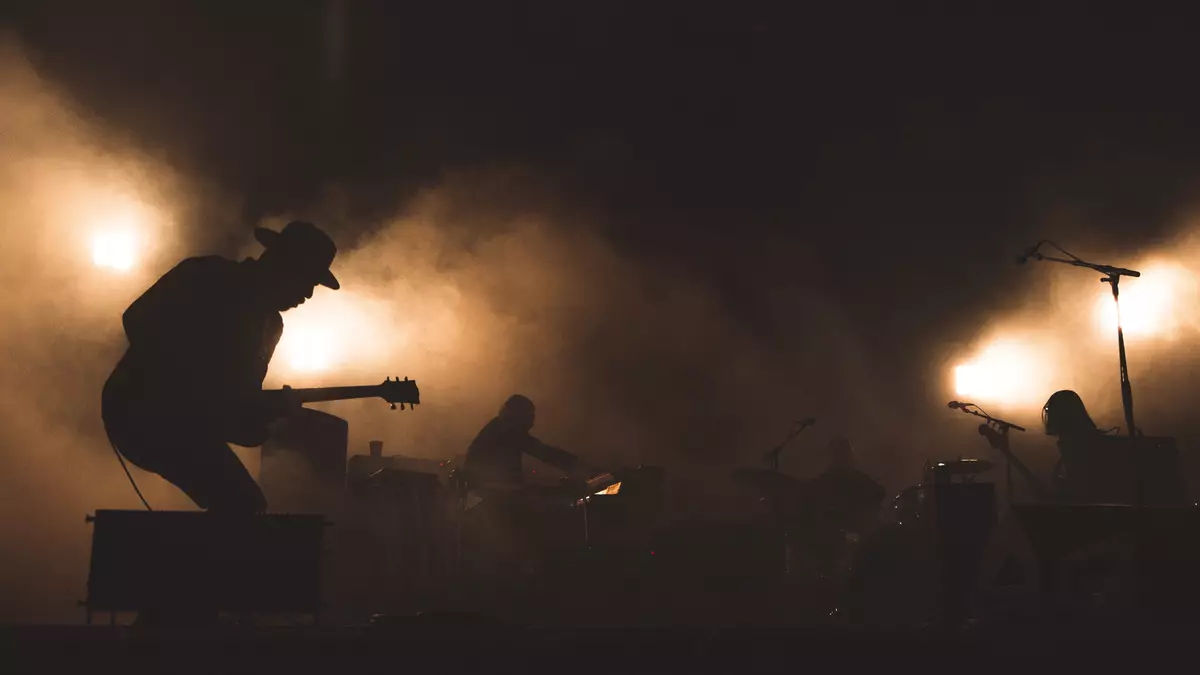
Visually, Björk’s current live approach is closer to a sci-fi opera or nature ritual than a standard pop concert. Think: elaborate headpieces, sculptural costumes that look half-organic, half-digital, and lighting design that changes the emotional temperature of the venue in seconds. Screens and projections are used, but not in the EDM-festival way; they tend to support a mood or narrative instead of acting as pure spectacle. Dancers and live instrumentalists often become part of the visual design, arranged carefully onstage rather than just backing her.
The crowd energy is also worth noting. Because the audience tends to be a mix of long-time fans and newer listeners who discovered her via streaming or social media, you’ll see very different reactions in real time. Older fans lose it when early albums are referenced; newer ones go particularly hard for "Fossora" and "Vulnicura" material, which feel emotionally aligned with current online culture around breakups, therapy, and self-reconstruction. Between songs, it’s usually pin-drop quiet – not out of stiffness, but because people are actually listening.
One thing to mentally prep for: she doesn’t treat the encore like a basic victory lap. Sometimes she subverts expectations by tucking a fan favorite in the middle and closing with something stranger, slower, or more fragile. The message is pretty consistent: you’re not there just to tick songs off a bucket list; you’re there to sit inside a very specific emotional and sonic world for 90 minutes plus.
What the web is saying:
Rumor Mill: What Fans Are Speculating
If you dip into Reddit threads or TikTok comment sections with "Björk" in the search bar, you’ll find a constant hum of low-key chaos: half rumor, half wish-list. A lot of it circles around three questions – is there another big concept project coming, will she expand upcoming live plans to more cities, and could we finally get more official releases of older tour visuals and rare cuts?
On r/popheads and r/music, one recurring theory is that Björk is gearing up for another multi-layered project that blurs the line between album, live show, and visual experience, similar to how "Biophilia" folded in apps and education. Fans point to patterns: interview hints about being interested in new tech, occasional references to environmental storytelling, and one-off collaborations with younger producers that don’t quite fit neatly into her last album’s sound. None of this is confirmed, but the speculation has people treating every new appearance like a clue-drop.
Tour-wise, fans are constantly attempting detective work: tracking which festivals she’s appeared at, which cities she’s favored in the past, and how far she’s willing to travel for a small number of highly curated shows. You’ll see entire threads where people build mock tour maps for the US and UK based on flight paths, venue capacities, and past patterns. The consensus: if additional dates land, they’ll likely be in cities with strong art and theatre scenes rather than just standard arenas.
Another hot topic is pricing and access. Some fans argue that the ticket cost for recent shows, especially in major European capitals, felt steep – but others counter that the level of production, limited number of dates, and art-house venues justify it. What’s interesting is that Björk is rarely framed as "overpriced pop"; instead, people compare her more to opera, contemporary art, or immersive theatre when debating whether the numbers make sense.
On TikTok, there’s a different flavor of rumor. Younger creators latch onto specific aesthetics – the mushroom imagery of "Fossora", the flutes of "Utopia", the cyber-natural visuals of "Post" and "Homogenic" – and build theories about what "the next element" will be. Some guess fire, some say air, some think she’ll go deeper into underground or ocean themes. These aren’t leaks; they’re fan fiction, but they help keep the hype cycle alive and give new listeners a way to jump in through aesthetics first, music second.
There’s also a quieter conversation about collaborations. Every time Björk is spotted near another high-profile artist, the rumor machine kicks in: could there be a joint track, a remix, or a surprise festival moment? Names from experimental electronic scenes, alt-pop, and even K-pop occasionally get thrown into the mix. While big crossover features haven’t suddenly started popping up everywhere, fans pay attention to who she praises in interviews – historically, that’s sometimes been a soft hint toward future creative intersections, even if they take years to fully surface.
Under all the theorizing is one shared feeling: nobody thinks Björk is done. Even when she hints at scaling back or focusing on specific projects rather than traditional album cycles, fans read it as "changing shape", not "stopping". That’s why every Instagram story, festival announcement, and cryptic quote becomes fuel for another round of predictions. For you, the smart move is to treat the rumor mill as entertainment – interesting, sometimes insightful, but not gospel – while keeping an eye on official channels for what actually locks in.
Key Dates & Facts at a Glance
- Official hub: All confirmed news, releases, and live information are centralized at the official site: bjork.com.
- Breakout solo era: Björk’s international solo breakthrough came with the album "Debut" in 1993, following years of work in bands and local projects in Iceland.
- Classic 90s run: The run of "Debut" (1993), "Post" (1995), and "Homogenic" (1997) is widely cited as one of the strongest three-album streaks in alternative pop history.
- Turn-of-the-century reinvention: "Vespertine" dropped in 2001, exploring intimate, micro-beat production just as mainstream pop was leaning maximalist.
- Early multimedia experiment: The "Biophilia" project (early 2010s) mixed music, apps, educational programs, and new instruments created specifically for the project.
- Emotional trilogy (recent years): "Vulnicura" focused on heartbreak and grief, "Utopia" pivoted to healing and new love, and "Fossora" explored roots, family, and grounded, earthy sonics.
- Festival presence: Over the last decade, Björk has prioritized select festivals and special engagements over massive, city-by-city world tours, leading to very high-demand shows.
- Awards & recognition: Across her career, she has earned multiple BRIT Awards, been nominated for several Grammys, and is frequently cited in critics’ lists of the most influential artists of the last 30 years.
- Visual collaborators: She’s worked with some of the most important visual artists and directors in pop – including Michel Gondry, Chris Cunningham, and others – making her music videos essential viewing, not just promo.
- Fanbase reach: Her audience now spans three generations, from original 90s fans to teenagers discovering her through playlists, reaction channels, and short-form video edits.
FAQ: Everything You Need to Know About Björk
Who is Björk, in simple terms?
Björk is an Icelandic singer, songwriter, producer, and visual artist who has spent decades pushing at the edges of what pop music can sound and look like. If you need a shorthand: she’s the person your favorite experimental or alt-pop artists quietly point to as a core influence. Starting as a child performer and moving through punk and alternative bands, she launched her solo career in the early 90s and quickly became known for her unusual voice, adventurous production, and striking visuals. What sets her apart is that she operates like a complete world-builder, not just a singer who shows up to the studio. She co-produces, shapes the visuals, obsesses over arrangements, and treats each album as a self-contained universe.
What is Björk best known for musically?
Musically, Björk is best known for fusing electronic production with orchestral, choral, and acoustic textures, then layering it all under emotional, sometimes abstract lyrics. Songs like "Human Behaviour", "Army of Me", "Hyperballad", "Bachelorette", and "Jóga" show different sides of her sound – from industrial-leaning beats to sweeping strings and glitchy, digital textures. She’s also famous for her vocal delivery: raw, sometimes unpolished on purpose, with a wide range and expressive phrasing that doesn’t chase "perfect" in the traditional, polished-pop sense. Across her catalog, she jumps from club-adjacent tracks to hushed ballads to almost classical-style choral pieces, often within a single record.
Where does Björk usually perform – and how often?
Unlike artists who tour heavily every album cycle, Björk tends to choose her live appearances carefully. You’re more likely to see her at curated festivals, art-oriented venues, or specially designed residencies than on a year-long arena run. Cities like London, New York, and key European cultural hubs often get more attention simply because they can host the kind of technically complex shows she brings. That means fewer overall dates, but higher intensity for each one. If you’re in the US or UK, your best shot is usually a major city with strong arts infrastructure, and you’ll want to watch announcements months ahead of time. When a Björk date appears in your country, it’s typically part of a larger, thought-through project, not just a random one-off.
When is the best time to start listening if you’re new?
If you’re just coming in now, you don’t need to start at the very beginning unless you want a full history lesson. A lot of newer listeners begin with "Homogenic" because it balances intense emotion, big melodies, and adventurous sound design in a way that still feels fresh in 2026. "Vespertine" is another good entry point if you like intimate, headphone-focused music. For something closer to the present moment, "Vulnicura" hits hard if you’re into brutally honest breakup records, while "Fossora" might work if you love experimental club music and earthy, acoustic textures mashed together. The key is to think of each album as its own world: pick the mood you’re in – heartbreak, euphoria, introspection, grounded family energy – and start with the record that matches it.
Why do people call Björk an influence on today’s pop and electronic music?
You see Björk’s fingerprints all over current pop, electronic, and experimental scenes. Long before it was normal for pop stars to collaborate with underground producers or to fuse glitchy, noise-adjacent sounds with big hooks, she was doing exactly that. Her willingness to embrace "ugly" or harsh textures next to beautiful melodies opened the door for a lot of what’s now considered standard in alt-pop and hyperpop. She also showed that you can treat visuals, fashion, and staging as core parts of the music experience, not afterthoughts. Many of today’s most visually driven artists – from avant-garde pop performers to boundary-pushing electronic producers – echo that approach, whether they directly acknowledge it or not. Add to that her early experiments with tech and interactive formats, and you can see why critics keep placing her near the roots of a lot of modern trends.
How can you keep up with reliable Björk news and not get lost in rumors?
Because the online chatter around Björk can get pretty wild, the safest strategy is simple: use official channels as your anchor point, and treat everything else as speculation or commentary. The official site at bjork.com is your starting line for confirmed information about releases and live plans. From there, cross-check anything you see on fan accounts, Reddit, X, TikTok, or Instagram. Fan communities are great at spotting patterns and archiving rare material, but they can also amplify wishful thinking as "almost confirmed" news. When in doubt, look for multiple sources and check dates. If something matters to your wallet – like booking travel for a show – wait until it’s listed on official outlets before locking anything in.
What makes seeing Björk live different from a typical concert?
Seeing Björk live feels less like watching a playlist of singles and more like stepping into a self-contained universe. The setlist is arranged to tell an emotional story, the visuals are tightly integrated with the music, and the staging is built to support the themes of whatever project she’s currently focused on. You might find yourself surrounded by massive organic shapes, unusual lighting choices, choirs, unique instruments, and dancers whose movements sync more with emotional beats than with conventional choreography. Vocally, she doesn’t aim for studio-perfect replicas; instead, there’s an emphasis on raw feeling and presence. For a lot of fans, that’s the draw: you walk out feeling like you’ve just watched a long, evolving piece of art that happens to be delivered through songs you love, not just a standard hit parade.
Disclaimer zu unseren Artikeln: Keine Anlageberatung, keine Kauf- oder Verkaufsempfehlung. Angaben zu Kursen, Unternehmen und Märkten ohne Gewähr; Änderungen jederzeit möglich. Börsengeschäfte können zu hohen Verlusten führen. Unsere Beiträge werden ganz oder teilweise automatisiert mit Unterstützung von AI erstellt und geprüft.