
Warning: Is Ethereum About To Betray Its Diamond Hands?
20.02.2026 - 23:39:58 | ad-hoc-news.de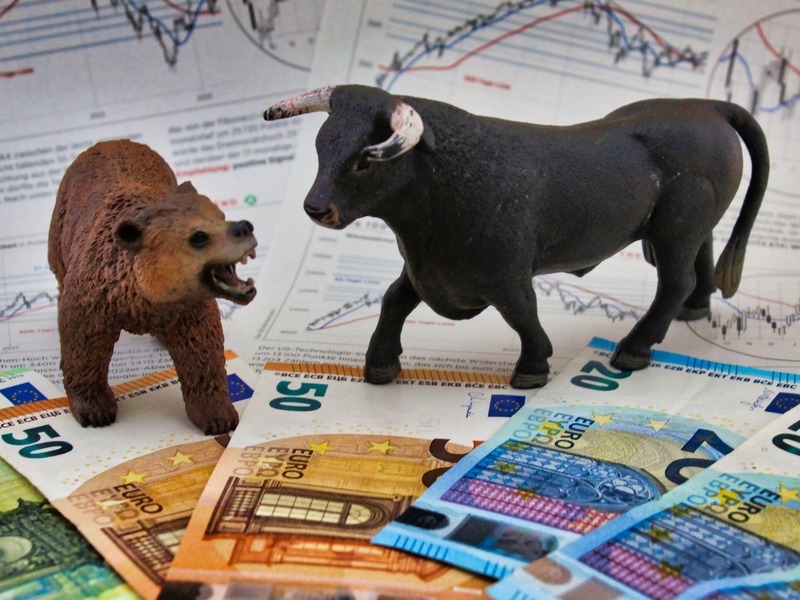
Get top recommendations for free. Benefit from expert knowledge. Sign up now!
Vibe Check: Ethereum is moving with serious energy, but the data is messy and the narratives are fighting each other. Because we cannot verify today's exact timestamp from live sources, we're in SAFE MODE: no hard numbers, only the brutal truth in words. Think powerful swings, aggressive wicks, and dominance battles across the whole crypto market.
Want to see what people are saying? Here are the real opinions:
- Watch uncensored Ethereum price predictions on YouTube (bulls vs. bears in real time)
- Scroll fresh Instagram charts and reels on the latest Ethereum news
- Swipe through viral TikTok Ethereum trading setups and hype clips
The Narrative: Ethereum right now is pure contradiction, and that's exactly why it's dangerous and exciting.
On one side, you've got the tech flex:
- Layer-2s (Arbitrum, Optimism, Base, zkSync, Scroll) are going insane with activity. Transactions on these chains are flooding in, while Mainnet increasingly acts like the final boss settlement layer. Gas on L2 is often tiny compared to Mainnet, and that's onboarding a new wave of on-chain users who would never touch raw Mainnet fees.
- DeFi is quietly rebuilding with DEXs, lending markets, restaking protocols, and yield strategies migrating to L2 to avoid insane gas. The meta now: do the complex degen moves on L2, then settle big value or long-term positions on Mainnet.
- Base (the Coinbase-backed L2) is a huge culture and liquidity magnet, pulling in normies via centralized exchange funnels and then pushing them on-chain. This is exactly what the Ethereum ecosystem needed: a mainstream ramp straight into smart contracts and DeFi.
But there's a dark side:
- Mainnet revenue is in a weird spot. With so much volume moving to L2s, raw fee income on L1 can feel weaker in certain periods. That means fewer fees burned, more volatility in how “ultrasound” ETH actually behaves. When usage spikes, gas fees explode and burn turns aggressive; when activity chills, the burn calms down and ETH feels more “normal.”
- Competing chains like Solana and others are still farming attention with cheap fees and high TPS marketing. The narrative war is live: speed and low cost vs. Ethereum's security, decentralization, and credible roadmap.
- Regulatory fog around ETH (security vs. commodity debates, ETF approvals, staking scrutiny) keeps big institutions cautious even while they clearly want exposure.
On the news side, outlets like CoinDesk and Cointelegraph are circling the same themes:
- Layer-2 scaling wars: Arbitrum airdrop season, Optimism ecosystem grants, Base growth, and zk-rollup adoption. Everyone is racing to become the default home for DeFi and on-chain culture on top of Ethereum.
- Ethereum ETFs & institutional flows: Headlines about spot and futures ETFs, their volume, and whether they truly unlock "wall of money" flows, or just let boomers short your bags with clean exposure.
- Vitalik and the roadmap: Verkle trees, state expiry, rollup-centric future, and upgrades like Pectra designed to make Ethereum leaner, faster, and easier for validators and users.
- Regulation and staking risk: Centralized staking services, restaking protocols, and the question of whether the SEC or other regulators treat staked ETH and yield products like securities.
Meanwhile, social sentiment is split:
- YouTube: Long-form traders argue whether ETH is a sleeping giant about to outperform Bitcoin, or a liquidity trap where every pump is an exit for big players.
- Instagram: Chart screenshots show aggressive volatility, big diagonal trendlines, and "last chance before breakout" narratives all over stories and reels.
- TikTok: Short clips push leverage strategies, "100x ETH altcoins" and "easy money with L2 farming" — classic top-of-cycle style energy, even if the market isn't fully euphoric yet.
Conclusion of the narrative vibe: Ethereum isn't dying. It's just shifting from a pure "speculative L1 casino" into a complex, multi-layer financial and infrastructure stack — and that evolution is exactly where traders either print or get rekt.
Deep Dive Analysis: Gas Fees, Burn Rate, ETF Flows & the Real Risk
1. Gas Fees: From Pain to Power
Gas fees are Ethereum's biggest FUD and its strongest flex at the same time.
- When the market heats up, gas fees explode. Retail complains, Twitter rages, but from a fundamentals perspective this is extremely bullish: high fees = high demand for blockspace = more ETH burned.
- When activity cools, gas fees drop to more manageable levels, but so does the burn intensity. So the narrative flips: "Is ETH really ultrasound money if the burn isn't constant?"
- Layer-2s change the game: users do most of the transactions cheaply on L2, while L2s periodically settle huge batches of data to Ethereum. That settlement still generates fees on L1, just more intermittently and in larger chunks.
The meta shift: Ethereum Mainnet no longer needs to serve every little transfer. It just needs to be the most secure, neutral, credibly decentralized settlement layer. The real economy moves to L2; the value crystallization stays on L1.
2. Ultrasound Money: Burn vs Issuance
The “ultrasound money” thesis is simple on paper, brutal in practice:
- Ethereum pays validators for securing the chain = issuance.
- Ethereum burns a portion of transaction fees via EIP-1559 = burn.
- If burn > issuance over time, ETH becomes net deflationary. If burn < issuance, ETH is slightly inflationary but still far leaner than pre-merge days.
What matters for traders is not a perfectly deflationary curve every single day, but the long-term direction:
- High usage cycles: DeFi seasons, NFT mania, memecoin runs, L2 adoption spikes – these periods often push burn aggressively, effectively shrinking ETH supply relative to demand.
- Low usage cycles: Choppy sideways action, low on-chain volumes – less burn, more modest supply dynamics. In these windows, price is more narrative-driven and macro-driven than on-chain-burn-driven.
The risk: if Ethereum fails to maintain strong demand for blockspace while competitors offer cheaper and faster experiences, the burn narrative weakens. Ultrasound money becomes just "pretty good money." Bulls are betting that L2 + DeFi + institutional adoption will keep demand strong enough for the burn thesis to matter long term.
3. ETFs, Institutions & the Macro Trap
Institutional adoption is a double-edged sword.
- Spot and futures ETFs make it easier for traditional funds, family offices, and boomers to get direct or synthetically wrapped ETH exposure. That opens up serious capital doors.
- But ETFs also make it easier to short and hedge ETH. Instead of aping into spot on-chain, big players can take neat, regulated positions with tight risk controls. That can cap euphoric blow-offs and create sharp "fake-out" moves that liquidate leveraged retail.
- Macro conditions (rates, inflation, liquidity) still run the show. When the Fed is tight and risk assets are under pressure, ETH becomes a high-beta tech asset again. When liquidity floods back, ETH can outperform as a levered bet on Web3 infrastructure.
Right now, the macro narrative is a tug-of-war:
- Institutions want yield (staking, DeFi, restaking) and exposure to programmable money.
- Regulators want control and clarity, which slows the pace of institutional allocation.
- Retail wants fast gains without reading whitepapers, which leads them straight into over-levered positions, liquidation cascades, and rekt zones.
Translation: Ethereum is increasingly institution-friendly, but the path is choppy. Every new ETF headline or regulatory comment can trigger aggressive moves as algos and whales reposition.
4. The Future: Verkle Trees, Pectra & the Rollup-Centric Endgame
This is where the long-term conviction either gets locked in or falls apart.
Verkle Trees are a technical upgrade aimed at massively improving how Ethereum stores and verifies its state. In simple trader language:
- They make it way more efficient for validators and clients to prove what the state of Ethereum is without needing to store everything locally.
- That reduces hardware requirements for full participation, which supports decentralization and makes running nodes more lightweight.
- More decentralization = more credible neutrality = stronger long-term premium for ETH as the "internet settlement asset."
Pectra (a future upgrade combining ideas from Prague + Electra) aims to push usability, efficiency, and validator UX forward:
- Potential improvements to account abstraction style features, making smart contract wallets more powerful and user-friendly.
- Better tools for validators and stakers, reducing complexity and improving capital efficiency for securing the network.
- Further alignment with the rollup-centric roadmap: L1 as the secure base, with L2s taking the UX front stage.
The core thesis: Ethereum is not trying to be the fastest meme casino L1. It wants to be the base layer of global finance and on-chain infrastructure, with L2s acting as the user interface.
Key Levels & Sentiment Check
- Key Levels: Because we're in SAFE MODE and can't lock in today's exact numbers, forget precise dollar lines. Think in key zones instead: one big support zone where dip buyers historically step in aggressively, one heavy resistance zone where rallies often stall and distribution kicks in, and a mid-range chop zone where liquidity hunts both sides. Watch how ETH behaves when it revisits previous breakout areas or prior liquidation clusters — that's where the real battle between bulls and bears is decided.
- Sentiment: Whales right now look split. On-chain data and order books often show stealth accumulation during periods of boredom, with big bids sitting below current price, while sudden spikes see heavy distribution as smart money offloads into FOMO. Social sentiment oscillates between "ETH is boring, I'm going to memecoins" and "ETH is the only serious long-term play." Historically, that kind of apathy-then-panic sequence has been a good breeding ground for big directional moves.
Verdict: Is Ethereum About To Betray Its Diamond Hands?
Here's the raw, no-fluff breakdown.
Bullish Forces:
- Layer-2 growth is insane, pulling real users on-chain and positioning Ethereum as the settlement backbone of Web3.
- The ultrasound money thesis may wobble short term, but structurally ETH is still one of the hardest assets in crypto with a credible burn + low issuance model.
- Institutional adoption through ETFs and regulated products is slowly turning ETH into a macro asset, not just a degen token.
- Roadmap upgrades like Verkle trees and Pectra are not hype marketing – they are concrete steps toward scalability, decentralization, and usability.
Bearish / Risk Factors:
- Fee volatility and L2 migration can make Mainnet look weaker in the short run, giving rival chains room to push FUD and grab mindshare.
- Regulatory pressure on staking, DeFi, and centralized services can spook big money and attack ETH's yield narrative.
- Macro shocks can trigger violent drawdowns where leveraged traders get obliterated, regardless of how clean the long-term thesis looks.
- Retail chasing L2 airdrops, memecoins, and leverage can create pockets of speculative excess that end in brutal unwinds.
The play, if you're thinking like a professional and not like exit liquidity, is simple:
- Treat Ethereum less like a short-term lottery ticket and more like core infrastructure exposure in the crypto stack.
- Respect the volatility. ETH can and will move in ways designed to liquidate the most crowded trade. Avoid perma-leverage and manage position size so you don't get rekt on a single wick.
- Watch L2 metrics, on-chain activity, and ETF flows, not just the daily candle. That's where the real signal is.
- Anchor your thesis on the roadmap: if Vitalik and the devs keep shipping Verkle trees, Pectra, and a healthy rollup ecosystem, the long-term WAGMI narrative is intact.
Is Ethereum about to betray its diamond hands? In the short term, absolutely possible — this market feeds on emotional traders. But over the long term, if Ethereum continues to lock in its role as the neutral, scalable settlement layer of the internet, walking away from it entirely might be the real betrayal.
If you choose to play this monster, do it with a plan, not just vibes. Protect your capital, respect the risk, and remember: surviving the volatility is how you stay around long enough to catch the next legendary ETH cycle.
Ignore the warning & trade Ethereum anyway
Risk Warning: Financial instruments, especially Crypto CFDs, are highly speculative and carry a high risk of losing money rapidly due to leverage. You should consider whether you understand how these instruments work and whether you can afford to take the high risk of losing your money. This content is for informational purposes only and does not constitute investment advice.
Die Kurse spielen verrückt – oder folgen sie nur Mustern, die du noch nicht kennst?
Emotionale Kurzschlussreaktionen auf unruhige Märkte kosten dich bares Geld. Vertraue bei deiner Geldanlage stattdessen auf kühle Analysen und harte Fakten. Seit 2005 navigiert 'trading-notes' Anleger mit präzisen Handlungsempfehlungen sicher durch jede Marktphase. Hol dir dreimal pro Woche unaufgeregte Experten-Strategien in dein Postfach.
100% kostenlos. 100% Expertenwissen. Jetzt abonnieren.


