
Slipknot 2026: Tours, Lineup Shocks & Next Era
Published on 02/14/2026 at 17:36 | Editorial responsibility: Rafael Müller, Editor-in-Chief AD HOC NEWS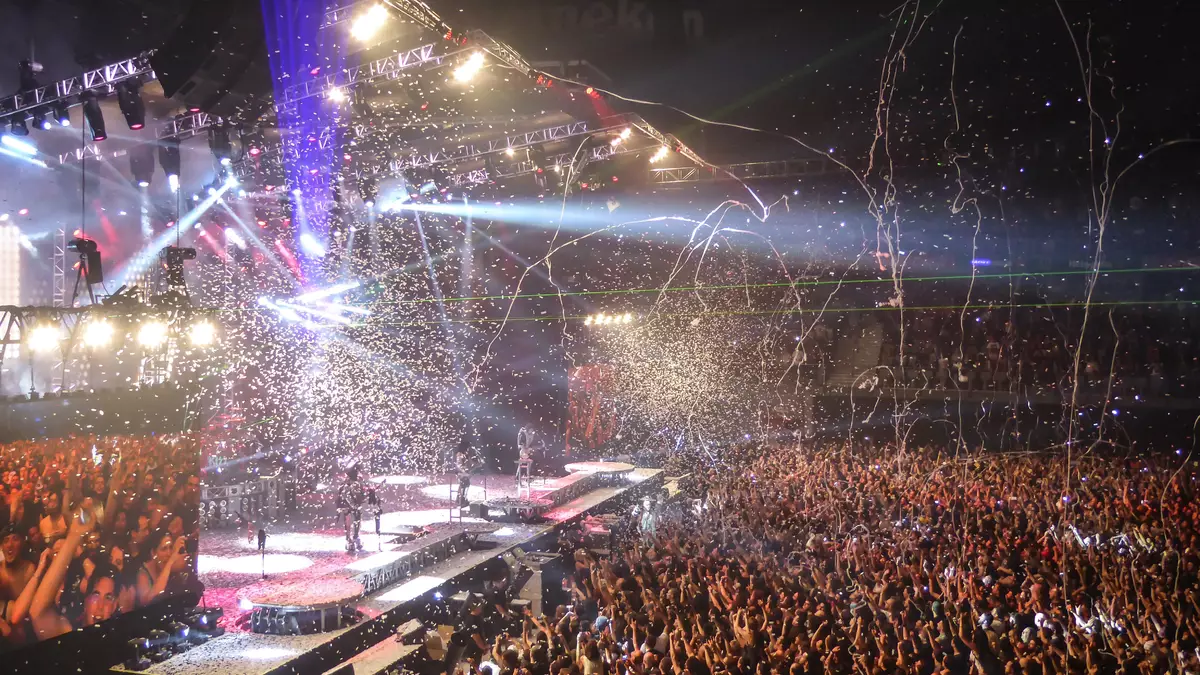
If it feels like the whole metal internet is quietly vibrating right now, you're not imagining it. Every time Slipknot breathe, change a mask, or wipe their socials, the fandom goes into full detective mode. With tours, festival dates, and constant whispers about their next chapter, 2026 is already shaping up to be another wild year in the Knotverse.
Before you start panic-refreshing every fan page you follow, make sure you've bookmarked the band's official hub for anything live-related:
See the latest official Slipknot tour & festival dates
Whether you're a Day One maggot from the self-titled era or you discovered them through TikTok edits of "Duality," the questions are the same: Where are Slipknot playing next? What does the setlist look like now? And what does this new era actually sound and feel like up close?
The Backstory: Breaking News in Detail
Slipknot rarely move quietly. Over the last few years, the band have juggled lineup changes, a new phase of mask aesthetics, and a touring schedule that keeps them parked near the top of metal festival posters worldwide. Even when there isn't a brand new studio album announced on a given day, the news cycle around them never really slows down.
What's happening right now sits on top of a pile of recent shifts. In the early 2020s they closed out one label era, hinted heavily at more experimental music, and cycled through personnel changes that fans are still unpacking. In interviews with big outlets like US rock and metal magazines, core members have talked about feeling "reborn" creatively, hinting that the band refuses to settle into legacy-act autopilot. The recurring theme: Slipknot aren't interested in just touring the hits and cashing in. They want to keep pushing.
That mindset spills directly into their touring and festival plans. Any time a new batch of dates leaks or gets announced, fans immediately start trying to decode the strategy. Are they lining up a full world tour, or doing a festival-heavy victory lap? Is this a transition period toward a new era, or the start of a farewell stretch many are afraid to even say out loud?
Recent tours have shown a pretty clear pattern: the US and UK remain priority territories, with Europe getting heavy festival love and stadium-size crowds, while South America continues to deliver some of the loudest, most intense audiences on earth. For US and UK fans especially, there's an expectation now that if Slipknot are active, they're going to show up in your time zone sooner rather than later.
Behind the scenes, there's also the reality that the band is older, the songs are physical, and the shows are still punishingly intense. In multiple recent interviews, members have admitted that the way they tour has to adapt: smarter routing, better pacing, more thought about production and stamina. That doesn't mean they're softening the impact; it means they're trying to make sure they can still deliver that impact at full force.
For fans, the implication is pretty simple: every new tour leg and festival appearance matters more than ever. When a new run of dates pops up on the official site or a festival poster drops with Slipknot's logo plastered across the top line, it's not just another show. It feels like another chapter in a band history that's slowly, visibly moving into a mature but still feral phase.
Layer onto that the constant low-key rumor cycle about new music: members talking about leftover material, experimental sessions, and side projects that may or may not bleed back into Slipknot proper. When they step on stage now, everyone is listening for clues. Different intro samples. Tweaked arrangements. A deep-cut resurrection. Anything that hints at where the Knots are heading.
So as you scan fresh event listings and try to budget for tickets, travel, and a new era of merch, remember: this isn't just "Slipknot are touring again." This is a massively influential band trying to write their next move in real time, and every show is a live update.
The Setlist & Show: What to Expect
If you've never seen Slipknot live, the first thing to understand is that "concert" barely covers it. It's a physical assault, a massive theater piece, and a nostalgia trip all at once. And even though the band tweak things every cycle, certain pillars keep showing up in recent setlists.
Across the last runs, the typical show has opened with a blast of era-defining tracks: think "People = Shit" or "(sic)" used as a statement of intent, or "Unsainted" and "The Dying Song" flying the flag for the newer material. Those openers do two important things: they reassure older fans that the chaos is still fully intact, and they flex the fact that Slipknot can still write massive, chant-along hooks decades into their career.
From there, the set tends to ricochet across eras. You'll almost always hear "Wait and Bleed" and "Surfacing," because the self-titled album is sacred ground for maggots. "Duality" remains the communal scream moment, the track where even the casuals in the back are yelling "I push my fingers into my eyes" like a ritual. "Psychosocial" is another modern classic that has basically turned into a global metal anthem, its stomp built for arenas and festivals.
Recent tours have also leaned hard on the Iowa and Vol. 3 eras: "Disasterpiece," "Left Behind," "Before I Forget" and "Vermilion" cycle in and out, often adjusted depending on country and festival vs. headline set. Deeper cuts like "Eyeless" or "My Plague" show up as fan-service grenades, the kind of songs that ignite hardcore pockets of the crowd.
The newer material hasn't been sidelined either. Tracks from their more recent albums — like "Nero Forte," "Solway Firth," or "The Chapeltown Rag" — have earned their place as modern set staples. Fans who've seen multiple tours in the last decade point out how seamlessly these recent songs sit next to the classics, which is a big reason Slipknot don't feel like a museum piece the way some '90s and 2000s bands do.
Atmosphere-wise, expect sensory overload from the second the house lights drop. Sirens, distorted samples, and creepy interludes set the tone before the band even appears. The percussion rigs still tower on either side of the stage, and the rotating drum platforms, pyrotechnics, and signature light show turn the whole thing into a haunted industrial circus.
The pit is its own ecosystem. Longtime maggots know the drill: walls of death when a fast song drops, circle pits during "Custer" or "Spit It Out," and that iconic "everybody down" command when it's time to jump. If you're heading into the floor for the first time, you'll want good shoes, a plan, and at least one friend who knows how to spot bodies coming over the barricade.
Vocally, there's always a lot of attention on Corey Taylor. Recent shows have demonstrated that he's adapted smartly, leaning into phrasing and power instead of just going full throat the entire night. Fans have noticed subtle rearrangements of certain lines and harmonies, a studio-level attention to detail that still leaves room for spontaneous, raw moments. The contrast between a whispered verse in "Snuff" and a scream-drenched chorus in "People = Shit" hits harder now that everyone knows how long he's been doing this.
Support acts on recent tours have usually hit a similar lane: modern heavy bands that build a bridge between younger metalcore/post-hardcore scenes and Slipknot's older audience. Prices vary wildly by region and venue size, but fans in the US and UK have been reporting typical arena-level ranges: cheaper seats for upper tiers, mid-range for general admission floor, and premium pricing for VIP or early-entry packages. If you're catching them at a festival, factor in the full ticket price and remember you're basically paying for a full day (or weekend) where Slipknot just happen to be the chaos at the center.
What the web is saying:
Rumor Mill: What Fans Are Speculating
The Slipknot rumor engine never sleeps, and right now it's working overtime. Scroll through Reddit threads, Discord servers, or TikTok comment sections and you'll see the same themes looping again and again: line-up stability, new music timing, and whether this "next era" hints at a long goodbye or an unexpected reinvention.
On Reddit, fans love to dissect every tiny detail from recent shows: which songs dropped out of the set, whether certain samples or intros are new, and which member seemed unusually front-and-center. One popular theory floating around is that the band are quietly "test-driving" arrangements that might end up on a future live release or reimagined studio project. People point to slightly extended outros, new transitions between classics, and subtle tempo shifts as evidence.
Another hot topic is masks and visuals. Every time a new mask era arrives, Slipknot essentially resets their entire visual identity. Fans on TikTok have been slowing down live clips frame-by-frame to compare details, arguing over symbolic meanings, possible callbacks to old eras, and whether the stripped-down or more theatrical looks signal where the music is going. To outsiders, this can look like over-analysis; to maggots, this is just how fandom works.
There's also the never-ending debate about ticket prices. On social feeds, you'll see two clashing narratives: one side frustrated about dynamic pricing and resale, the other side insisting that for a production this big, the primary prices are still fair compared to a lot of pop and rock tours. Some fans have even started sharing spreadsheets tracking average prices per city, trying to figure out which markets are the most affordable or which venues seem to treat fans better.
Festival lineups generate their own wave of theories. Any time Slipknot are announced for a major European or UK festival, the comments instantly fill with questions: "Is this the only UK show?" "Are they saving something special for this set?" "If they're headlining here, does that mean a full European run is locked?" People comb through gaps in the calendar to guess where off-date headline shows might land.
On the music side, there's ongoing speculation about how heavy or experimental the next big release will be. Clips of more melodic moments from recent albums get stitched next to savage early tracks like "Eeyore" or "Get This," with captions like "Which Slipknot are you hoping shows up next?" The community seems split in a healthy way: some want a full return to unhinged brutality, others love the balance of melody, groove, and chaos they've settled into more recently.
One more subtle but important rumor thread: longevity. Fans are asking openly now how long Slipknot can keep this level of intensity going. That doesn't mean people expect them to vanish tomorrow, but every big tour announcement sparks comments like "I'm not missing this run; you never know how many are left." The emotional weight of that thought is starting to show in fan behavior: more people traveling to multiple shows, more meetups organized online, more emphasis on "If you can go, just go."
Put simply, the vibe in 2026 is this: Slipknot feel like a band in motion, not on repeat. And the fandom is right there with them, trying to read every sign, crack every code, and make sure they're in the room when the next big shift happens.
Key Dates & Facts at a Glance
Here's a quick, fan-focused snapshot to keep handy as you stalk the event listings and plan your next Slipknot night out.
| Type | Region | Detail | Why It Matters |
|---|---|---|---|
| Live Shows | Global (US/UK/EU focus) | Official dates, venues, and tickets listed on the band's events page | The only place you should treat as definitive for current and future Slipknot gigs |
| Headline Tours | US / UK / Europe | Recent years have seen arena and festival-capacity headline runs in these regions | If you're in these markets, odds are high you'll see new dates when cycles ramp up |
| Festival Slots | Europe / UK / South America | Slipknot frequently appear as top-line headliners at major rock and metal festivals | Biggest production setups, shorter but concentrated "all killer" setlists |
| Classic Set Staples | Global | "Duality," "Psychosocial," "Wait and Bleed," "Surfacing" often appear most nights | If it's your first show, expect these as anchoring moments in the set |
| Recent-Era Live Regulars | Global | Songs like "Unsainted," "Nero Forte," "The Dying Song" and "The Chapeltown Rag" | Show how newer records stand shoulder-to-shoulder with the classics |
| Ticket Levels | Varies by city | Upper-tier seats, floor GA, VIP upgrades, and festival passes | Plan early: GA and mid-priced seats usually go first, then VIP, then cheapest corners |
| Fan Age Range | Global | Teenagers discovering the band now through streaming, plus original late-'90s fans | Expect a mixed generation pit: parents and kids, veteran maggots and new recruits |
| Official Info | Online | Band site, verified socials, and major promoters | Best way to avoid scams, outdated dates, or fake event listings |
FAQ: Everything You Need to Know About Slipknot
This is the part where we answer the questions you're probably already typing into search, group chats, or Reddit threads.
Who are Slipknot, really, in 2026?
Slipknot are one of the most influential heavy bands of the last 25 years, full stop. They started as a masked, ultra-chaotic metal collective from Iowa and grew into a global headliner with real chart power and a fiercely loyal fanbase that calls itself "maggots." In 2026, they're in a mature phase but still operating like a hungry band: changing masks, evolving the live show, and refusing to be boxed in as a pure nostalgia act.
Lineup-wise, they've weathered losses, departures, and new additions, but the core identity — masks, nine-piece intensity, and a mix of brutality and melody — remains intact. If you last paid attention around the early 2000s, you'd still recognize the spirit, even if some faces under the masks have changed.
What kind of music do Slipknot play now?
At their base, Slipknot still sit in the extreme metal space: downtuned riffs, blast beats, relentless percussion, and harsh vocals. But across their discography they've woven in melody, groove, atmosphere, and experimental elements. Recent albums mix the savagery of early records with more dynamic songwriting, clean vocal sections, and eerie, cinematic interludes.
In the current era, the "Slipknot sound" you hear live draws from everything: the frantic attack of tracks like "People = Shit" and "(sic)," the sing-along pull of "Duality" and "Before I Forget," and the modern, expansive feel of newer cuts. If you're a fan of heavy music that still cares about hooks and mood, this mix is why the band keeps attracting younger listeners who weren't even born when the self-titled album dropped.
Where can I find official Slipknot tour dates and tickets?
The safest, cleanest answer: check the official events page and then follow the links out to verified ticket partners. That page is the band's central "source of truth" where you can see which festivals they're playing, which cities have headline shows, and what's actually confirmed vs. just rumored on social media and fan forums.
From there, follow through to official ticket sellers — typically big-name primary platforms in your region. Avoid random third-party resellers unless you've checked that the show is genuinely sold out and you're prepared for higher prices and the usual risks. Fake listings and scalpers are everywhere, especially when a band with Slipknot's draw announces a limited run or festival appearance.
When is the best time to buy Slipknot tickets?
For standard arena or amphitheater shows, the best time is usually as close to the on-sale time as you can manage. Fan presales and cardholder presales often unlock earlier access; signing up for mailing lists and keeping an eye on official socials can give you a jump on those windows.
If you're targeting GA floor tickets, assume they'll go quickly in big markets like Los Angeles, New York, London, or major European capitals. For seated tickets, mid-price sections often vanish early, leaving you with either premium close-up seats or budget high-up options. For festivals, early-bird passes can be significantly cheaper, but you'll have to commit before full day-by-day lineups are revealed.
Some fans gamble on last-minute tickets dropping closer to the show date, but for Slipknot, that's risky — especially for one-off festival sets or smaller city shows with fewer seats. If this might be your only chance to see them for a while, buy earlier rather than later.
Why are Slipknot shows considered a "must-see" even if you're not a hardcore metal fan?
Because they're not just loud; they're immersive. The production — lights, pyro, staging, the sheer visual impact of nine masked figures tearing up the stage — is closer to a dark theater piece than a standard rock show. The audience energy is also on another level: you're surrounded by people who know every lyric, every breakdown, every cue to jump or chant.
Even if you spend most of the night in the stands instead of the pit, it's an experience that sticks with you. There's a reason so many people come out of their first Slipknot show saying some version of "I didn't even know all the songs, but that was insane."
What should I wear and bring to a Slipknot concert?
Think practical, then expressive. Comfortable shoes are non-negotiable, especially if you're going onto the floor. You'll be standing, jumping, or at the very least bracing yourself as the crowd moves. Black clothing is the unofficial uniform, band tees are everywhere, and you'll usually see a few people in masks or boiler suits paying direct tribute to the band.
Leave anything you wouldn't want sweaty or lost at home. Check your venue's bag policy; many major arenas now allow only small, clear bags. Ear protection is smart — even for metal veterans — because Slipknot run loud. Hydration is key, especially for summer outdoor shows or packed indoor pits. And charge your phone if you plan on filming, but don't spend the whole night behind a screen; the real magic is in the moment.
Why does Slipknot still matter to Gen Z and younger fans?
Because everything that made them shocking and powerful in the late '90s still hits in 2026, just in a different context. Under the masks, gore, and chaos, Slipknot songs have always dealt with alienation, anger, mental health, self-sabotage, and survival — themes that resonate heavily with younger listeners navigating an anxious, always-online world.
On top of that, the band's catalog is built for the way people consume music now. Tracks blow up on TikTok audio, live clips go viral on YouTube and Reels, and algorithm-driven platforms regularly push "Duality" or "Psychosocial" into curated metal and rock playlists. Younger fans discover the hits first, then fall down the rabbit hole of full albums, live performances, and lore.
So when Slipknot announce new shows or hint at fresh music, it's not just older fans reliving high school. It's a cross-generational moment — mosh pits where kids who found the band last year are screaming alongside people who've been there since the first masks hit MTV.


