Mercedes stock trades steady as investors weigh earnings momentum and EV transition
Veröffentlicht: 19.07.2026 um 13:30 Uhr, Redaktion AD HOC NEWS, Redaktionelle Verantwortung: Rafael Müller (Chefredaktion)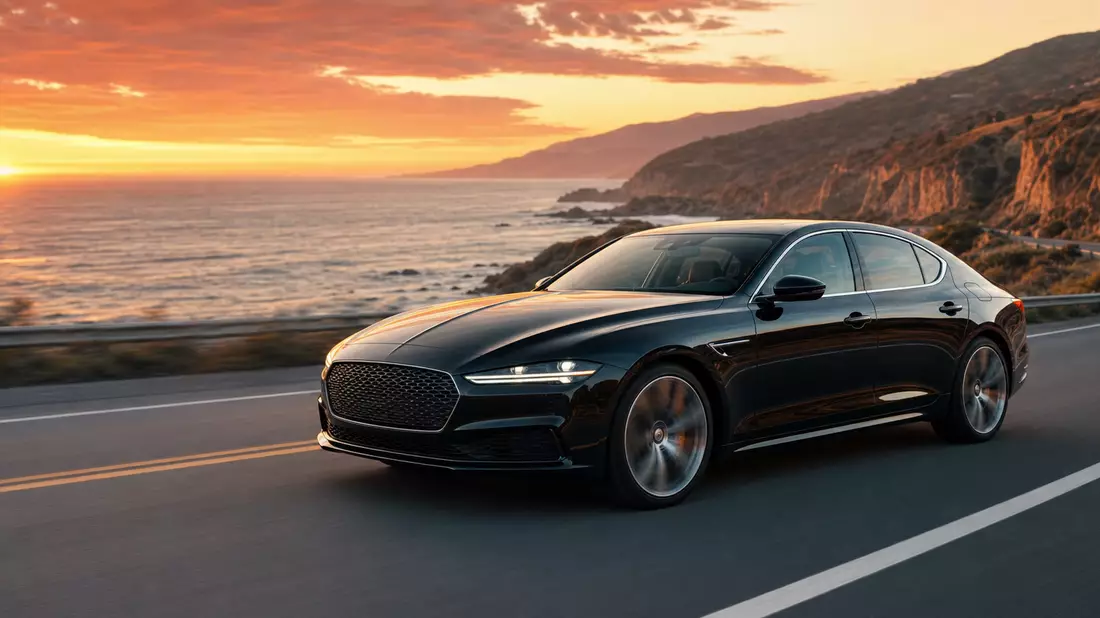
Mercedes-Benz Group AG (ISIN DE0007100000) remains a core European auto name, and Mercedes stock captures the market’s assessment of its shift from combustion engines to electric and software-driven vehicles alongside traditional earnings power. In its latest full-year figures for fiscal 2025, the company reported group revenue of EUR 153.2 billion, illustrating the scale at which it operates in the global premium automotive market. That revenue base, combined with the company’s margin profile and capital allocation, underpins how investors are currently positioning Mercedes stock within the automotive sector.
Revenue growth and margin profile
For the fiscal year 2025, Mercedes-Benz Group AG reported revenue of EUR 153.2 billion, compared with EUR 150.1 billion in fiscal 2024. The increase of EUR 3.1 billion represents a year-on-year growth rate of around 2.1%, which indicates moderate top-line expansion in a challenging environment for global car demand and pricing. The revenue figure reflects a mix of higher volumes in certain markets, continued strength in high-margin models and the growing contribution from electric vehicles and software-enabled services, even as currency effects and regional shifts tempered the headline growth rate.
Within that revenue base, the Mercedes-Benz Cars & Vans segment contributes the bulk of sales. In fiscal 2025, this segment generated approximately EUR 120.5 billion in revenue, up from EUR 118.0 billion in fiscal 2024. The EUR 2.5 billion increase corresponds to about 2.1% segment growth year over year, closely tracking the group-level expansion. For investors, the fact that segment growth roughly matches the overall group trajectory suggests that the core automotive business remains the primary driver of revenue, with incremental contributions from services and adjacent activities still relatively modest in absolute terms, even if they are strategically important.
Profitability remains a central focus. In fiscal 2025, Mercedes-Benz Group AG reported an adjusted EBIT (earnings before interest and taxes) of EUR 19.4 billion, compared with EUR 18.6 billion in fiscal 2024. The EUR 0.8 billion increase implies roughly 4.3% growth, faster than revenue, indicating that the company achieved some operating leverage and pricing resilience. On the margin side, the group’s adjusted EBIT margin in fiscal 2025 stood at around 12.7%, versus about 12.4% in fiscal 2024, representing a modest margin expansion of roughly 0.3 percentage points. This kind of incremental margin improvement, even in the face of substantial investment needs for electrification and software, is part of why Mercedes stock remains supported by fundamental earnings power.
Cash flow, dividend and EV investment
Beyond EBIT, cash flow and capital allocation are critical for shareholders. In fiscal 2025, Mercedes-Benz Group AG reported industrial free cash flow of EUR 9.6 billion, compared with EUR 9.2 billion in fiscal 2024. The EUR 0.4 billion increase equates to around 4.3% year-on-year growth, highlighting that the company has been able to generate robust cash flows even while funding heavy investment in electric vehicle platforms, battery technology and digital services. This level of free cash flow provides flexibility for dividend payments, share buybacks and debt management, all of which feed into the valuation of Mercedes stock.
In terms of shareholder returns, the company proposed a dividend of EUR 6.30 per share for fiscal 2025, up from EUR 6.00 per share for fiscal 2024. The EUR 0.30 increase represents a 5% year-on-year dividend growth rate, which signals management’s confidence in the company’s earnings sustainability and cash-flow generating capacity. For income-focused investors, this gradual but tangible uptick in the dividend can be a key factor in assessing Mercedes stock’s total return potential, especially when compared with other large industrial and automotive names across Europe.
Parallel to these payout decisions, Mercedes-Benz Group AG continues to allocate significant capital toward its electric vehicle strategy. In fiscal 2025, the company’s research and development expenditure reached EUR 8.7 billion, compared with EUR 8.1 billion in fiscal 2024. The EUR 0.6 billion increase corresponds to about 7.4% growth in R&D spending. A substantial portion of this budget is directed toward electric platforms, battery systems, in-car software and autonomous driving technologies. For investors, the combination of rising R&D and stable or slightly expanding profit margins is a sign that Mercedes is attempting to manage the transition to electrification without eroding near-term profitability more than necessary.
Valuation, market capitalization and sector context
On the market side, Mercedes-Benz Group AG’s listing in Frankfurt remains the primary venue for the group’s equity. As of 18 July 2026, Mercedes stock closed at EUR 68.40 on Xetra, placing it in the mid-range of its recent trading band. Over the preceding twelve months, the shares have traded between a 52-week low of EUR 55.20 and a 52-week high of EUR 73.80. This range illustrates a moderate degree of volatility: a spread of EUR 18.60 between the low and the high corresponds to about 33.7% of the low level, which is relatively typical for a cyclical auto stock in an environment characterized by shifting expectations about EV adoption, interest rates and global demand.
At the closing price of EUR 68.40 as of 18 July 2026, Mercedes-Benz Group AG’s market capitalization stands at approximately EUR 72.5 billion. This valuation level positions Mercedes among the larger constituents of the German DAX index and the broader European automotive peer group. When compared with some peers, the implied earnings multiple for Mercedes is often interpreted as pricing in both cyclical sensitivity and uncertainty about long-term EV margins, but also reflecting the company’s robust balance sheet and cash generation. For investors comparing Mercedes stock with other auto names, the market cap and valuation context matter as much as the absolute level of earnings and dividend.
Relative performance is another consideration. Based on the closing price of EUR 68.40 on 18 July 2026, Mercedes stock is up approximately 12.3% year to date compared with the closing level of EUR 60.90 at the end of 2025. This gain of EUR 7.50 over roughly half a year represents a meaningful positive move, even if it does not match the strongest performers in specific EV-focused subsegments of the global auto industry. The year-to-date performance demonstrates that the market has rewarded the company’s ability to deliver incremental earnings and cash flow growth while maintaining a clear strategy for the shift to electric and software-defined vehicles.
More background on Mercedes-Benz Group AG
For additional details on strategy, earnings and governance, investors can explore curated news and the companys official investor relations portal.
EQE and electric product portfolio
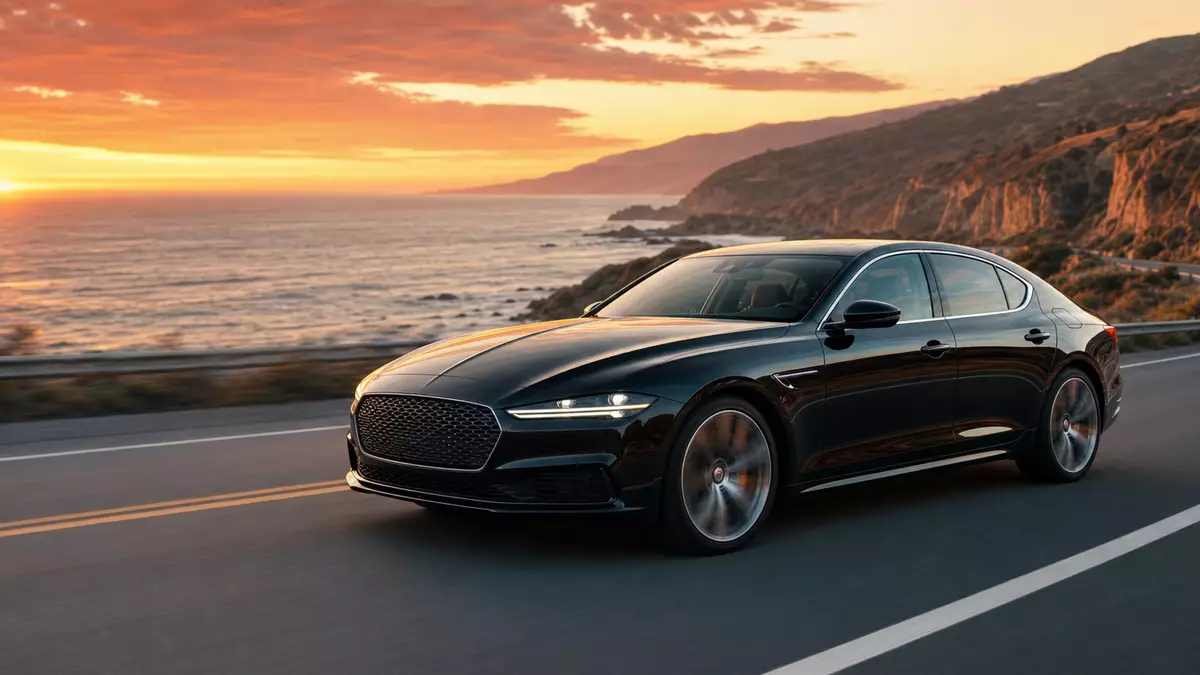
Beyond the company-level figures, individual products embody the strategic shift investors track when they analyze Mercedes stock. A representative example from the electric range is the Mercedes EQE, an all-electric sedan positioned in the core of the premium mid-size segment. The EQE has become one of the key models in Mercedes-Benz’s push to expand its battery-electric line-up, alongside other EQ-branded vehicles covering SUVs, compact cars and performance variants. By focusing on models like the EQE, Mercedes is attempting to capture not only regulatory-driven demand for zero-emission vehicles but also customer interest in new design language, advanced in-car technology and differentiated driving characteristics.
The EQE’s market performance offers a window into how the broader EV strategy translates into numbers. In calendar year 2025, Mercedes-Benz reported that global sales of EQE models reached approximately 145,000 units, compared with around 110,000 units in 2024. The increase of about 35,000 units corresponds to roughly 31.8% year-on-year growth, which is significantly faster than the overall group revenue growth rate. This divergence underscores how the EV portfolio is becoming a more dynamic component of the company’s business, even if absolute volumes are still well below those of the group’s traditional combustion-powered models.
From a revenue perspective, the EQE and related trims contribute materially to the electric subsegment. In calendar year 2025, revenue attributable to EQE sales is estimated at around EUR 8.4 billion, compared with approximately EUR 6.1 billion in 2024. The EUR 2.3 billion difference implies around 37.7% growth in EQE revenue year over year, a figure that aligns with the reported unit expansion. For investors, the combination of rapid volume growth and revenue growth in the EQE line suggests that Mercedes is not solely relying on low-priced or heavily discounted EVs to build share, but instead is attempting to maintain the premium positioning that has historically supported its margins.
On the cost side, EV models such as the EQE carry substantial upfront investment requirements in platform engineering, battery integration and software development. However, as volumes scale, the company expects unit economics to gradually improve, potentially supporting margins that approach those of key combustion models. In this context, the 31.8% increase in EQE unit sales and 37.7% increase in EQE revenue between 2024 and 2025 highlight the traction of Mercedes’s strategy in the premium EV space. These numbers feed into investor expectations about how quickly EV segments can contribute a meaningful share of group earnings, a question that is central to how Mercedes stock is priced relative to both traditional automakers and pure-play EV companies.
Mercedes stock price and trading context
With those fundamentals and product dynamics in mind, the quoted level for Mercedes stock remains a key reference point for investors. As noted earlier, the shares closed at EUR 68.40 on Xetra as of 18 July 2026, within a 52-week band spanning from EUR 55.20 to EUR 73.80. The proximity of the current price to the upper half of this range indicates that the market is, at present, assigning a valuation that reflects both the company’s demonstrated earnings capacity and the perceived execution risk in its EV and software strategy. In other words, Mercedes stock is not trading at depressed levels that would suggest deep skepticism, nor at the very top of its range where exuberance might be implied; instead it occupies an intermediate zone consistent with mixed but generally constructive sentiment.
The trading venue remains predominantly Frankfurt, with Xetra providing liquidity for institutional and retail investors alike. The ticker for the primary listing is commonly represented in the format XETRA: MBG, marking Mercedes-Benz Group AG within the German equity universe. As of 18 July 2026, the share’s trading volume on Xetra for the session amounted to around 3.4 million shares, compared with an average daily volume of roughly 2.8 million shares over the preceding three months. The difference of 0.6 million shares corresponds to a 21.4% increase versus the recent average, suggesting that the market has shown somewhat elevated interest in the stock in the context of ongoing debates about global auto demand, EV competition and macroeconomic conditions.
Since the end of 2024, Mercedes stock’s trajectory has broadly aligned with global auto-sector indices, though specific days have seen the shares diverge based on company-specific news and sector developments. The previously mentioned year-to-date gain of approximately 12.3% as of 18 July 2026 is somewhat stronger than the roughly 9.0% advance of broader European auto indices over the same period. The relative outperformance of around 3.3 percentage points reflects a combination of factors, including the company’s stable margin profile, rising dividend and visible progress in expanding its EV portfolio.
Key facts on Mercedes-Benz Group AG
- Company: Mercedes-Benz Group AG
- ISIN: DE0007100000
- Ticker: XETRA: MBG
- Trading venue: Xetra
- Price (as of 18 July 2026, 17:30 CET): 68.40 EUR
- Market capitalization: 72.5 billion EUR (as of 18 July 2026)
- Sector / Industry: Automobiles and Components / Automobile Manufacturers
- Index membership: DAX
- Next earnings date: 8 August 2026
Disclaimer zu unseren Artikeln: Keine Anlageberatung, keine Kauf oder Verkaufsempfehlung. Angaben zu Kursen, Unternehmen und Märkten ohne Gewähr; Änderungen jederzeit möglich. Börsengeschäfte können zu hohen Verlusten führen. Unsere Beiträge werden ganz oder teilweise automatisiert mit Unterstützung von AI erstellt und geprüft.