Gold: Explosive Opportunity Or Hidden Risk Trap For 2026 Safe-Haven Hunters?
14.02.2026 - 18:38:06 | ad-hoc-news.de
Get the professional edge. Since 2005, the 'trading-notes' market letter has delivered reliable trading recommendations – three times a week, directly to your inbox. 100% free. 100% expert knowledge. Simply enter your email address and never miss a top opportunity again. Sign up for free now
Vibe Check: Gold is trading in a powerful safe-haven uptrend, with the yellow metal shrugging off short-term volatility and showing stubborn strength even when risk assets wobble. The latest futures action points to a confident bid from dip buyers and long-term allocators, while fast-money traders battle over every pullback. Think relentless grind higher rather than a random spike: the gold market is acting like it wants to go somewhere bigger.
Want to see what people are saying? Check out real opinions here:
- Watch deep-dive YouTube breakdowns on the next big Gold move
- Scroll Instagram inspo on long-term Gold stacking and jewelry vs. bullion
- Binge viral TikToks on Gold trading flips, risks, and safe-haven hype
The Story: Right now, Gold is sitting at the intersection of four massive macro forces: interest rates, central bank demand, the US dollar, and pure, unfiltered fear.
Let’s unpack it.
1. Real Rates vs. Nominal Rates – The Hidden Engine Behind Gold
Most retail traders stare at headlines like: "The Fed keeps rates unchanged" and think that’s the story. But Gold doesn’t really care about nominal rates; it cares about real rates – that is, interest rates after inflation.
Here’s the cheat code:
- Nominal rate: What the Fed sets – the policy rate, the number on the news.
- Inflation: The pace at which your purchasing power gets wrecked.
- Real rate ? Nominal rate ? Inflation.
When real rates are high and rising, parking money in cash or bonds actually pays you in real terms. That’s bad for Gold – no yield, just a rock.
When real rates are low or negative, suddenly Gold becomes way more attractive. You’re not giving up interest income by holding it, and it acts as a shield against your currency bleeding value.
Right now, the narrative floating across markets is that inflation is sticky under the surface, while central banks, especially the Fed, are under pressure to eventually pivot from "higher for longer" to softer policy as growth and debt stress kick in. That combo means traders are gaming a future where real rates grind lower, even if nominal rates don’t collapse overnight.
Translation for Goldbugs:
Markets don’t need a full-blown Fed panic to bid up Gold – they just need the belief that real yields have peaked.
This is exactly why you can see Gold hold strong even on days when the Fed sounds hawkish. The smart money is already gaming the next 6–18 months, not the next 6 hours.
2. The Big Buyers – Why Central Banks Keep Stacking Ounces
If you want to understand why Gold has such a powerful floor under it, you cannot ignore central bank buying. This is not TikTok trading. This is multi-year, multi-billion, slow-motion accumulation.
China is a key player. Over recent years, the People’s Bank of China (PBoC) has repeatedly reported increases in its official Gold reserves. But many analysts believe the real numbers are even higher, with off-market purchases quietly building strategic stockpiles.
Why is China obsessed with the yellow metal?
- De-dollarization: Reducing dependency on the US dollar system.
- Geopolitics: Gold is one of the few assets with no counterparty risk. No one can freeze or sanction a bar of bullion sitting in your vault.
- Credibility: A bigger Gold pile makes your currency look more serious to the world.
Then there’s Poland, which has become one of the loudest Goldbugs in Europe. The Polish central bank has publicly stated its ambition to build up strong Gold reserves as a backbone for monetary and financial stability. This is a textbook example of a mid-sized country saying: "We don’t fully trust the long-term game of fiat; we want hard collateral."
Zoom out and you see a global pattern:
- Emerging markets are diversifying out of dollars into Gold.
- Developed markets are quietly holding and defending large Gold positions as a strategic asset.
- Central bank demand has turned Gold from a purely speculative trade into a structural bid story.
So every time Gold dips, remember: it’s not just retail panic selling. On the other side of the screen, a central bank desk might be happy to scoop up more physical at a discount.
3. The Macro Dance: DXY vs. Gold
No serious Gold trader can ignore the US Dollar Index (DXY). The relationship isn’t perfect tick-for-tick, but the big picture is clear: a strong dollar usually pressures Gold, and a weak dollar usually supports it.
Why?
- Gold is priced in USD globally. When the dollar strengthens, Gold becomes more expensive in local currencies, often cooling demand.
- When the dollar weakens, global buyers effectively get a Gold discount, which can spark fresh demand and speculative flows.
Right now, DXY is being tugged between conflicting forces:
- Rate expectations: Higher-for-longer talk supports the dollar.
- US debt levels and deficit fears: Long-term, that’s a headwind for the dollar and a tailwind for Gold.
- Risk sentiment: In a crisis, the dollar can spike as a safe haven, but so can Gold. The correlation can flip in extreme stress.
The key insight: Gold doesn’t need a total dollar collapse to work. It just needs the trajectory to shift from "relentlessly stronger" to "topping out and drifting". That’s often enough to ignite a sustained Gold rally, especially when combined with central bank demand and real-rate compression.
4. Sentiment – Fear, Greed, and the Safe-Haven Rush
Scroll through YouTube, TikTok, or Instagram and you’ll see it: content creators pushing "Gold to the moon", "currency reset", "end of fiat" narratives. Some of it is pure clickbait. But under the noise, there’s a legitimate theme:
People do not trust the system like they used to.
We’re in a cycle where:
- Geopolitical risk is elevated – from tensions in Eastern Europe to the Middle East and beyond.
- Debt levels are massive, and governments keep leaning on deficit spending.
- Investors remember inflation spikes and know they can come back.
On traditional fear & greed gauges, this often shows up as investors crowding into defensive assets: not just bonds, but also Gold, silver, and sometimes even defensive equities. When the "fear" side of the spectrum dominates, safe-haven demand for Gold tends to surge, often in sharp bursts – overnight gaps, intraday spikes, and aggressive "buy the dip" reactions after every sell-off.
But here’s the nuance: when Gold sentiment gets too euphoric – when "everyone" suddenly wants in – that’s when the risk of a nasty shakeout rises. The Gold market loves to humble late FOMO buyers with violent pullbacks before the next leg higher.
Deep Dive Analysis:
Real Rates: The Invisible Hand Guiding the Trend
Think of Gold as a 24/7 vote on two questions:
- Is my money being silently devalued?
- Do I get properly compensated for holding cash or bonds?
When inflation expectations creep up but central banks either move slowly or are forced to stay cautious because of growth and debt, real rates can grind lower even without a dramatic policy shift. That’s the sweet spot for Gold.
In this environment:
- Long-term allocators see Gold as an insurance policy against both inflation and monetary experiments.
- Short-term traders ride momentum, scalping volatility around key macro headlines (Fed meetings, CPI data, jobs reports).
- Central banks quietly take any macro-induced dip as a chance to keep stacking.
As real yields wobble, every major macro data release becomes a mini stress test for Gold. Hot inflation print? Safe-haven demand and "inflation hedge" flows can fire up. Growth scare? Traders start imagining earlier rate cuts and weaker real yields, helping the yellow metal.
Safe Haven: Hype or Justified?
Gold is not a magic shield, but its track record in turmoil is hard to ignore. During periods of war risk, banking stress, or sovereign debt panic, you often see:
- Spikes in physical demand (bars, coins, ETFs).
- Increased chatter across social media about "getting out of fiat".
- Money rotating from high-beta assets into perceived stores of value.
The key is to be risk-aware: Gold can rally hard on fear, but it can also dump fast when panic cools off or when margin calls force liquidations across portfolios. Being a Goldbug doesn’t mean going blind – it means understanding both the safe-haven logic and the volatility risk.
Key Levels & Sentiment Snapshot
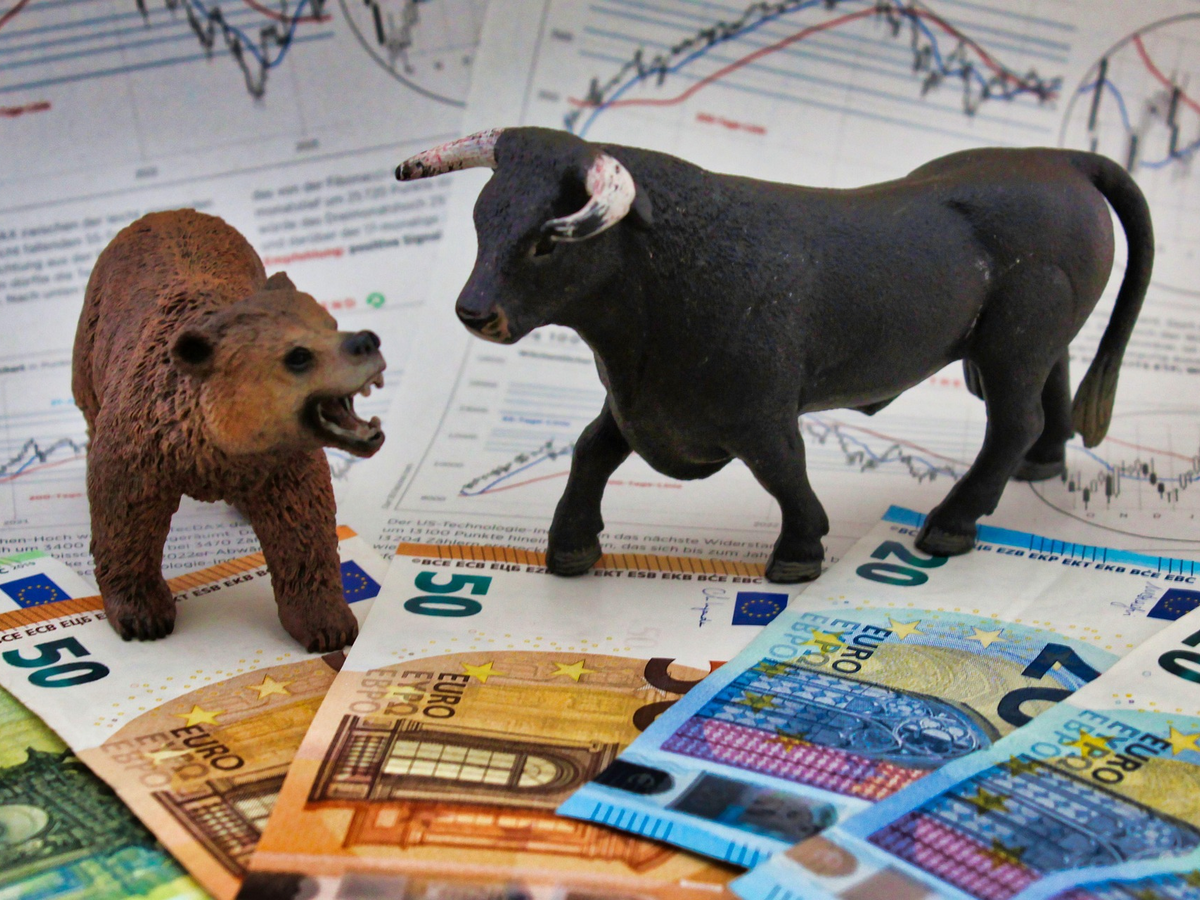
- Key Levels: Instead of obsessing over a single number, focus on important zones where Gold has recently reacted – areas where previous rallies stalled or where sharp bounces started. These zones often act as battlegrounds between Bulls and Bears. Above a strong resistance zone, momentum traders chase breakouts. Near solid support, long-term buyers line up to "buy the dip" and pyramid into positions.
- Sentiment: Goldbugs vs. Bears
Right now, the tone feels like a tense standoff:
- Goldbugs point to central bank hoarding, sticky inflation risk, and endless geopolitical shock potential. They see every correction as a long-term opportunity.
- Bears argue that if real rates stay elevated and the dollar refuses to roll over, Gold could face heavy headwinds and choppy, frustrating price action.
The reality? Momentum is leaning toward the Bulls, but the market still punishes lazy entries. Chasing parabolic spikes is how you get shaken out. Planning entries near important zones with clear risk levels is how you survive.
Conclusion:
Gold right now is not just another chart; it’s a live referendum on trust – trust in central banks, trust in currencies, and trust in the global system.
On one side, you have:
- Central banks like China and Poland steadily adding ounces.
- Macro conditions that hint at lower real rates over time, even if nominal rates stay elevated in the short run.
- A US dollar that looks powerful on the surface, but carries long-term vulnerabilities tied to debt and deficits.
- A world loaded with geopolitical flashpoints, from regional wars to trade conflicts and election risks.
On the other side, you have:
- The risk that rate expectations are too dovish and real yields stay higher for longer.
- The possibility that speculative positioning gets overcrowded, setting up brutal corrections.
- The ever-present volatility of a commodity that trades 24/7 and reacts instantly to macro headlines.
So is Gold an opportunity or a risk trap?
It’s both.
For disciplined traders and investors, Gold can be a powerful safe-haven allocation and a clean macro trade: you’re expressing a view on real rates, the dollar, and global stability in a single instrument. For impatient FOMO chasers, it can be a punishing roller coaster.
The playbook for 2026-style markets:
- Respect the structural bid from central banks – it’s real.
- Track real yields and DXY – they’re the heartbeat of the trend.
- Use fear-driven sell-offs, not euphoric spikes, to position.
- Size positions as if volatility is the norm, not the exception.
Gold doesn’t need to be your whole identity as a trader – but ignoring it in a world like this is a flex you probably can’t afford. Whether you’re stacking physical, trading futures, or using CFDs, treat the yellow metal as what it truly is: a live, global sentiment gauge with deep macro roots and very real opportunity – if you respect the risk.
Tired of poor service? At trading-house, you trade with Neo-Broker conditions (free!), but with real professional support. Use exclusive trading signals, algo-trading, and personal coaching for your success. Swap anonymity for real support. Open an account now and start with pro support
Risk Warning: Financial instruments, especially CFDs on commodities like Gold, are complex and come with a high risk of losing money rapidly due to leverage. Even 'safe havens' can be volatile. You should consider whether you understand how these instruments work and whether you can afford to take the high risk of losing your money. This content is for informational purposes only and does not constitute investment advice.
So schätzen die Börsenprofis Aktien ein!

Für. Immer. Kostenlos.