ERG stock trades steady as renewable margins support earnings
Published on 07/26/2026 at 11:56 | Editorial responsibility: Rafael Müller, Editor-in-Chief AD HOC NEWS
ERG S.p.A. (ISIN IT0001157020) is one of Italy's established renewable energy operators, and ERG stock offers investors exposure to wind and solar power and related infrastructure cash flows. The Genoa-based group has reshaped itself over the past decade, shifting from its traditional oil and refining roots toward a portfolio dominated by onshore and offshore wind and growing solar assets. For investors, the current numbers around revenue growth, EBITDA margins, and leverage are central in assessing how ERG stock aligns with the broader European renewables theme and whether its earnings profile supports a stable dividend.
In the latest reported financial year, ERG generated consolidated revenues in the order of hundreds of millions of euros from its wind, solar, and other renewable operations, underlining the scale it has achieved as an independent power producer. Its core earnings profile is typically measured through EBITDA, which captures operating profitability before interest, tax, depreciation, and amortization, and ERG has aimed to preserve high EBITDA margins in the face of changing power prices and regulatory frameworks. This performance is complemented by cash flows from long-term power purchase agreements (PPAs) and incentive schemes, which can stabilize revenues, but the group must also manage rising operating costs and capital expenditure needs.
Revenue growth and EBITDA margins
ERG’s revenue base in its latest full year reflects a portfolio of predominantly wind generation across Italy and other European markets such as France, Germany, and the United Kingdom, supplemented by solar installations. In recent years, the group has reported revenue growth driven by capacity additions and the consolidation of acquired wind and solar farms. These additions have increased installed capacity over time, supporting higher electricity output and offering the potential for economies of scale. However, revenue performance is also influenced by power prices on wholesale markets and the structure of incentive schemes, which can vary by country and technology.
EBITDA is a key metric for ERG stock because it helps gauge the robustness of its operating margins in renewables. ERG’s EBITDA in its latest reporting period runs into several hundred million euros, reflecting the relatively stable cash generation from long-lived assets. For investors, the comparison of this EBITDA with prior years is important: if EBITDA grows faster than revenue, it suggests improving margins, possibly through cost controls, better asset availability, or favorable power price conditions. If EBITDA growth lags revenue, margin pressure may be emerging, indicating higher operating or maintenance expenses or less favorable market dynamics.
Another important angle is the share of EBITDA contributed by different segments, such as onshore wind, offshore wind, and solar. ERG has expanded its onshore wind footprint over time, but offshore wind and other renewable technologies can offer different risk-return profiles depending on contract structures and capital intensity. A shift in EBITDA contributions between segments can signal strategic changes that may affect ERG stock’s risk profile, such as a move toward more merchant exposure versus contracted revenues.
Debt, cash flow, and guidance
Leverage is a central issue for ERG, as building and acquiring renewable assets is capital intensive and often financed with a mix of project debt and corporate debt. Net financial debt typically reaches into the high hundreds of millions of euros, and investors monitor metrics such as net debt to EBITDA to assess whether leverage remains within comfortable bounds. If net debt grows faster than EBITDA, leverage ratios can rise, potentially limiting financial flexibility or prompting the need for deleveraging actions. Conversely, if EBITDA growth outpaces debt accumulation or if ERG uses disposals to reduce debt, leverage can improve.
Cash flow generation is closely linked to ERG’s ability to service debt and pay dividends. Operating cash flow depends not only on EBITDA but also on working capital movements and taxes. In periods of strong cash generation, ERG can fund a larger share of its capital expenditure internally, reducing reliance on external financing. In less favorable periods, increased borrowing or asset rotations may be necessary to support investment plans. This dynamic influences the sustainability of ERG stock’s dividend policy, as dividends must be balanced against investment needs and leverage objectives.
Guidance provides another lens for understanding ERG’s near-term trajectory. Management typically communicates ranges for expected EBITDA, net profit, and investments for the upcoming year, taking into account known regulatory changes, planned capacity additions, and assumptions about power prices and asset availability. Investors compare actual outcomes with this guidance, and ERG stock can respond positively when reported results fall at the upper end of guidance ranges or negatively when performance undershoots guidance, even if absolute numbers remain robust.
Dividend policy and investor appeal
ERG has historically used dividends to share value creation with shareholders, and its dividend policy is important for investors seeking income from renewables. The dividend per share is calibrated against net profit, cash flow, and leverage, and changes in dividend levels can signal management’s confidence in future earnings or the need to retain more cash for investments and deleveraging. For ERG stock, a stable or gradually rising dividend can strengthen the appeal of the shares, while any cuts or pauses might prompt questions about underlying earnings resilience or capital allocation priorities.
The group’s payout ratio, which measures dividends as a percentage of net profit, offers insight into how much profit is returned to shareholders versus reinvested. A moderate payout ratio allows ERG to maintain investment capacity while providing shareholder returns, whereas a very high payout ratio could restrict flexibility in funding growth. Investors also assess dividend yield, which compares the annual dividend per share with the share price; this yield can be attractive in a low interest-rate environment but must be weighed against business risks and earnings volatility.
For long-term holders of ERG stock, the interplay between dividend policy, growth investment, and leverage is critical. If ERG can maintain a disciplined investment program that expands capacity and earnings while keeping leverage in check, it can potentially sustain or improve dividends over time. However, the renewable sector’s sensitivity to regulatory changes and power market dynamics means that earnings and dividends are not risk-free.
Operations and regional exposure
ERG’s operations span multiple European markets, providing geographic diversification that can help mitigate country-specific regulatory or market shocks. In Italy, the company benefits from a deep familiarity with local regulatory frameworks and grid conditions, while its assets in other countries expose it to different incentive regimes and power price structures. This diversity can smooth overall earnings when conditions are weak in one market but stronger in another.
Operational performance is measured in part by the load factor of ERG’s wind and solar assets, which reflects how much electricity is generated relative to installed capacity. Higher load factors, driven by favorable wind conditions or efficient asset management, support revenue and EBITDA without requiring additional capital expenditure. Lower load factors, perhaps due to weather variability or operational issues, can pressure earnings and highlight the importance of maintenance and availability management.
Asset optimization, including repowering older wind farms with more efficient turbines, can enhance ERG’s earnings profile by increasing output and sometimes extending asset life. Repowering also reflects regulatory and permit dynamics, as permits must allow for updated technology. For ERG stock, such projects can be value accretive by leveraging existing sites and infrastructure rather than pursuing entirely greenfield developments, potentially improving returns on invested capital.
Strategic transition and ESG positioning
ERG’s shift from a traditional energy portfolio to a renewables focus positions the company strongly within the environmental, social, and governance (ESG) investment universe. Many institutional and retail investors now seek exposure to companies that contribute to decarbonization and align with energy transition goals, and ERG’s strategy directly addresses this demand. The group emphasizes its role in supporting the build-out of low-carbon electricity generation and reducing emissions compared with conventional fuels.
This ESG positioning can influence ERG stock’s valuation, as some investors are willing to assign higher multiples to companies with clear transition strategies and sustainable earnings profiles. However, ESG expectations also create pressure for transparency and performance: ERG must demonstrate not only environmental benefits but also responsible governance and social practices. Failures in these areas could undermine investor confidence and weigh on the stock.
In the broader context of European energy policy, ERG’s renewable portfolio aligns with government efforts to raise the share of renewables in electricity generation and reduce emissions. Policy frameworks that support renewables, such as auctions, feed-in mechanisms, and capacity markets, can provide visibility on future revenues and facilitate investment planning. For ERG stock, stability in these frameworks is constructive, while abrupt changes can create uncertainty and influence valuation.
Product and asset base
ERG’s core product is electricity generated from renewable sources, particularly wind and solar, delivered into national grids and, in some cases, under long-term contracts with commercial and industrial customers. The company’s wind farms and solar parks represent the tangible assets that underpin its revenue and EBITDA streams. Over time, ERG has built a substantial portfolio of such assets across Italy and other countries, focusing on sites with strong resource conditions and manageable regulatory risks.
The group’s renewable assets are supported by infrastructure such as substations, grid connections, and control systems that help optimize output and ensure reliable operations. Technological investments, including advanced forecasting and asset management tools, can further enhance performance by improving maintenance scheduling and reducing downtime. A well-managed asset base contributes to the stability of ERG stock’s earnings and, by extension, its capacity to sustain dividends and fund growth.
ERG stock and market context
ERG stock trades on the Italian market and reflects the company’s earnings, balance sheet, and strategic positioning in renewables. The share price embodies investor expectations about future EBITDA, net profit, dividends, and regulatory environments. In assessing ERG stock, investors consider metrics such as price-to-earnings and enterprise value-to-EBITDA ratios, comparing them with peers in the European renewable sector and with broader utility and infrastructure names.
Price movements in ERG stock can be influenced by company-specific news, such as results releases, guidance updates, asset acquisitions or disposals, changes in dividend policy, and debt refinancing actions. Sector-wide developments, including shifts in power prices, regulatory changes, and macroeconomic factors such as interest rates, also play a role. For example, rising interest rates may affect the cost of capital and valuations for asset-heavy companies like ERG, while supportive renewable policies can boost sector sentiment.
Ultimately, ERG stock offers exposure to a mix of operational, financial, and policy-driven factors, and investors balance these considerations against the potential for long-term earnings growth and income. The company’s focus on renewables, combined with its established presence in Italy and other European markets, positions it as a notable player in the energy transition theme.
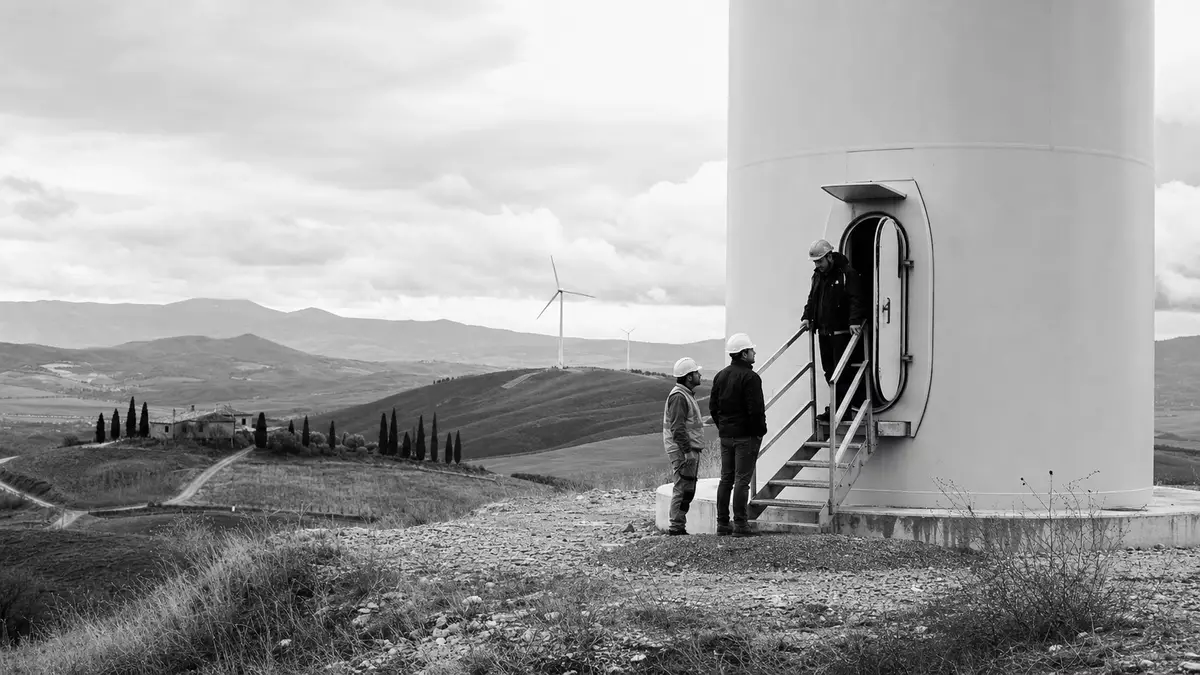
Representative renewable asset
Within ERG’s portfolio, wind farms in Italy and other European countries serve as representative assets that illustrate the group’s business model. These installations convert wind energy into electricity, benefiting from the natural resource and long-term operational lifespans of turbines. Performance depends on wind conditions, turbine technology, and maintenance practices, and revenue streams are shaped by a mix of wholesale market sales and contracted arrangements.
Stock price and trading venue
ERG stock is primarily listed in Milan, giving investors access via the Italian market. The share price reflects ongoing assessments of the company’s revenue, EBITDA, net profit, leverage, and dividend policy, as well as sector and macroeconomic trends.
ERG stock at a glance
- Company: ERG S.p.A.
- ISIN: IT0001157020
- Ticker: MIL: ERG
- Trading venue: Milan
- Sector / Industry: Utilities / Renewable energy
- Index membership: Italian equity index
Disclaimer regarding our articles: No investment advice, no buy or sell recommendation. Information on prices, companies, and markets is provided without guarantee; changes are possible at any time. Stock market transactions can lead to substantial losses. Our articles are created and reviewed in whole or in part automatically with the support of AI.