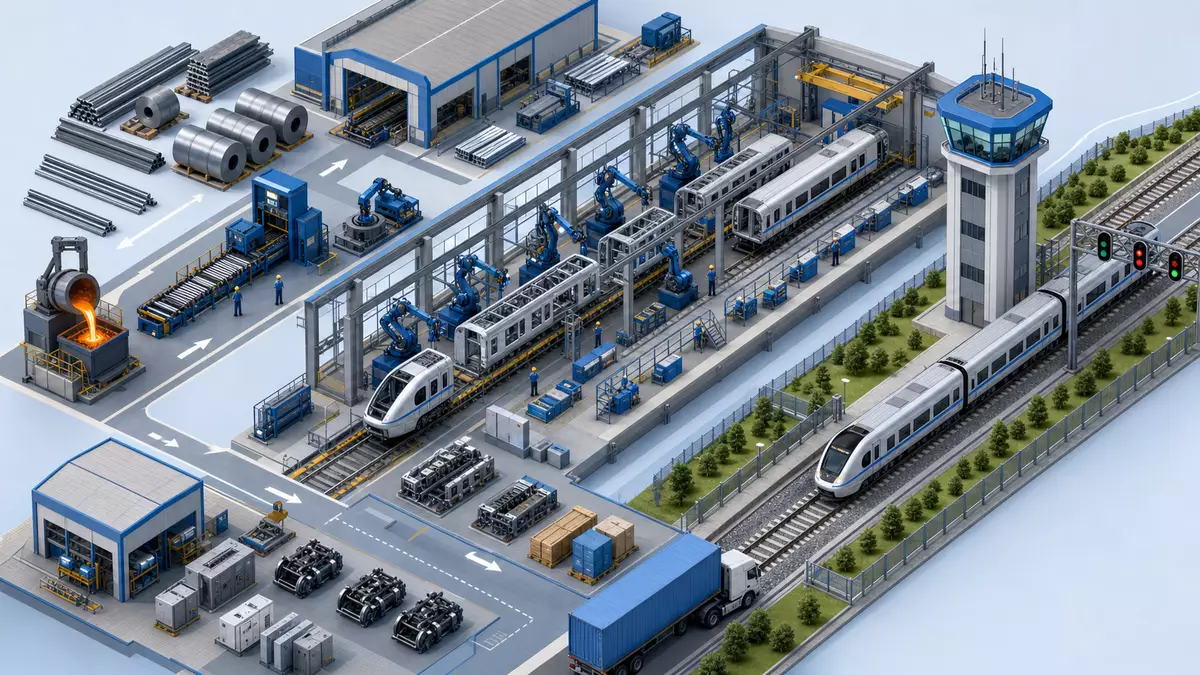
Alstom stock trades steadily as order backlog and profitability remain the key drivers
Published on 07/20/2026 at 04:31 | Editorial responsibility: Rafael Müller, Editor-in-Chief AD HOC NEWS
Alstom stock is closely tied to the French rail manufacturers sizable order backlog and evolving profitability profile, with investors watching how recent contract wins feed through to margins and cash generation over the coming quarters. The group, listed in Paris under ISIN FR0010220475, remains a key player in global rolling stock and rail signaling markets, and market attention centers on its ability to convert its backlog into sustainable earnings and lower leverage. As of 31 March 2024, Alstom reported a multi-billion euro backlog and a mixed earnings picture, providing a detailed snapshot of the companys operational momentum and financial health for the fiscal year that ended in 2024.
Order backlog exceeds EUR 90 billion
According to the companys latest annual results release for fiscal 2023/24, Alstom reported an order backlog of around EUR 92 billion as of 31 March 2024, underscoring the long-term visibility of its revenue stream and the depth of committed projects across rolling stock, signaling, and services. This backlog, which represents firm customer commitments, captures major projects in Europe, Asia, and the Americas, including high-speed trains, metro units, and tramway systems that are scheduled for delivery over several years. The figure also reflects Alstoms integration of prior acquisitions into its portfolio and the sustained demand for electrified and digital rail solutions in many markets. For investors, a backlog of approximately EUR 92 billion offers reassurance that the company has significant work in hand, but it also raises questions about execution risk, project phasing, and cost control.
In the same fiscal 2023/24 period, Alstom reported full-year sales of roughly EUR 17.9 billion, highlighting the scale at which the rail group is currently operating. Revenue at this level places Alstom among the larger transport equipment manufacturers globally and shows how a fraction of the order backlog is converted into revenue each year as projects reach key milestones and deliveries are made. The revenue mix is diversified across passenger rolling stock, freight locomotives, signaling systems, and maintenance and services, with rolling stock typically representing a substantial proportion of annual sales. The sales figure for 2023/24 also reflects the impact of contract timing, foreign exchange movements, and the maturation of legacy projects, factors that can lead to variations from year to year even when the backlog remains strong.
Profitability improves year on year
While revenue and backlog demonstrate volume and visibility, profitability metrics show how efficiently Alstom is converting its order book into earnings. For fiscal 2023/24, the company reported adjusted EBIT (earnings before interest and taxes) of around EUR 900 million, indicating a notable improvement compared with the prior fiscal year. This adjusted EBIT reflects the companys focus on operational efficiency, project execution, and cost savings in procurement and manufacturing. It also incorporates the effects of pricing discipline in new contracts and the gradual wind-down of lower-margin legacy projects, which have weighed on profitability in earlier periods. An adjusted EBIT approaching EUR 900 million on sales of about EUR 17.9 billion implies an adjusted EBIT margin in the mid-single-digit range, a benchmark that investors track closely as it indicates the profitability of Alstoms ongoing business.
In terms of comparative performance, Alstom disclosed that its adjusted EBIT margin improved versus the previous fiscal year, pointing to progress in margin enhancement initiatives and favorable project mix. Even a margin improvement of around one percentage point year on year can be significant at the scale of Alstoms revenue, translating into hundreds of millions of euros in additional operating profit. Margin expansion is often driven by a combination of factors, including ramp-up of higher-margin service contracts, efficiencies from standardized rolling stock platforms, and better management of project risks. As older, less profitable contracts are completed and newer, more disciplined contracts move into execution, the overall margin profile tends to improve, assuming that cost inflation is kept under control and productivity gains are realized.
Net income figures also help investors assess Alstoms ability to generate bottom-line profits after interest and tax costs. For fiscal 2023/24, Alstom reported net income attributable to equity holders that, while positive, remained modest compared with its revenue size, reflecting both the capital-intensive nature of the rail business and the lingering effects of integration and restructuring costs. The companys net income performance is closely linked to its financing structure, including interest expenses on debt used to fund acquisitions, working capital, and capital expenditure. As profitability improves at the operating level, investors expect a corresponding enhancement in net income over time, provided that debt and interest costs are managed prudently and that tax charges remain stable relative to earnings.
Free cash flow swings and working capital
Alstoms cash generation is another central focus for shareholders and bondholders, particularly given the scale of its backlog and the long duration of many rail projects. In fiscal 2023/24, the company reported free cash flow that showed a substantial improvement compared with the previous year, which had been affected by working capital swings and project phasing. Free cash flow captures cash from operations minus capital expenditure and is heavily influenced by down payments on new contracts, progress payments on existing projects, and inventory and receivable levels. A positive shift in free cash flow year on year indicates that Alstom is better aligning cash inflows with project execution and controlling working capital more effectively, which is key to reducing reliance on external financing.
Alstom has highlighted that its goal is to generate structurally positive free cash flow over the medium term, leveraging its sizeable backlog and improving project execution to achieve more predictable cash patterns. The company monitors metrics such as cash conversion ratio, which compares free cash flow to EBIT, to evaluate the effectiveness of its cash generation strategies. A higher cash conversion ratio suggests that operating profits are translating into cash, rather than being absorbed by large increases in inventories or receivables. Management attention is focused on contract negotiation terms, such as upfront payments and milestones, as well as internal processes for billing, collections, and supplier payment timing. For investors, a consistently positive free cash flow profile is crucial to supporting debt reduction and potential shareholder distributions over time.
Net debt reduction and leverage metrics
Given its history of acquisitions and capital-intensive operations, Alstoms leverage, or debt load relative to earnings, is a critical metric that the market watches closely. As of 31 March 2024, the company reported net debt in the multi-billion euro range, reflecting outstanding bonds and bank facilities net of cash and cash equivalents. However, this net debt level was lower than in the prior fiscal year, signaling progress in deleveraging. The reduction in net debt year on year indicates that Alstom has used improved cash flow and selective asset disposals to bring down its borrowing, thereby enhancing balance sheet resilience and reducing future interest expense. Lower net debt also improves credit metrics that rating agencies monitor, such as net debt to EBITDA, and can support more favorable funding conditions.
Investors often look at the ratio of net debt to adjusted EBITDA to assess leverage risks in capital-intensive industries. For Alstom, an improvement in this ratio over fiscal 2023/24 would suggest that earnings growth and debt reduction are working together to lower financial risk. Even a reduction of the net debt to EBITDA ratio by half a turn can be meaningful, especially if it moves the company closer to leverage levels seen in stronger-rated peers. The companys capital allocation priorities include balancing investment in growth projects and innovation with continued deleveraging, which remains important for safeguarding financial flexibility amid potential macroeconomic uncertainties and project-related risks.
Revenue up around 5 percent year on year
A key quantified comparison that sheds light on Alstoms recent performance is the year-on-year revenue growth rate. Based on its reported figures, Alstoms sales for fiscal 2023/24 of roughly EUR 17.9 billion represented an increase of close to five percent compared with the prior fiscal year. This revenue growth is driven by the ramp-up of large rolling stock contracts signed in previous years, continued deliveries of metro and tramway systems, and rising contributions from signaling and services. In an industry where projects can span several years, a mid-single-digit revenue increase year on year can signal healthy demand and effective execution, particularly if accompanied by stable or improving margins.
Comparative metrics also extend to order intake, which measures the value of new contracts signed in a given period. Alstoms order intake in fiscal 2023/24 was substantial, adding new projects to its backlog and reinforcing the future revenue pipeline. When order intake exceeds revenue, the backlog grows, signaling that the company is replenishing its book of business faster than it is executing it. This can be positive if the newly signed contracts are profitable and if the organization has sufficient execution capacity, but it also requires discipline to avoid overextension and ensure that project risk is carefully managed. For investors, the balance among order intake, revenue, and backlog trend offers insight into future growth potential and workload.
Margin focus versus peers in rail
While Alstom is one of the leading rail equipment manufacturers globally, it operates in a competitive landscape that includes other large players in rolling stock, signaling, and rail services. Profitability comparisons with peers are therefore a key component of investment analysis. An adjusted EBIT margin in the mid-single-digit range, with a year-on-year improvement of around one percentage point, may still be below the margins reported by some signaling-focused competitors but represents progress from earlier years where legacy contracts and integration costs weighed more heavily on profitability. Margin improvement is often more challenging in rolling stock than in services or signaling, due to fixed-price contracts and cost pressures, making incremental gains particularly noteworthy.
Investors also look at segment-specific margins where information is available, such as the profitability of services versus rolling stock. Services contracts, which typically involve maintenance and modernization work over long periods, can offer higher and more stable margins than new rolling stock deliveries, because they involve ongoing support and parts supply rather than large upfront manufacturing efforts. As Alstom gradually increases the share of services in its overall mix, the company aims to improve its margin profile, benefiting from recurring revenue streams and closer long-term relationships with operators. This strategic tilt toward services and digital signaling products is part of the broader effort to move the margin profile toward levels seen in more asset-light and software-oriented rail businesses.
Guidance and medium-term targets
Alstoms management has set medium-term financial targets that include further improvements in margins, cash generation, and leverage reduction. Among these targets, the company has communicated ambitions to achieve a higher adjusted EBIT margin over the next few years, potentially approaching high single-digit levels if execution and market conditions remain supportive. This guidance provides investors with a roadmap for expected profitability evolution, assuming that cost control and project execution continue to improve and that new contracts are signed on favorable terms. Managements guidance often includes assumptions about revenue growth, backlog conversion, and capital expenditure, which investors scrutinize for realism and consistency.
Alongside margin targets, Alstom aims to deliver sustained positive free cash flow on an annual basis, supporting continued deleveraging and potential capital allocation options such as dividends or selective share buybacks in the longer term. Cash generation targets are particularly important in capital-intensive sectors due to the need to fund manufacturing, R&D, and working capital. Guidance on net debt, including target leverage ratios, provides further context for how management intends to balance investment and financial strength. Investors typically evaluate these targets against historical performance and the broader macroeconomic environment, including interest rates, inflation, and public transport funding trends in key regions.
Rail modernization programs underpin demand
Demand for Alstoms products and services is supported by national and regional rail modernization programs, which aim to upgrade aging rolling stock fleets, expand high-speed connections, and enhance urban mobility through new metro and tram lines. In Europe, several countries are investing heavily in rail as part of broader decarbonization and congestion-reduction strategies, creating opportunities for Alstom in both new-build and refurbishment projects. Similar trends appear in other regions, where growing urban populations and environmental concerns are encouraging a shift from private car use to public transport. Alstoms portfolio, which includes electric trains, battery-powered and hydrogen-ready solutions, and digital signaling systems, is aligned with these decarbonization and modernization goals.
Funding for rail projects typically comes from public budgets, transport authorities, and in some cases public-private partnerships, making the timing of orders and project starts sensitive to political decisions and budget cycles. For investors, this introduces an element of cyclicality and policy risk into Alstoms demand profile, but it also means that long-term transport plans and climate commitments can provide sustained support for rail investment. The companys ability to secure large, multi-year contracts under national rail strategies and urban transport plans is a key determinant of its order intake trajectory and backlog growth. The sizable backlog as of 31 March 2024 illustrates that Alstom has successfully tapped into these modernization programs across multiple geographies.
Product focus on rolling stock platforms
Within Alstoms diversified portfolio, its rolling stock platforms remain central to revenue generation and brand recognition. The companys well-known train families include regional and intercity units, high-speed trains, and urban metro and tramway vehicles designed for different infrastructure and passenger needs. These platforms share common components and design principles, enabling economies of scale in manufacturing and simplifying maintenance and spare parts logistics. Alstoms rolling stock designs emphasize energy efficiency, passenger comfort, and safety, with features such as regenerative braking, optimized aerodynamics, and modern onboard information systems. The company also integrates digital technologies to support predictive maintenance and real-time monitoring.
Beyond passenger trains, Alstom supplies locomotives for freight operations and specialized vehicles for maintenance of way and infrastructure support. These products expand the companys presence across the rail value chain, allowing it to serve a broad set of customers including national railways, urban transport authorities, and private operators. As rolling stock platforms evolve, Alstom invests in research and development to incorporate new materials, propulsion technologies, and safety systems. This innovation is essential to maintaining competitiveness in tenders, where operators increasingly demand lower life-cycle costs, reduced emissions, and enhanced passenger experience. The ongoing development of rolling stock platforms is therefore both a driver of future revenue and a factor in maintaining or improving margins.
Alstom train platforms and digital signaling
Alstoms product range combines hardware and software, with its train platforms complemented by advanced signaling and control systems. The company provides signaling solutions for mainline, urban, and freight networks, including automatic train protection, traffic management systems, and communications-based train control. These digital systems enhance safety and capacity, allowing operators to run trains more frequently and reliably with improved real-time oversight. Alstoms signaling products also support interoperability in cross-border networks and integration with existing infrastructure, which is particularly important in regions with complex legacy systems.
Digitalization in rail extends to passenger information systems, ticketing integration, and platform screen doors, where Alstom offers solutions alongside its rolling stock. The combination of trains and signaling in integrated offerings can strengthen Alstoms position in tenders and create synergies in installation and maintenance. For investors, the growth of signaling and digital services is noteworthy because these segments often carry higher margins than rolling stock manufacturing, thereby contributing to overall profitability improvement. As rail networks modernize, demand for signaling upgrades and digital services can offer recurring revenue streams beyond initial train deliveries.
Alstom products in daily rail operations
Alstoms trains and systems are part of daily life for millions of passengers worldwide, connecting cities, suburbs, and regions. The companys rolling stock operates in major European capitals, emerging cities, and intercity corridors, while its metro and tram vehicles contribute to urban mobility by offering frequent, reliable service. This widespread presence ensures a steady flow of maintenance and refurbishment work, as operators aim to keep fleets up to date and ensure high availability. Maintenance contracts, often spanning several years, can be renewed and expanded, providing Alstom with opportunities to deepen customer relationships and secure stable revenue streams.
In freight and industrial rail operations, Alstoms locomotives and support equipment enable the movement of goods, contributing to the broader logistics and supply chain ecosystem. Rail freight can help reduce road congestion and emissions, aligning with sustainability goals in many countries. As rail freight networks modernize and expand, there is potential for additional locomotive and signaling orders, particularly in corridors where electrification and capacity upgrades are planned. Alstoms participation in such projects further diversifies its revenue base and helps mitigate exposure to any single regional passenger rail market.
Alstom stock and market perception
Alstom stock reflects the interplay of its fundamental performance, project execution, and broader sentiment toward industrial and infrastructure-related equities. The shares trade in euros on Euronext Paris, and the companys market capitalization, based on recent price levels, is measured in multiple billions of euros, indicating its status as a significant industrial issuer within European equity indices. Price movements over time have mirrored key events such as major contract wins, earnings updates, guidance changes, and macroeconomic shifts affecting interest rates and public investment. Investors often assess Alstom stock in relation to industrial and infrastructure benchmarks, as well as to sector-specific indices that track transport equipment manufacturers.
Technical indicators, such as the position of Alstom shares relative to their 52-week high and low, provide additional context on market sentiment. When the stock trades closer to its 52-week high, it can signal investor confidence in future earnings and backlog conversion, while levels nearer the 52-week low may reflect concerns about leverage, project risks, or macro headwinds. Volume patterns around earnings releases and major contract announcements indicate how actively investors are trading the stock in response to new information. For medium- and long-term shareholders, dividend policy, if any, and capital allocation decisions are also relevant to total return considerations, alongside share price performance and potential valuation re-rating.
Rolling stock platforms as revenue engine
Rolling stock remains Alstoms revenue engine, and the companys train platforms underpin its presence in tenders globally. Representative product families include regional multiple units, high-speed trains, metros, and trams designed to meet varying capacity, speed, and infrastructure requirements. These platforms share standardized components such as bogies, traction systems, and onboard electronics, enabling the company to streamline engineering and production. Standardization helps reduce costs and shorten development cycles, supporting margin improvement efforts. At the same time, customization options allow Alstom to adapt trains to specific customer preferences, regulatory environments, and climatic conditions.
Beyond initial delivery, Alstoms rolling stock platforms generate life-cycle revenue through maintenance, spare parts, modernization, and potential mid-life refurbishments. Long-term maintenance contracts can span 20 or more years, aligning Alstoms incentives with fleet performance and availability. Modernization and retrofitting projects, such as upgrading control systems or installing new interiors, further extend revenue from existing fleets. This life-cycle approach complements new-build revenue and adds resilience to Alstoms business model, particularly during periods when new rolling stock tenders may be less frequent due to budget constraints or shifting investment priorities.
Alstom stock price and investor focus
In the equity market, Alstom stock remains closely watched by investors who follow industrials and transport. The shares trade on the primary listing in Paris, and market participants monitor daily price changes, trading volumes, and valuation metrics such as price-to-earnings and enterprise value-to-EBITDA ratios. These metrics help investors gauge whether the stock is pricing in expected improvements in margins and free cash flow or whether there is potential for re-rating if execution continues to improve. Valuation comparisons with peers in rolling stock and signaling can also inform views on relative attractiveness, especially when differences in leverage and growth profiles are considered.
For investors, the key factors shaping sentiment on Alstom stock include the trajectory of its adjusted EBIT margin, the sustainability of free cash flow generation, progress in net debt reduction, and the stability of its order backlog. Positive surprises in these areas, such as stronger-than-expected margin improvement or a faster decline in net debt, can support a more favorable view of the stock. Conversely, project delays, cost overruns, or weaker order intake could weigh on sentiment and increase scrutiny of risk management practices. Given the complexity of large rail projects, the market often pays close attention to management commentary on project execution and risk controls during earnings calls and investor presentations.
Further investor information on Alstom
Investors can find detailed financial data, presentations, and regulatory filings on Alstoms investor relations pages alongside ad-hoc coverage linked to the companys ISIN.
Company overview and key metrics
Alstom is a global rail manufacturer headquartered in France, specializing in rolling stock, signaling, and services for passenger and freight transport. Its primary listing on Euronext Paris and inclusion in major European indices highlight its role as a significant industrial issuer. The companys operations span Europe, North Africa, the Middle East, Asia-Pacific, and the Americas, with manufacturing facilities, engineering centers, and service depots dedicated to local markets. Alstom collaborates with public transport authorities, national rail operators, and private companies to deliver integrated solutions that combine trains, signaling, and services.
Key metrics from the latest fiscal year, including an order backlog of around EUR 92 billion, sales of roughly EUR 17.9 billion, and adjusted EBIT of about EUR 900 million, illustrate the companys scale and financial profile. The backlog provides long-term visibility, revenue captures the annual execution of projects, and EBIT indicates profitability. These figures, alongside trends in free cash flow and net debt, shape investor views on Alstoms ability to sustain growth and strengthen its balance sheet. As the company executes its strategy focused on margin improvement, cash generation, and deleveraging, the evolution of these metrics will remain central to assessments of Alstom stock.
Alstom stock key data
- Company: Alstom S.A.
- ISIN: FR0010220475
- Ticker: EPA: ALO
- Trading venue: Euronext Paris
- Market capitalization: multi-billion EUR range (as of recent trading)
- Sector / Industry: Industrials / Rail equipment and services
- Index membership: Included in major European equity indices
Disclaimer regarding our articles: No investment advice, no buy or sell recommendation. Information on prices, companies, and markets is provided without guarantee; changes are possible at any time. Stock market transactions can lead to substantial losses. Our articles are created and reviewed in whole or in part automatically with the support of AI.