
ThyssenKrupp stock holds close to its 52-week high as guidance upgrade and analyst support underpin the rally
Published on 08/31/2026 at 10:09 | Editorial responsibility: Rafael Müller, Editor-in-Chief AD HOC NEWS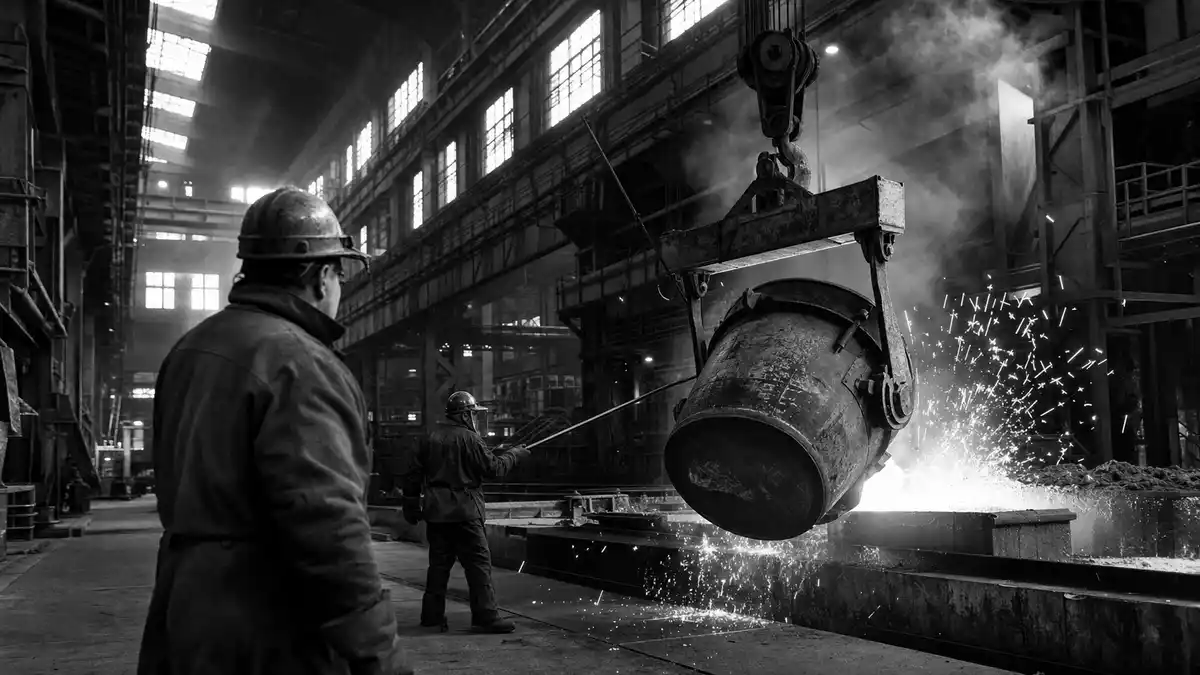
ThyssenKrupp (ISIN DE0007500001) stock is trading close to a newly set 52-week high as of August 31, 2026, with investors weighing an upgraded fiscal 2025/2026 earnings outlook and multiple higher analyst price targets that frame the recent rally in concrete numbers. Per recent reporting dated August 30, 2026, the shares closed the prior session at €14.67, 3.4 percent below the 52-week high of €15.18 reached on August 28, 2026, and that level now serves as a key reference point for the stock’s short-term technical picture. The move comes after ThyssenKrupp delivered stronger-than-expected third-quarter results for fiscal 2025/2026 and raised the lower end of its adjusted EBIT guidance range, giving investors fresh data to recalibrate their view of the group’s earnings power.
Guidance upgrade and Q3 2025/2026 figures
In its fiscal 2025/2026 third-quarter update, ThyssenKrupp reported that adjusted EBIT rose 18 percent to €183 million, while revenue expanded 8 percent in the same period, signaling that profitability improved faster than top-line growth within the current reporting window. Per the same analysis, management also lifted the lower end of its full-year adjusted EBIT guidance range to €600 million from €500 million, effectively signaling that even the downside scenario for operating profit is now higher than previously indicated. At the same time, the upper limit of the projected group loss was trimmed to €700 million from €800 million, narrowing the potential net loss and directly improving the risk profile for equity holders in numerical terms.
The combination of higher expected adjusted EBIT and a reduced loss ceiling matters for investors because it reshapes how cash flows and leverage might evolve over the remainder of fiscal 2025/2026. An 18 percent adjusted EBIT increase to €183 million in the third quarter, paired with an 8 percent revenue gain, suggests that margin discipline and mix effects are contributing more to earnings than pure volume growth. Since the guidance upgrade, recent reporting indicates that ThyssenKrupp stock has added 10 percent, highlighting that the market is responding more positively to the improved profitability outlook than to the still-challenging backdrop of group-level losses. For long-term holders, the raised guidance floor at €600 million of adjusted EBIT becomes a new anchor for valuation models, particularly when viewed against the narrowed projected loss corridor topping out at €700 million.
Stock level, rally metrics and market cap context
From a pure market-data perspective, the latest available close for ThyssenKrupp shares shows a price of €14.67 as of August 30, 2026, down 1.2 percent on the day but still within 3.4 percent of the 52-week high of €15.18 reached on August 28, 2026. Per recent coverage, that modest pullback sits within a 30-day advance of 23 percent, underscoring that short-term momentum remains firmly positive despite individual sessions of profit-taking. Over a slightly longer horizon, reporting indicates that the stock has climbed 57 percent since the start of the year, a re-rating that has pushed ThyssenKrupp’s market capitalisation to €9.18 billion and materially altered the company’s equity profile compared with the beginning of 2026.
These percentage moves and absolute levels give retail investors concrete reference points for understanding the rally. A year-to-date gain of 57 percent, coupled with a market cap of €9.18 billion as of late August 2026, places ThyssenKrupp in a very different valuation bracket than when the year began. The fact that shares are only 3.4 percent below a €15.18 52-week high indicates that the market has not yet imposed a significant pullback despite the strong run, suggesting that investors are still willing to pay for the improved guidance and operational metrics. At the same time, the 1.2 percent day-on-day decline at the latest close highlights that short bursts of selling pressure continue to surface, which is typical after rapid advances and gives traders specific percentages to gauge the strength of any emerging consolidation.
Analyst targets and valuation perspective
Beyond company-issued guidance, a cluster of analyst updates has provided additional numerical context for ThyssenKrupp’s valuation. According to a review of recent commentary on the stock, price targets from three large houses now range between €16 and €22, all paired with positive ratings that imply a supportive stance on the stock. One analyst raised a target to €20 while reiterating a Buy call, emphasizing that the company has multiple catalysts and financial flexibility but still trades at a discount versus peers. Another lifted its target from €19 to €22 while maintaining a Buy view, while a third shifted from a Hold to a Buy rating and increased its target from €11 to €16.
The spread between these updated targets and the latest €14.67 closing price offers a clear quantified comparison that investors can use. At the low end, a €16 target sits roughly 9 percent above the recent price, while the upper-end €22 target stands around 50 percent higher, sketching out a broad, numerically defined range of perceived upside. The mid-range €20 figure lies about 36 percent above €14.67, which, paired with the 57 percent year-to-date gain already realised, hints that analysts see scope for further appreciation but are also implicitly acknowledging that a substantial part of the re-rating has already occurred. For retail investors, these numbers help differentiate short-term momentum from longer-term valuation cases, grounding the narrative in concrete euros and percentage gaps rather than vague optimism.
Green steel financing and strategic fork
Recent coverage also frames ThyssenKrupp’s rally as facing a strategic fork tied to the financing of its green steel ambitions. The company’s push into lower-carbon steel production requires substantial investment, and the way these projects are funded will influence both leverage and equity dilution in the years ahead. Per analysis focused on this topic, the improved third-quarter 2025/2026 results and higher adjusted EBIT guidance give ThyssenKrupp more internal financial firepower to support such initiatives, reducing reliance on purely external capital compared with scenarios built on lower earnings baselines.
The numbers around adjusted EBIT and projected losses are central to this strategic debate. With the lower end of adjusted EBIT guidance lifted to €600 million, management signals confidence that the business can generate significantly more operating profit than previously anticipated, which in turn helps support investment in green steel infrastructure from a stronger financial footing. The trimming of the projected group loss ceiling to €700 million also improves the optics of the balance sheet trajectory, suggesting that while challenges remain, they are likely to be narrower in scale than earlier guidance indicated. For investors following the decarbonisation theme, the key takeaway is that ThyssenKrupp’s earnings and loss guidance has shifted in a direction that numerically supports the feasibility of its green steel plans, even as the exact mix of debt, equity and partnerships for financing remains a critical variable.
Representative product: steel and materials solutions
To understand what sits behind these numbers at the operational level, it helps to look at ThyssenKrupp’s core role as a diversified industrial and steel group. The company’s steel and materials solutions business supplies flat steel products and processed materials to automakers, machinery producers and construction firms, providing tailored grades and formats that meet specific strength, formability and corrosion-resistance requirements. This segment is emblematic of the group’s broader proposition: combining metallurgical expertise with downstream processing and logistics to deliver ready-to-use inputs for industrial customers.
Demand for such steel and materials solutions is closely linked to cycles in automotive production, capital goods investment and infrastructure spending, all of which feed into ThyssenKrupp’s revenue and margin metrics. As the company pursues green steel initiatives, the same product family is likely to evolve toward lower-carbon variants, which could command premium pricing and alter the revenue mix over time. For retail investors, seeing that adjusted EBIT climbed 18 percent to €183 million in the fiscal 2025/2026 third quarter while revenue rose 8 percent underlines how product portfolios like steel and materials solutions can contribute disproportionately to earnings when pricing, efficiency and mix shift in the company’s favor.
Stock level and as-of context
From a trading-venue standpoint, ThyssenKrupp shares are listed on the Xetra platform in Frankfurt, with the latest reported price of €14.67 as of August 30, 2026, reflecting the prior completed session before August 31, 2026. That close leaves the stock just 3.4 percent short of its 52-week high of €15.18 set on August 28, 2026, and anchors the current market capitalisation at €9.18 billion based on the same late-August quote snapshot. For investors monitoring the name from the US, the euro-denominated levels and the proximity to a fresh 52-week high are key metrics to track alongside the upgraded adjusted EBIT guidance and analyst target range.
Read more
A detailed rally and guidance overview offers more on the third-quarter 2025/2026 figures, the adjusted EBIT increase to €183 million and the narrowed loss guidance corridor, all of which underpin the recent stock moves.
Steel solutions as a core offering
Within ThyssenKrupp’s portfolio, steel solutions stand out as a representative product category that connects directly to the company’s financial metrics. These solutions encompass flat carbon steel, coated steels and tailored blanks that automakers and industrial clients use for body panels, structural components and machinery casings. The product line is supported by modern rolling mills, coating facilities and service centers that provide cutting, slitting and just-in-time delivery, helping customers reduce their own inventories and production complexity.
As industrial demand stabilises or improves, orders for such steel solutions provide volume support for ThyssenKrupp’s revenue line, while operational efficiency and product differentiation feed into adjusted EBIT. The fiscal 2025/2026 third-quarter figures, with revenue up 8 percent and adjusted EBIT up 18 percent, suggest that segments like steel solutions are contributing to margin expansion, potentially through better utilisation of assets and more focused pricing strategies. Looking ahead, green steel variants within this product family could further change the revenue and margin mix, particularly if regulatory frameworks and customer preferences continue to shift toward lower-carbon materials.
Closing view on ThyssenKrupp stock
ThyssenKrupp stock, listed on Xetra, last closed at €14.67 as of August 30, 2026, setting the company’s market capitalisation at €9.18 billion and keeping the shares within 3.4 percent of the €15.18 52-week high recorded on August 28, 2026. For retail investors, the upgraded adjusted EBIT guidance to at least €600 million for the current fiscal year, the trimmed projected loss ceiling to €700 million and analyst targets between €16 and €22 create a numerically grounded framework for judging whether the recent 57 percent year-to-date rally still has room to extend or is entering a more measured consolidation phase.
Fact box
Company: ThyssenKrupp AG
ISIN: DE0007500001
Ticker: TKA
Exchange: Xetra (Frankfurt)
Price (as of August 30, 2026, 4:00 p.m. local time): €14.67
Market cap: €9.18 billion (as of August 30, 2026)
Sector / Industry: Materials / Steel and industrial engineering
Index membership: MDAX


