
Suunto Race All Black GPS Watch - AMOLED Display And 40 Hour Dual Band GPS
Published on 09/14/2026 at 12:24 | Editorial responsibility: Rafael Müller, Editor-in-Chief AD HOC NEWS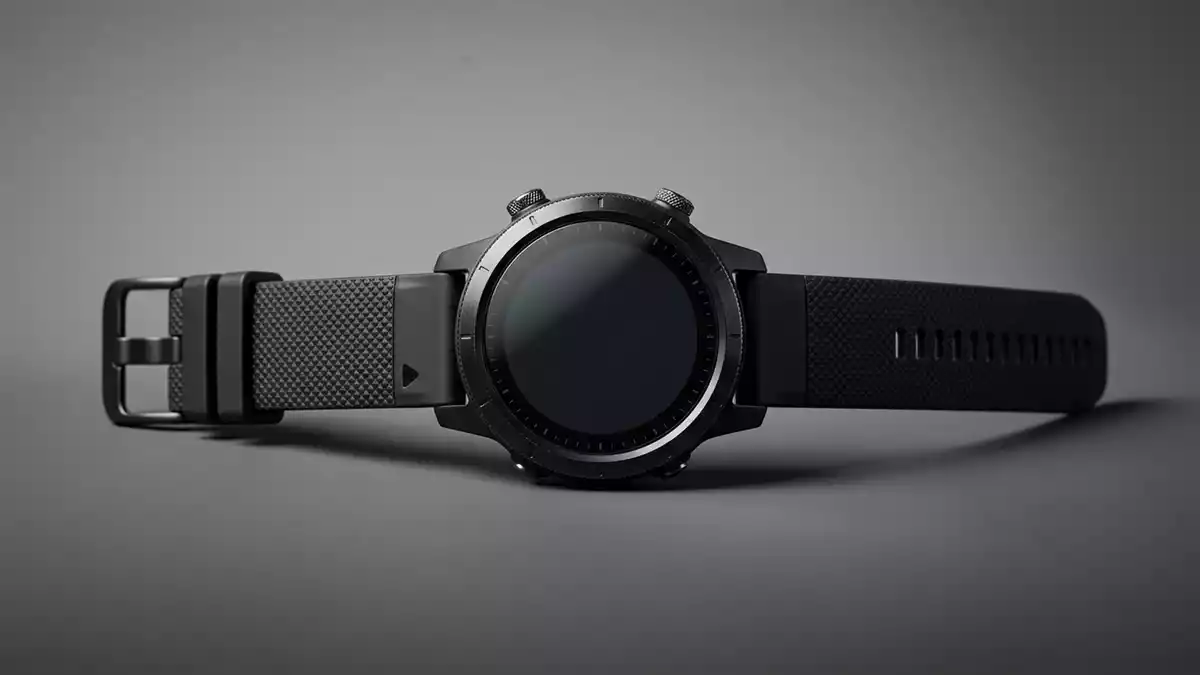
Suunto Race All Black is Suunto's large GPS sports watch aimed at runners and endurance athletes who want a bright AMOLED display, long battery life and advanced training metrics on the wrist. With a 1.43 inch screen, dual band GPS and stainless steel bezel, it targets the same space as high end competitors while keeping a focused sport feature set.
Design, Display And Hardware
The Suunto Race All Black uses a 49 x 49 x 13.3 mm case with an 83 g stainless steel bezel and a glass fiber reinforced polyamide body, giving it a substantial feel on the wrist compared with lighter plastic models, according to Android Central's specification table. The watch ships with a 22 mm silicone band that fits wrists from 125 to 175 mm, so owners can swap in standard third party straps if they prefer different materials or styles.
At the center of the hardware is a 1.43 inch AMOLED display with a 466 x 466 pixel resolution and a quoted peak brightness of 1,000 nits, which makes activity data and maps easy to read in bright daylight, according to DC Rainmaker's in depth review. The display is protected by sapphire crystal, and the watch is rated to 10 ATM water resistance, meaning it is designed for use down to 100 m in water based training, a figure that matches the specification summary from Tom's Guide.
Hardware controls combine the touchscreen with three physical buttons and a rotating digital crown, so owners can scroll through menus and training data even with gloves or wet fingers, as described by TechRadar's review. Inside, Suunto equips the watch with sensors including optical heart rate, heart rate variability for stress and recovery tracking, SpO2, a barometric altimeter, compass and temperature sensor, as detailed in Android Central's overview.
Battery Life And GPS Performance
Battery life is a core selling point. In smartwatch mode with daily use, Suunto rates the Race at up to 12 days with gesture based display and 24/7 activity tracking, or up to 26 days if heart rate monitoring is disabled and the display is used more sparingly, values quoted in DC Rainmaker's battery breakdown. For endurance workouts, Tom's Guide reports that Suunto specifies up to 40 hours of GPS recording time in multiband dual frequency mode and up to 120 hours in a lower power GPS mode with heart rate turned off, giving multi day coverage for trail runs and hikes.
The watch supports dual band GPS using L1 and L5 frequencies and multiple satellite systems, including GPS, GLONASS, GALILEO, QZSS and BEIDOU, according to Android Central. This allows the Suunto Race to lock on to more satellite signals at once and reduce positional errors in environments with tall buildings or deep canyons compared with single band GPS watches.
Compared with the titanium version, which weighs 69 g and includes 32 GB of storage, the stainless steel All Black model weighs 83 g and carries 16 GB of onboard storage for offline map data and routes, a contrast highlighted by both DC Rainmaker and Android Central. Runners comparing the two can weigh the roughly 14 g difference against the extra storage and higher price of the titanium option.
Training Features And Mapping
On the software side, Suunto Race All Black focuses on structured training and navigation tools that complement the hardware. Suunto includes support for downloading offline topographic maps and heatmaps so users can follow routes without a connected phone, as described in Android Central. Turn by turn navigation, breadcrumb trails and a back to start function help trail runners and hikers stay on course.
Training metrics include estimates of VO2 max, training load, recovery time and heart rate zones, along with race focused features like race pacing and structured intervals, according to the feature lists compiled by RunnersPicks. The watch also supports sleep tracking and stress monitoring via heart rate variability, so athletes can monitor both daytime performance and nighttime recovery.
Where Suunto Race lags some competitors is in on device entertainment features. RunnersPicks notes that there is no offline music storage, so users still need a phone for music during workouts. The watch instead leans into fitness first tools and pairs with the Suunto app over Bluetooth for syncing activities, managing maps and analysis. Wi Fi and ANT Plus connectivity expand sensor and syncing options, but the device does not run a generic app store, as summarized by Tom's Guide.
Suunto Race All Black Official Details
Suunto publishes full specifications, user guides and accessory information for the Suunto Race All Black on its own site.
Price And Positioning In The US Market
In the United States, the stainless steel Suunto Race, including the All Black colorway, carries a list price of $449, while the titanium version is priced at $549, according to multiple reviews including Tom's Guide and TechRadar. Gear focused outlet Coach adds that these prices have held since the launch window in October 2023, underscoring Suunto's intent to compete directly with rival watches at similar price points.
This pricing brackets the Suunto Race between midrange GPS watches and top tier flagship models in the US market that often cross the $600 mark, while still offering premium elements like sapphire glass and dual band GPS. Buyers deciding between the steel and titanium versions weigh the $100 price difference against the 14 g weight reduction and 16 GB of extra map storage documented by DC Rainmaker.
Within Suunto's own lineup, the Race sits above more compact models and just below the larger Vertical line, which offers even longer battery runtimes and adds features such as solar charging in some versions, but at a higher price and weight. The Race S, introduced later, provides a smaller case and lighter weight, but the original Race All Black still appeals to users who prefer a large display and longer per charge endurance, as covered in Android Central's comparison.
How Suunto Race Compares With Rivals
Compared with rival GPS watches, reviewers repeatedly highlight the combination of AMOLED display and mapping at the Race's price. TechRadar notes that the 1.43 inch AMOLED panel at 466 x 466 resolution and 1,000 nit brightness brings it closer in feel to smartwatch like competitors while still offering up to 40 hours of dual band GPS recording, a figure that some rival AMOLED watches only reach with reduced accuracy modes, as explained in TechRadar.
In terms of weight, the 83 g stainless steel Race is heavier than certain plastic bodied competitors in the same price range, which can come in under 50 g, but the titanium model's 69 g weight narrows the gap and remains comparable to other metal cased GPS watches, according to Android Central. Reviewers also point out that Suunto's focus on training and navigation means buyers who want contactless payments or broad third party app support may prefer more full featured smartwatch platforms.
Battery endurance is one of the Race's comparative strengths. DC Rainmaker's testing confirms that Suunto's claimed 40 hour multiband GPS mode and 12 day smartwatch figures are competitive with or better than some rivals that rely on reduced GPS accuracy or dimmer displays to hit the same numbers, as noted in DC Rainmaker's endurance testing. For runners who prioritize high accuracy GPS and long trail events, this combination can be a key differentiator.
Context And Use Cases
Suunto Race All Black fits best for runners, trail runners and multisport athletes who value strong training metrics, accurate multiband GPS and offline maps in a device that still looks at home in everyday wear. Its 49 mm case and 83 g weight mean it sits more comfortably on medium to larger wrists, while lighter options like the Race S or smaller competitors may suit those with slimmer wrists who spend long days wearing the watch, as reflected in wrist fit discussions from Live For The Outdoors.
For athletes who already own a Suunto Vertical or plan to train for very long events, the Race acts as a slightly smaller, more affordable alternative that still delivers dual band GPS and topographic maps. Runners stepping up from earlier Suunto or entry level GPS watches gain a high resolution display, expanded storage for maps and more advanced recovery metrics, with the tradeoff that the Race does not offer offline music or phone free payment options common in some smartwatch ecosystems.
Key Facts At A Glance
- Product: Suunto Race All Black (stainless steel)
- Manufacturer: Suunto Oy, Vantaa, Finland
- Category: GPS sports watch (AMOLED)
- Model designation: Suunto Race All Black, 49 x 49 x 13.3 mm case, 83 g steel version
- Display: 1.43 inch AMOLED, 466 x 466 pixels, approximately 1,000 nit peak brightness
- Battery life: Up to 12 days smartwatch use, up to 40 hours multiband GPS, up to 120 hours low power GPS mode
- Water resistance: 10 ATM (100 m) with sapphire crystal glass
- Price: $449 (stainless steel, as of 09/14/2026)
- Target audience: Runners and endurance athletes needing dual band GPS, offline maps and long battery life


