Splendor Board Game by Space Cowboys - Gem Mining Strategy Classic With 2-4 Players And 30 Minute Playtime
Published on 09/07/2026 at 20:30 | Editorial responsibility: Rafael Müller, Editor-in-Chief AD HOC NEWS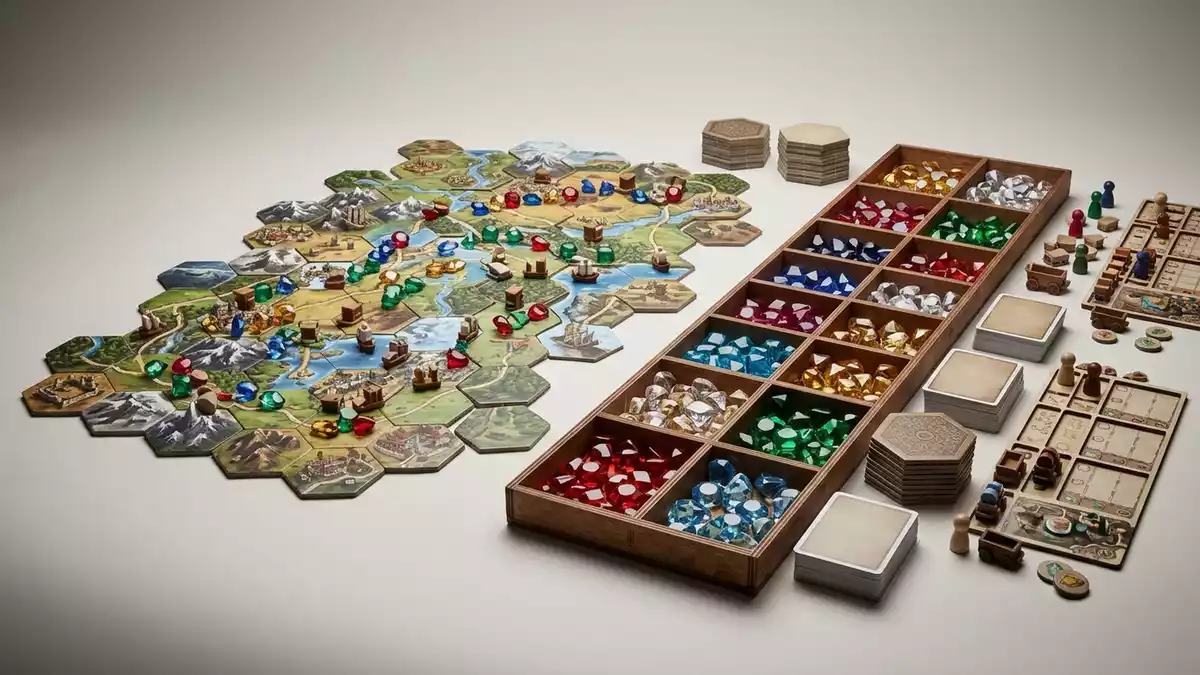
Splendor board game casts players as wealthy Renaissance gem merchants racing to build the most prestigious jewelry business, using chunky poker-style chips and a 90-card development deck to create efficient engines in about 30 minutes per game.
Game Overview And Table Presence
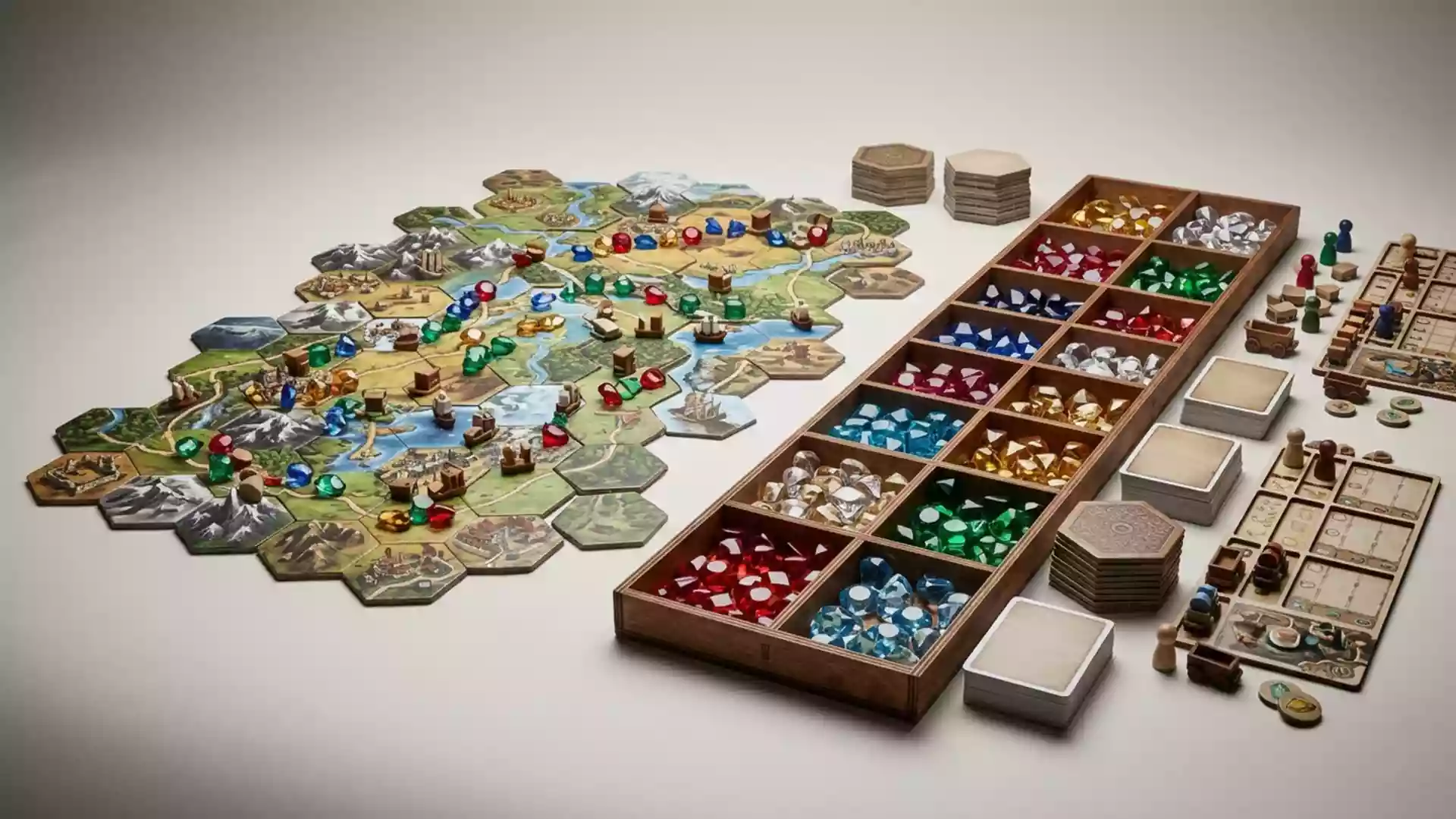
Splendor, designed by Marc Andre and published by Space Cowboys, first appeared in 2014 and has since become a modern family strategy staple with millions of copies sold worldwide.The game is officially listed as supporting 2-4 players with a playing time of around 30 minutes. On the table, the core components include 40 gem chips made from thick plastic and 90 development cards split across three levels, plus 10 noble tiles, a first player token and a rulebook.The gems come in six colors, with seven chips each for diamond, sapphire, ruby, emerald and onyx, and five gold chips used as wilds.
Players compete to earn prestige points by acquiring development cards that provide permanent gem discounts and by attracting nobles who award bonus points when certain color requirements are met.Each turn is intentionally simple: players either take chips, reserve a card with a gold chip or buy a card using collected gems. The first player to reach 15 prestige points triggers the end of the game, and whoever has the most points at that moment wins.
Publisher, Brand And US Distribution
Splendor is credited to Space Cowboys as the publisher, a studio created in 2014 by industry veterans associated with Asmodee, with the game itself positioned as part of Asmodee Group’s catalog of family strategy titles.In the United States, Asmodee USA, based in Roseville, Minnesota, acts as the primary distributor for Splendor alongside other titles like Catan and Ticket to Ride. US-facing online information pages list Splendor within Asmodee’s family games lineup, noting its nomination for Spiel des Jahres in 2014 and its status as an accessible strategy title aimed at a broad audience.
The Asmodee ecosystem also supports digital adaptations and expansions for the brand, including the official digital version published by Twin Sails Interactive and engineered by Days of Wonder, which closely follows the physical game’s rules and visual style.That digital edition keeps the same 2-4 player count and 30 minute playtime target, allowing fans to play online while preserving the original engine-building structure. At the same time, physical expansions and refreshed editions maintain the board game’s presence on retail shelves and in specialty game stores.
Splendor Family Strategy Game Details
Official product information and component breakdown for Splendor are available directly from Asmodee.
Game Flow, Rules And Component Specs
The physical Splendor box includes a rulebook that teaches the game in a few pages, emphasizing a simple turn structure: take chips, reserve a card or buy a card.Players collect gem chips to pay the costs printed in the lower left corner of development cards, and once purchased, those cards sit in front of the player and provide a permanent gem bonus of a specific color. Higher level cards cost more chips but provide higher prestige values, creating a clear progression from cheap engine-building cards to expensive, high-scoring cards.
Noble tiles sit above the card rows with requirements like three ruby bonuses and three diamond bonuses, rewarding players who build broad engines rather than focusing on a single color.When a player’s card tableau meets a noble’s requirement, that noble automatically visits and adds prestige points, often pushing a player closer to the 15 point threshold. The mix of gem discounts and noble goals encourages players to plan several turns ahead, balancing short-term card purchases with long-term engine goals.
Component specifications underline Splendor’s emphasis on tactile play: the gem chips are thick discs similar in size and feel to casino poker chips, providing satisfying weight when stacked and moved.Cards feature gem mine, transport and artisan artwork and are printed on standard board game card stock sized for easy shuffling and table display. Noble tiles and the first player token round out the set, with all components fitting into a compact box that is easy to store and transport.
Price, Editions And Expansions In The US
For US shoppers, Splendor’s core edition is positioned as a mid-range family strategy game, typically priced in line with other modern classics that offer a full ruleset, quality components and repeat play value.Asmodee’s catalog highlights Splendor alongside titles like Ticket to Ride and 7 Wonders, reflecting its role as a gateway-level game that introduces players to engine-building and resource management without lengthy play sessions. US game stores generally carry the refreshed artwork edition released for the game’s 10th anniversary, which keeps the same rules and component counts while updating card and box visuals.
Beyond the base game, Splendor has spawned a line of related titles and expansions that alter the core formula while keeping recognizable gem icons and card layouts.The Sun Never Sets expansion adds bastions and trade routes to the Orient, raising the average playtime to about 45 minutes while maintaining the 2-4 player range. Other entries like Splendor Duel reshuffle the gem collection into a shared grid for two players and adjust victory conditions, but the original Splendor remains the benchmark experience and the recommended starting point for most households.
Comparison With Splendor Duel And Category Context
When comparing Splendor with Splendor Duel, the clearest quantified difference lies in player count: the original game supports 2-4 players and is aimed at families wanting a flexible table size, while Splendor Duel is designed specifically for two, tightening the experience for couples or head-to-head play.Both games target roughly 30 minute playtimes, but the Duel version adds a 5x5 token grid draft that introduces more positional tactics compared with the original’s simple chip pools. As a result, the base Splendor plays more smoothly as a gateway game for newer players, while Splendor Duel pushes deeper strategy for two.
Within the broader family strategy category, Splendor slots alongside titles such as Ticket to Ride and Azul that rely on straightforward rules, visual clarity and short sessions to welcome a wide range of ages.Reviews typically emphasize its ease of teaching, noting that the rule explanation often takes less than five minutes before players can complete a full game in about half an hour. For households already familiar with light engine-building titles, Splendor offers a clean, focused experience with minimal rules overhead compared with heavier economic simulations.
Use Cases, Audience And Verdict
Splendor’s documented 2-4 player range and 10+ age recommendation point squarely at family groups, mixed-experience gaming circles and casual game nights where teach time and game length need to stay short.The combination of chunky gem chips and clear card iconography makes it a comfortable pick for players who enjoy tangible components and straightforward scoring. In practical use, Splendor works well as a first engine-builder for households stepping beyond traditional roll-and-move games or party titles.
Compared with more complex resource management games, Splendor’s single-action turns and race to 15 prestige points keep downtime low and make it easier for newer players to stay engaged.Its limits show up mainly for gamers seeking longer, more intricate economic simulations, who may find the decisions relatively focused around card efficiency rather than multi-step production chains. For households wanting a compact box, fast setup and a clear scoring race, however, Splendor delivers a concise gem mining strategy experience that has held its place in the modern board game canon for more than a decade.
Key Facts About Splendor
- Product: Splendor board game, base edition
- Manufacturer: Asmodee USA, Roseville, MN (publisher studio: Space Cowboys)
- Category: Family strategy board game
- Players: 2-4 players
- Recommended age: 10 years and up
- Average play time: 30 minutes per game
- Components: 40 gem chips, 90 development cards, 10 noble tiles, 1 first player token, 1 rulebook
- Target audience: Families and casual gamers seeking a 30 minute engine-building game