
Pimax Dream Air SLAM Edition VR Headset - Feather Light 8K Class PCVR For Demanding Sims
Published on 09/19/2026 at 22:01 | Editorial responsibility: Rafael Müller, Editor-in-Chief AD HOC NEWS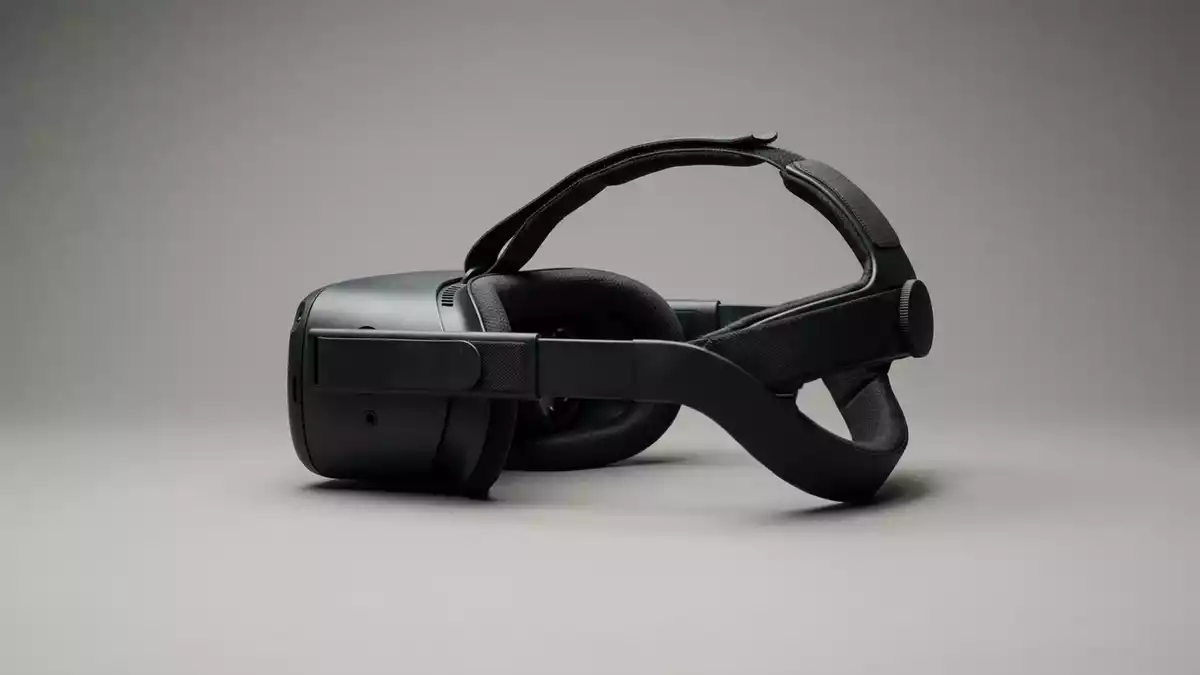
Pimax Dream Air SLAM Edition is a high-end PCVR headset that targets sim pilots and racing fans who want sharp visuals without a heavy brick strapped to their face. The SLAM bundle pairs the Dream Air headset with two tracked controllers and inside-out tracking for a premium price in the $1,999-2,299 range, making it one of the priciest consumer VR devices but also one of the most technically ambitious.
Display And Optics Prioritize Detail
The core of the Pimax Dream Air SLAM Edition is a dual Sony micro-OLED display system delivering 3,840 x 3,552 pixels per eye, for a combined 7,680 x 3,552 resolution in what Pimax describes as an 8K class headset. The company’s own headset overview page lists this 3840*3552*2 layout along with micro-OLED panels and an HFOV of around 110 degrees, tying resolution and field of view directly to its simulation focus.Pimax Dream Air overview
Independent testing backs these numbers up. A detailed review of the Dream Air notes a per-eye resolution of 3840 x 3552, a 90 Hz max refresh rate, and a horizontal field of view of roughly 110 degrees, confirming that the headset delivers both dense pixels and a reasonably wide viewing angle rather than chasing extreme FOV at the cost of clarity.Dream Air specs and review
Pimax combines these panels with its ConcaveView pancake lenses. The enterprise-focused Dream Air spec sheet cites ConcaveView pancake optics, a color gamut covering 100% of DCI-P3, and a contrast ratio claimed at 100000:1, characteristics that suit dark cockpits and night scenes in demanding titles.Dream Air enterprise specs
Weight, Comfort And Tracking Options
Weight is where the Dream Air SLAM Edition separates itself from many other PCVR headsets. Pimax’s own materials describe a headset weight under 170 grams, pairing the light shell with an ergonomic facemask and backstrap built to be modified for fit.Lightweight design and strap A FAQ from Pimax lists the panel size at 1.35 inches, reiterates micro-OLED technology, and notes that each lens weighs about 20 grams, keeping the front of the headset from feeling nose-heavy over long sessions.Dream Air FAQ and lens details
Reviewers put numbers on this comfort story. One long-term test measured the Dream Air at about 10.6 ounces, which corresponds to roughly 300 grams including cable weight, and stressed how this feels dramatically lighter on the head than many competing PCVR headsets that approach or exceed 600 grams.Measured headset weight Another comparative review lists the Dream Air’s weight near 170 grams for the headset shell itself, contrasting that with roughly 600 grams for some rivals, underscoring how much less mass you feel on your face when you stand up from a cockpit or lean forward during a race.Dream Air weight compared with heavier headsets
The SLAM Edition in particular adds four tracking cameras to the front of the headset to enable inside-out tracking. Technical breakdowns note that the Dream Air with SLAM offers headset and controller tracking via these cameras, with Lighthouse base station tracking available as an alternative option for those who prefer SteamVR’s external beacons.SLAM and Lighthouse tracking options A PC hardware review points out that the SLAM bundle includes two controllers tracked by the headset itself, whereas the Lighthouse version leans on SteamVR base stations and does not bundle controllers in the same way.SLAM bundle with controllers and tracking
Connectivity And PC Requirements
The Dream Air SLAM Edition is a tethered PCVR headset, not a standalone device. Pimax’s FAQ explains that the headset connects to a PC using DisplayPort 1.4 and USB 3.0 Type-C, with one Type-C port handling video and the second reserved for accessories such as external audio devices.DisplayPort and USB-C connectivity The cable length is listed at 5 meters in technical documentation, giving enough reach for cockpit setups or room-scale movement without the cable feeling overly restrictive.Cable length and physical specs
Feature lists from Pimax emphasize that the headset is powered by the company’s Pimax Play software and functions as a PC-powered VR device compatible with SteamVR and Pimax’s own content platform.Platform and device type overview The same comparison source classifies Dream Air as a PC-powered headset announced in December 2024 and released in June 2026, placing it among the newest wave of wired high-resolution devices that assume a reasonably powerful gaming PC as a prerequisite.
Pricing, Bundles And Competition
Pimax sells the Dream Air across two main bundles. The company’s store overview lists Dream Air pricing between $1,999 and $2,299, with the lower end corresponding to the Lighthouse configuration and the higher end to the SLAM Edition with controllers.Pricing range for Dream Air bundles A dedicated purchase page for the Dream Air cites a regular price of $2,299.00 USD for the full SLAM bundle, explicitly marking that figure as the standard price and noting that shipping and taxes are calculated separately at checkout.Purchase page listing $2,299 price
Third-party comparisons show slightly different figures when considering headset-only pricing. One spec database lists a retail price of $1,899 for the headset-only configuration and $2,199 for bundles that include controllers, again splitting Lighthouse and SLAM options into different price brackets.Alternative headset-only and controller bundle prices From a value perspective, this places Dream Air well above mainstream consumer headsets but close to or below some mixed reality devices positioned for productivity and media, emphasizing that it is a deliberately premium purchase oriented toward enthusiasts who prioritize visual fidelity.
Several reviews compare Dream Air directly with other premium PCVR headsets. One analysis contrasts the Dream Air’s roughly 170-300 gram weight range with a rival device at roughly 600 grams, highlighting a weight difference of around 300 grams that users can feel immediately during long sessions.Weight comparison against heavier PCVR rivals Another spec comparison pits the Dream Air’s per-eye resolution of 3840 x 3552 and 110 degree field of view against a 5K-class headset at 2560 x 2560 per eye, underscoring how much more detail Dream Air pushes to each eye for users willing to accept a wired connection and higher system requirements.Resolution comparison with 5K-class devices
Explore Pimax Dream Air SLAM Edition Details
Pimax’s own store listing for the Dream Air SLAM bundle consolidates key specs, pricing and bundle contents for buyers comparing options.
Use Cases, Limits And Who It Suits
The Dream Air SLAM Edition is squarely aimed at PC users who already own a capable machine and want visual clarity above all else. With 3840 x 3552 pixels per eye, its image density lends itself to reading cockpit instruments, spotting distant track signage, and viewing complex terrain with fewer visible pixels than older 1440p-class or 2160p-class headsets.Visual clarity for simulators The relatively modest 110 degree horizontal field of view keeps image edges from warping excessively, which can matter when users spend hours staring forward at a runway or track instead of constantly looking around a room.
On the flip side, running such a high-resolution, high-contrast headset means pushing a lot of pixels, and multiple reviewers note that users need strong GPUs and carefully tuned settings to keep frame rates at 72 or 90 Hz, especially in visually heavy titles. That makes Dream Air SLAM Edition best suited to enthusiasts who already invest in high-end PCs and are comfortable tweaking graphics options rather than those seeking a simple, console-like experience.Performance demands in complex PCVR titles
As a wired PCVR headset, Dream Air also lacks the untethered freedom of standalone devices. Pimax’s FAQ explicitly describes it as wired PCVR, though the company mentions an accessory battery pack concept that could later enable more wireless-like behavior.Wired PCVR design and accessory plans For dedicated sim rigs where a cable can be neatly managed along a cockpit frame, that tradeoff can be acceptable in exchange for the extra resolution and image quality, but it is still a limit to acknowledge.
Pimax Dream Air SLAM Edition At A Glance
- Product: Pimax Dream Air SLAM Edition PCVR headset with controllers
- Manufacturer: Pimax (pimax.com)
- Category: PC-powered VR headset
- Resolution: 3,840 x 3,552 pixels per eye micro-OLED display
- Field of view: Approximately 110 degrees horizontal HFOV
- Refresh rate: 72 Hz and 90 Hz modes supported
- Weight: Headset shell under 170 g, measured total around 10.6 oz
- Price: $2,299.00 USD for SLAM bundle (as of 09/19/2026)
- Target audience: Enthusiast PC sim and racing players seeking high-resolution wired VR


