
Google Nest Thermostat E T4000ES - Smart Home Climate Control With Frosted Glass Display
Published on 09/16/2026 at 22:10 | Editorial responsibility: Rafael Müller, Editor-in-Chief AD HOC NEWS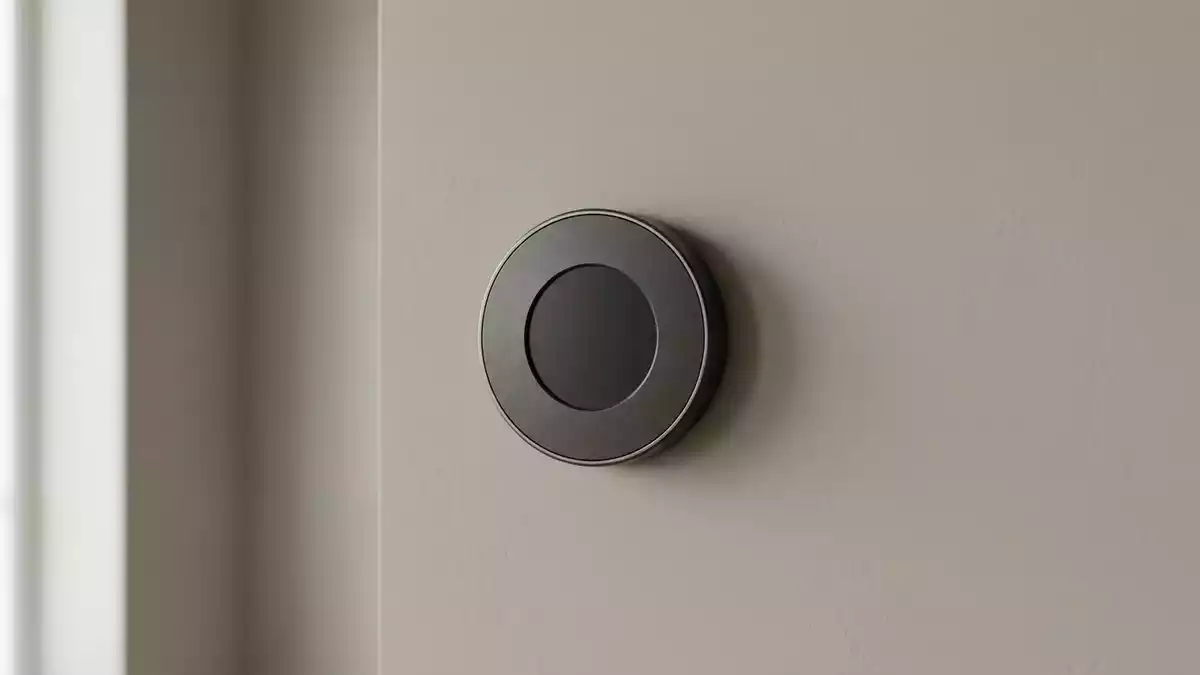
Google Nest Thermostat E T4000ES is a puck shaped smart thermostat designed to manage home heating and cooling through a simple frosted glass display and the Google Home app. It targets typical 24V residential systems, combining Wi-Fi connectivity, motion sensors and automatic scheduling to cut back on wasted energy when nobody is home.
Design, Display And Hardware Specs
The Nest Thermostat E uses a round housing with a diameter of about 3.19 inches and a height of roughly 1.14 inches, giving it a compact profile on the wall compared with the larger Nest Learning Thermostat. A technical spec sheet lists its mass at approximately 4.9 oz, with a matte white finish and frosted glass over the screen that softens the interface rather than showing a bright mirror like display.Technical documentation from a major home improvement retailer details that the LCD panel is a 24 bit color display with a 320 x 320 resolution at 182 pixels per inch and a 1.76 inch diameter, which is enough for clear temperature numerals and simple menus.
Inside the housing Nest includes temperature, humidity, proximity, occupancy and ambient light sensors, which allow the thermostat to detect when people are nearby and adjust the screen brightness and schedule logic accordingly. The same technical sheet notes a built in rechargeable lithium ion battery that draws power from the HVAC control wiring, with total power consumption under 1 kWh per month for the thermostat itself. Wireless connectivity covers 802.11b/g/n 2.4 GHz and 802.11a/n 5 GHz Wi-Fi along with Bluetooth Low Energy and 802.15.4 for communication with other devices in the Nest ecosystem.
System Compatibility And Smart Features
The Nest Thermostat E is designed for most 24V heating and cooling systems found in US detached homes and apartments. Documentation states that it works with gas, electric, forced air, heat pump, radiant, oil, hot water, solar and geothermal systems as long as they use low voltage control wiring. Supported configurations include one stage of heating (W1) and one stage of cooling (Y1), plus a second stage that can be either additional heating (W2) or additional cooling (Y2), along with connections for a fan (G) and power via C, Rh or Rc terminals.Compatibility details from the spec sheet emphasize that the thermostat is aimed at the majority of typical US systems but does not support certain complex multi stage or accessory configurations.
The thermostat connects to the Google Home and Nest apps on phones and tablets running iOS or Android, allowing remote temperature changes and schedule adjustments over the internet. Feature lists from a detailed review highlight functions such as automatic schedule creation based on observed user adjustments, app based programming and support for geofencing, where the thermostat can shift to a more efficient Eco mode when it detects that all registered phones have left the home.A review from a US technology publication notes that Home/Away Assist and scheduling are the core automation features, mirroring most of the functions of the more expensive Nest Learning Thermostat but in a simplified format.
Connectivity, Sensors And Everyday Control
In daily use the Nest Thermostat E behaves like a typical smart thermostat with a focus on basic clarity. When someone walks near the device, proximity and occupancy sensors wake the display, showing the target temperature or a simple dial graphic. Ambient light readings modulate the backlight so the 24 bit LCD remains legible in bright daylight without glowing harshly in a dark hallway. Connectivity requirements outlined in the technical documentation state that the thermostat expects an always on Wi-Fi connection plus a smartphone or tablet with the Nest or Google Home app for full remote control.
The internal radio supports dual band Wi-Fi with 2.4 GHz and 5 GHz networks so it can latch onto common home routers without needing a separate hub. Bluetooth Low Energy is present for local device discovery and accessory communication. Combined with its on board lithium ion battery, the thermostat retains its schedule even if the HVAC system goes offline briefly, drawing minimal power from the wiring harness. For installation, packages described on a major online retailer page list the display, base, optional trim plate, mounting screws, wire labels, an installation guide and a pro installation card as included components, pointing to a standard wall mount setup that many homeowners can perform themselves given basic comfort with wiring.A large US retailer listing confirms these contents and the round white plastic build.
Pricing And Value Against Alternatives
When launched, the Nest Thermostat E carried a US list price of $169, positioning it below the third generation Nest Learning Thermostat, which was listed at $249 in the same period according to trade press coverage. A comparative review underscores that the roughly $80 gap was intended to make the E a more approachable option for buyers who wanted app control and scheduling but did not need the metal housing and higher resolution display of the flagship model.An international tech review with US pricing repeats the $169 figure for the US market with the older Nest thermostat at $249.
More recent US pricing from a business focused retailer shows the Nest Thermostat E offered at a current price of about $55.99 for a new unit, reflecting the fact that the product now sits as a cost reduced model in a lineup that includes newer Nest thermostats. The same page indicates starting offers around $85.00 for certain configurations, but the main listed price is under $60, highlighting a substantial drop from the original MSRP.A US business retailer listing provides the current price figure and context that prices can vary in stores and apps.
Compared with the Nest Learning Thermostat, which remains a higher priced option even years after launch, the Thermostat E trades the metal ring and sharper 480 x 480 display for a polycarbonate body, frosted screen and slightly smaller diameter. The same review that highlights the E's 3.19 inch size notes that the Learning Thermostat measures 3.3 inches across and offers additional compatibility with multi stage systems and certain accessories, placing the E firmly in the midrange smart thermostat segment aimed at straightforward residential use. For buyers whose systems fall within the supported 24V categories and who value app control and simple scheduling over premium materials, the lower list and current retail prices strengthen the case for choosing the E instead of the flagship.
Nest Thermostat E Official Specs
Google hosts a detailed installation and technical specification page for the Nest Thermostat E with dimensions, wireless standards and compatibility information.
Brand Ownership And US Presence
The Thermostat E belongs to the Google Nest smart home line, which covers thermostats, cameras, speakers, displays and other connected devices. Historical timelines describe how Nest Labs, founded in 2010 in Palo Alto, California, was acquired by Google in January 2014 in a deal worth about $3.2 billion and later fully integrated into Google's hardware division. In 2019 Google unified its smart home branding under the Google Nest name, making Nest the label for thermostats and other home devices sold through Google's channels.
Company profiles list Google Nest's headquarters address as 3400 Hillview Ave, Palo Alto, CA, tying the Thermostat E to a US based hardware operation even though Google LLC and its parent Alphabet Inc. run the broader business. For shoppers, that means the thermostat is supported by Google's US hardware and services teams and configured to work with the US version of the Google Home app, English language firmware and common local HVAC configurations.
Placement In The Smart Thermostat Segment
Within the smart thermostat market, the Nest Thermostat E sits between basic programmable digital thermostats and higher end learning models. It offers app control, Wi-Fi connectivity and sensor driven automation that go beyond a simple seven day programmable unit, but it avoids the reflective glass, high resolution display and expanded compatibility of the Nest Learning Thermostat. US tech reviews characterize it as a mid tier option that delivers the main Nest experience with a lower price and simpler styling, making it suitable for owners of single or dual stage 24V systems who want remote control and automatic scheduling without paying flagship prices.
Limitations appear chiefly in system compatibility and display fidelity. The E does not support some complex multi stage or accessory heavy HVAC setups that can be handled by the Learning Thermostat or certain premium Honeywell models, and its frosted screen deliberately mutes visual impact. However, for a large portion of typical US homes with straightforward heating and cooling, its 3.19 inch, 4.9 oz form factor and support for most common gas, electric and heat pump systems cover the essentials. The one year limited warranty listed in the technical sheet provides baseline protection, while some pro installations can extend coverage to three years under certain programs.
Google Nest Thermostat E Facts
- Product: Google Nest Thermostat E T4000ES smart thermostat
- Manufacturer: Google LLC, Mountain View, CA (Google Nest hardware division)
- Category: Smart Wi-Fi thermostat for 24V HVAC systems
- Model designation: T4000ES, round wall mounted unit
- Dimensions and weight: Diameter 3.19 in, height 1.14 in, mass 4.9 oz
- Display: 1.76 in 24 bit color LCD, 320 x 320 resolution at 182 ppi
- Wireless standards: 802.11b/g/n 2.4 GHz and 802.11a/n 5 GHz Wi-Fi, Bluetooth Low Energy, 802.15.4
- Power and battery: Built in rechargeable lithium ion battery, thermostat power consumption under 1 kWh per month
- System compatibility: Most 24V gas, electric, forced air, heat pump, radiant, oil, hot water, solar and geothermal systems with up to two stages of heating or cooling
- Price: $55.99 (as of 09/16/2026) from a US business retailer
- Target audience: US homeowners and renters with standard 24V HVAC systems seeking app controlled scheduling and energy conscious automation


