
Apple iPad (10th Generation) 10.9-Inch - A14 Power, USB-C And Landscape Camera
Published on 09/12/2026 at 14:06 | Editorial responsibility: Rafael Müller, Editor-in-Chief AD HOC NEWS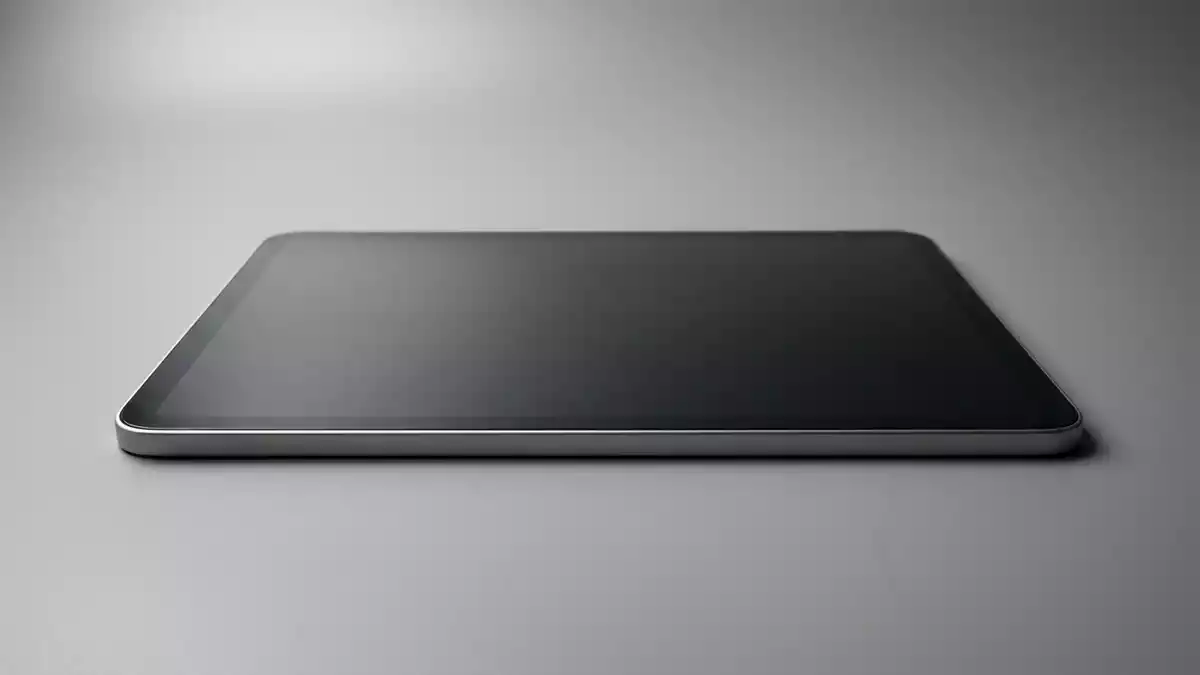
Apple iPad (10th generation) is Apple Inc's refreshed entry-level tablet, built around a 10.9-inch Liquid Retina display and the A14 Bionic chip to give everyday users more screen space and processing headroom without jumping to iPad Pro prices. The model launched in 2022 and sits below the iPad Air and iPad Pro in Apple’s current tablet lineup, but it adds modern touches like USB-C, a landscape front camera and Wi-Fi 6 that make it feel much closer to those higher-end devices.
Design, Display And Cameras
The iPad (10th generation) moves to a flat-edge design with uniform bezels and a 10.9-inch Liquid Retina LCD, running at a native resolution of 2360 x 1640 pixels and a pixel density of 264 ppi, with typical maximum brightness rated at 500 nits according to Apple’s technical specifications on its support site.Apple’s tech specs list the 10.9-inch 2360 x 1640 display at 264 ppi and 500 nits The screen supports True Tone, which adjusts color temperature to ambient light, and uses an oleophobic coating to resist fingerprints, but it is not laminated and does not support ProMotion high refresh rates. Dimensions for the Wi-Fi model are 9.79 inches in height, 7.07 inches in width and 0.28 inch in depth, with a listed weight of 1.05 pounds, while the Wi-Fi + Cellular variant adds a fraction of an ounce at 1.06 pounds.Apple’s spec sheet details the 9.79 x 7.07 x 0.28-inch chassis and around 1.05 lb weight
On the back, the tablet uses a single 12-megapixel wide camera with an f/1.8 aperture, autofocus and support for 4K video recording, Smart HDR 3 and 5x digital zoom, matching the resolution and many features of cameras found in higher tiers of Apple’s tablet range.A detailed spec overview confirms the 12MP f/1.8 rear camera and 4K video The more notable change is on the front: Apple has moved the 12-megapixel ultrawide selfie camera with a 122-degree field of view to the long edge, so it sits at the top when the tablet is used in landscape. This placement aligns better with video calls and supports Center Stage, which pans and zooms digitally to keep people framed during calls.A review of the iPad (10th generation) highlights the landscape 12MP ultrawide front camera and Center Stage
Performance, Connectivity And Accessories
Inside, the iPad (10th generation) replaces the A13 Bionic used in the 9th generation iPad with the newer A14 Bionic SoC, bringing a hexa-core CPU configuration with two high-performance cores clocked around 3.1 GHz and four efficiency cores, along with a four-core GPU and a Neural Engine that doubles the core count compared with its predecessor.Coverage of the hardware notes the move from A13 to A14 Bionic and the expanded Neural Engine Apple pairs the chip with 4GB of LPDDR4X memory and offers two storage capacities, 64GB and 256GB, which match the configurations available on the 9th generation iPad but at higher starting prices.A spec rundown lists 4GB of RAM with 64GB and 256GB storage options For most basic users, 64GB may be sufficient for browsing, streaming and light app usage, but heavier app installations, offline video libraries or games can push power users toward the 256GB option.
Networking capabilities step up to Wi-Fi 6 (802.11ax) with 2x2 MIMO in all models, improving both peak throughput and performance in congested environments compared with Wi-Fi 5 tablets.Connectivity specs list Wi-Fi 6 and Bluetooth 5.2 support Bluetooth 5.2 handles accessories, while cellular configurations add support for 5G NR as well as 4G LTE bands, giving mobile workers and commuters data connectivity away from Wi-Fi.A technical summary notes 5G NR and LTE support on Wi-Fi + Cellular models Apple lists battery life at up to 10 hours of web browsing or video playback on Wi-Fi, and up to 9 hours when using cellular data, in line with other current iPad models and sufficient to cover a full school or workday under typical use.Apple’s specifications rate up to 10 hours of web or video on Wi-Fi and up to 9 hours on cellular
One of the biggest practical shifts for the 10th generation iPad is the move from Lightning to USB-C, aligning the connector with newer iPads and many non-Apple devices and making it easier to share chargers or docks.A feature article emphasizes the transition to USB-C on the 10th generation iPad The tablet also supports Apple Pencil (1st generation) via an adapter and the Apple Pencil (USB-C) model, as well as Apple’s Magic Keyboard Folio, which adds a keyboard and trackpad in a two-piece case. For students or office workers, that combination turns the device into a portable writing and productivity station, though Apple’s official compatibility notes make clear that it does not support the second-generation magnetic Apple Pencil used on iPad Pro and some Air models.Accessory coverage lists support for Apple Pencil (1st generation) and Magic Keyboard Folio
Official Specs For Apple iPad (10th Generation)
Apple’s own spec sheet bundles detailed information about dimensions, display, battery life and connectivity for the iPad (10th generation).
Pricing, Colors And Position In The Lineup
When Apple introduced the iPad (10th generation) in 2022, the Wi-Fi model carried an introductory price of $449 in the US, while the Wi-Fi + Cellular configuration started at $599, marking a noticeable jump over the $329 starting price of the 9th generation iPad.A launch summary lists US$449 for Wi-Fi and US$599 for Wi-Fi + Cellular at introduction Subsequent discounts have lowered those figures: by mid-2025, US deals from mainstream retailers and carriers had brought the entry price down to $349 for the 64GB Wi-Fi model, $499 for the 256GB Wi-Fi version, and up to $649 for the 256GB Wi-Fi + Cellular configuration.A US pricing breakdown lists $349 for 64GB Wi-Fi, $499 for 256GB Wi-Fi, $499 for 64GB Wi-Fi + Cellular and $649 for 256GB Wi-Fi + Cellular Those figures put the iPad 10th gen below iPad Air, which typically starts higher, but above the 9th generation iPad that Apple continued to sell at a lower price point for budget buyers.
Color choices include blue, pink, yellow and silver, which give buyers more expressive options than the more limited or muted palettes used for some older entry-level models.A specification list cites blue, pink, silver and yellow finishes The device runs iPadOS 16 at launch but is eligible for later iPadOS updates, and its A14 chip and 4GB RAM keep basic multitasking, split-screen use and Apple’s Stage Manager feature (as supported) within reach, though power users who lean on heavy creative apps may still benefit from iPad Air or Pro hardware. For Apple Inc, the iPad line remains a core hardware category, and the 10th generation model fills the slot for shoppers who want modern features but do not need the performance or display upgrades of the company’s higher tiers.An overview of the iPad family positions the standard iPad below the Air and Pro ranges in Apple’s tablet hierarchy
Comparison With The 9th Generation iPad And Alternatives
Compared with the 9th generation iPad, the 10th generation model brings several measurable changes. The display grows from 10.2 inches to 10.9 inches in diagonal size, offering more usable space for split-screen apps and video without a dramatic increase in physical footprint.Coverage of the upgrade notes the move from a 10.2-inch to a 10.9-inch display and a higher starting price The processor steps up from A13 to A14, with the newer chip providing more CPU and Neural Engine capability for tasks like photo editing and on-device machine learning, and connectivity advances to Wi-Fi 6 and optional 5G on cellular models instead of Wi-Fi 5 and LTE. These upgrades are paired with a shift to USB-C and the landscape front camera, which change how the device fits into desk setups and video call workflows.
At the same time, Apple kept some constraints in place. Base storage remains 64GB despite the price increase, meaning users who expect to store large local files still need to consider the 256GB version. The display, while larger and brighter, does not gain higher refresh rates or full lamination seen on Air and Pro tiers, and support for Apple Pencil remains focused on the 1st generation and Apple Pencil (USB-C) rather than the magnetically charging 2nd generation accessory. For buyers comparing the iPad (10th generation) with iPad Air, the numbers underline its placement as a more affordable but slightly less feature-rich tablet: the Air offers laminated displays, M-series chips and second-generation Apple Pencil support at a higher starting price, whereas the 10th gen iPad brings modern basics to a mainstream audience.
Use Cases And Who The iPad (10th Generation) Fits Best
Because the iPad (10th generation) balances a 10.9-inch display, A14 performance, Wi-Fi 6 and optional 5G networking with mid-tier pricing, it aligns well with students, families and general users who want a tablet for note-taking, streaming, light creative work and video calls rather than for heavy professional workloads. In classrooms, the combination of up to 10 hours of battery life, Apple Pencil support and the Magic Keyboard Folio makes it suitable for handwritten notes, document editing and browser-based research without forcing schools or parents into the cost of iPad Air or Pro devices.Apple’s user guide for the iPad (10th generation) details the port layout, cameras and buttons used in everyday scenarios For casual home use, the landscape front camera and Center Stage features help keep family video calls natural, and the USB-C port allows the tablet to share chargers and hubs with newer laptops and other devices.
From a broader perspective inside Apple’s tablet range, the iPad (10th generation) acts as a bridge between the long-running classic iPad design and the more advanced Air and Pro line, bringing some of their features down to a still relatively accessible price point. Buyers who prioritize maximum screen quality, top-tier performance or advanced accessory ecosystems will find those values more concentrated in the Air and Pro families, while those who care most about modern networking, a reasonably large screen, front camera placement and compatibility with Apple’s education and consumer software will find the 10th generation iPad’s spec sheet aligned with their everyday needs. As long as shoppers choose the storage tier that matches their usage patterns and understand the differences in display and accessories compared with higher models, the device offers a clear, quantified path into Apple’s tablet ecosystem.
Key Facts About Apple iPad (10th Generation)
- Product: Apple iPad (10th generation), 10.9-inch Wi-Fi, 64GB
- Manufacturer: Apple Inc., One Apple Park Way, Cupertino, CA 95014
- Category: Tablet computer (iPadOS)
- Display: 10.9-inch Liquid Retina LCD, 2360 x 1640 resolution, 264 ppi, 500 nits typical brightness
- Processor and memory: Apple A14 Bionic SoC with hexa-core CPU and 4GB RAM
- Storage options: 64GB or 256GB flash storage
- Size and weight: 9.79 x 7.07 x 0.28 inches, approximately 1.05 lb (Wi-Fi model)
- Battery life: Up to 10 hours of web browsing or video playback on Wi-Fi
- Price: $349 for the 64GB Wi-Fi model at US retailers (as of 09/12/2026)
- Target audience: Students, families and general users needing a mid-range iPad for everyday tasks


