
4M Kidzlabs Anti Gravity Magnetic Levitation Science Kit - Seven Maglev Projects For Young Scientists
Published on 09/16/2026 at 19:44 | Editorial responsibility: Rafael Müller, Editor-in-Chief AD HOC NEWS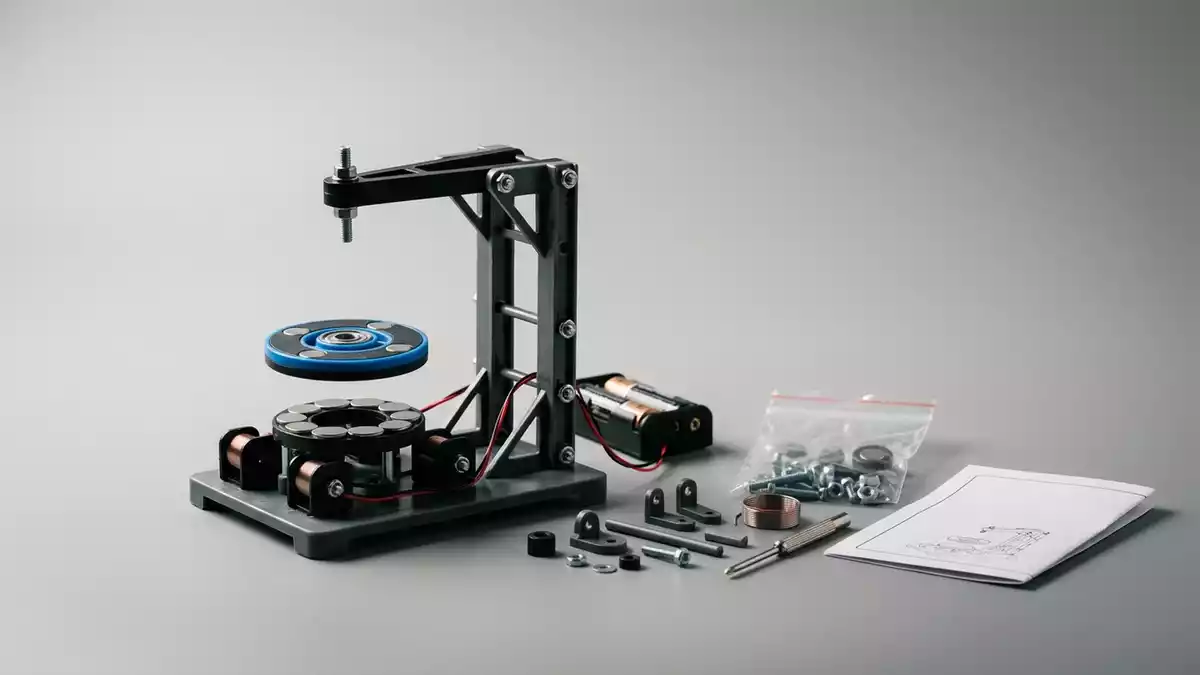
4M Kidzlabs Anti Gravity Magnetic Levitation Science Kit turns the abstract idea of magnetic levitation into seven hands-on projects that kids can build on a tabletop at home. The compact kit is aimed at children around ages 8 to 14 and focuses on visible anti gravity effects such as a floating pencil, levitating metal parts and a small maglev style transporter.
What Comes In The 4M Kidzlabs Maglev Box
The Anti Gravity Magnetic Levitation kit is part of 4M's Kidzlabs line and arrives as a small boxed experiment set with a footprint of roughly 9.45 x 8.46 x 2.48 in for the packaged product, according to one US retail listing that describes the assembled size of the kit components.
Inside the box, the core elements are seven ring magnets, a molded baseplate and a series of plastic and metal parts that act as supports, axles and decorative pieces. A detailed parts list from a US hobby retailer notes a graphic template with compass, earth and spaceman motifs, a thin rod with ring, a hexagonal rod, a round rod, a sticker sheet, a UFO body, a string, a pointer, a copper washer, ten nuts, an enclosure, a divider, a weighing pan, a string attachment, an axle, a support arm and a baseplate, plus a printed manual with detailed instructions.
The baseplate itself is described in European product information with dimensions of 14 x 17.5 x 2 cm, which matches the rectangular platform that forms the foundation for the various experiments. The platform hosts the ring magnets and provides mounting points for the upright rods, weighing pan and other structures used to show magnetic repulsion and levitation.
Seven Experiments Built Around Magnetic Levitation
The main attraction of the kit is the sequence of seven experiments that all rely on magnetic forces to suspend or move objects without direct contact. Retail and hobby descriptions highlight projects such as floating a pencil so it spins in midair, levitating a screw above the magnets, building a simple maglev transporter inspired by high speed trains, creating a random motion machine, and constructing a hovering metal sculpture.
One product listing characterizes the set as a STEM experiment kit with seven physics projects based on magnetic levitation, emphasizing that it teaches kids about the earth's magnetic poles, repulsion between magnets and practical applications such as a homemade magnetic compass and a magnetic weight scale. The magnets are arranged so that like poles face each other, creating repelling forces strong enough to keep light objects suspended while still allowing them to rotate or oscillate.
Written instructions walk users through assembling each configuration step by step, from positioning the baseplate and inserting rods to stacking the ring magnets with the correct orientation. The graphic template and decorative parts such as the UFO body and spaceman add visual flair to the experiments and help turn abstract physics into playful scenes.
Age Range, Safety And Difficulty Level
Across US and international retail sources, the kit is consistently recommended for ages 8 and up, with some listings specifying an age band of 8 to 14 years. This places the experiments in the middle elementary to early middle school range, where children can already handle small parts and follow multi step instructions but still benefit from guided projects.
One science education retailer attaches a choking hazard warning due to small components and advises that the kit is not suitable for children under three years old, with adult supervision required for safe use. The projects involve aligning strong magnets, handling nuts and washers and balancing objects carefully, which can be challenging for younger children without help.
From a difficulty perspective, the kit balances straightforward builds, such as the floating pencil, with more intricate setups like the maglev transporter and random motion machine. The instructions aim to keep each project achievable in a single session, making the kit appropriate both for home use and for short classroom or club activities.
Pricing In The US And How It Compares
On US retail sites, the Anti Gravity Magnetic Levitation Science Kit appears at a range of prices within the typical band for compact STEM experiment sets. A large US general merchandise retailer lists the Kidzlabs Anti Gravity Maglev kit at $28.47 when purchased online, with the description positioning it as a seven project physics set with magnetic levitation as the core theme (price as of 09/16/2026).
Another US science education retailer offers a closely labeled Anti Gravity Magnetic Levitation kit at $23.95 around early September 2026. A department store listing under the 4M Kidzlabs Antigravity Maglev name shows a current price of $38.99, indicating that pricing can vary by store and channel but generally falls somewhere in the $24 to $39 band for the US market.
In comparison with other small STEM kits focused on single topics such as electricity or simple chemistry sets, this price level places the 4M kit in the middle segment: not a budget impulse item, but still accessible for many households and suitable as a birthday or holiday gift for a child interested in science.
How The 4M Kit Stacks Up Against Other STEM Sets
Compared with typical beginner science kits that include only one or two core experiments, the Kidzlabs Anti Gravity Magnetic Levitation kit stands out by packaging seven distinct projects around a shared concept. Many entry level magnet sets focus on bar magnets and iron filings, while this kit concentrates on ring magnets and anti gravity effects.
One US science retailer emphasizes that the set weighs about 14 oz in shipping, with an approximate ship size near 9.40 x 8.50 x 2.40 in, making it compact enough to store easily and to use on a small desk or kitchen table. This smaller footprint contrasts with some larger physics sets that require more space and more extensive cleanup.
Where other STEM products may spread across topics like electricity, optics and simple machines, the 4M kit focuses tightly on magnetic levitation and repulsion. For a child already curious about maglev trains or hovering toys, this depth on one theme can be more engaging than a broader but shallower assortment.
Use Cases, Limits And Who It Suits Best
For parents and educators, the kit's seven experiments lend themselves to structured learning sessions or casual weekend builds. Each project demonstrates a different way magnetic forces can support weight or generate motion without friction, which can complement school lessons on forces and energy.
The recommended age range and choking hazard warning set clear limits: children under eight will likely need significant help, and the smallest parts should be kept away from toddlers. The experiments also work best in a calm environment where magnets and parts are not bumped while being aligned, as even slight disturbances can disrupt levitation.
For households seeking a compact, self contained physics activity with visible anti gravity effects, the 4M Kidzlabs Anti Gravity Magnetic Levitation Science Kit offers a focused set of seven projects based on ring magnets, repulsion and careful balancing. It is less suited to children who prefer quick crafts or chemistry style experiments, but well aligned with those fascinated by trains, space themed designs and the idea of floating objects.
Key Facts At A Glance
- Product: 4M Kidzlabs Anti Gravity Magnetic Levitation Science Kit
- Manufacturer: 4M Industrial Co., Ltd.
- Category: Magnetic levitation STEM experiment kit
- Projects: Seven magnetic levitation experiments in one kit
- Age recommendation: 8 to 14 years
- Baseplate dimensions: 14 x 17.5 x 2 cm platform
- Price: $28.47 (as of 09/16/2026, major US retailer)
- Target audience: School age children interested in physics and STEM activities


