
Zugspitze, Germany’s high plateau above Garmisch-Partenkirchen
Published on 09/21/2026 at 08:03 | Editorial responsibility: Rafael Müller, Editor-in-Chief AD HOC NEWS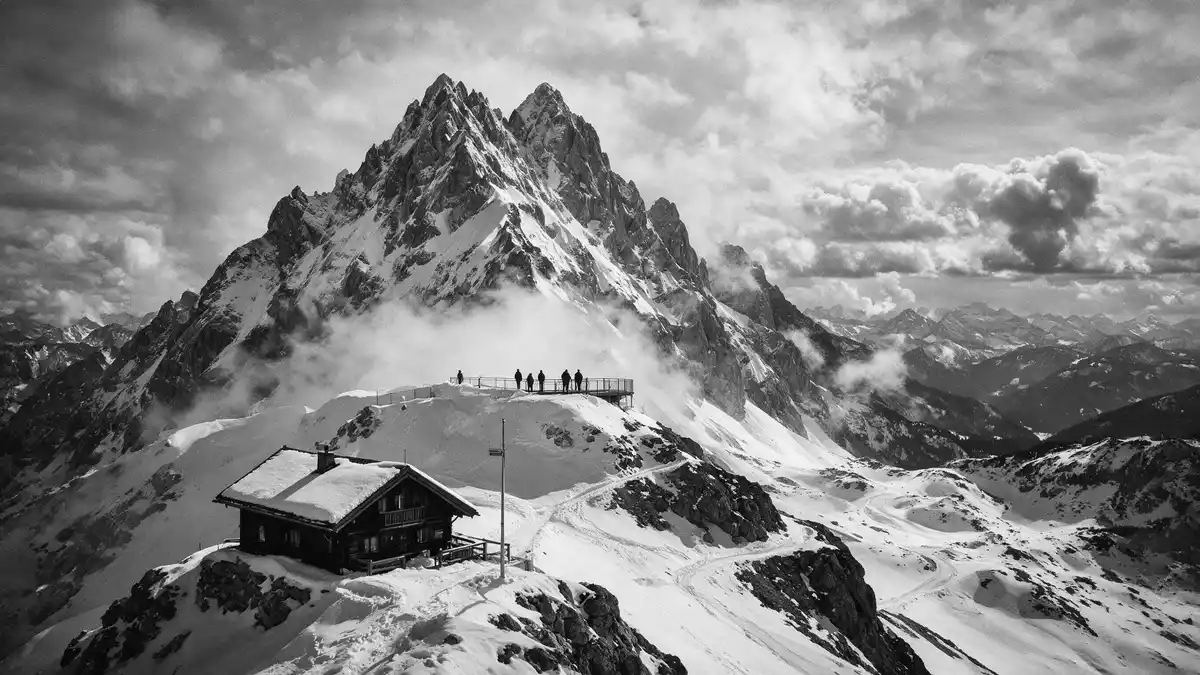
Zugspitze above Garmisch-Partenkirchen is Germany’s highest mountain, a border peak where bare rock, snowfields and built structures share a high plateau on the crest of the Wetterstein Mountains. Rising to about 2,962 m (9,718 ft), it stands on the boundary between Bavaria in Germany and Tyrol in Austria, giving the summit area a distinctly cross-border character.
A high plateau on Germany’s rooftop
Zugspitze forms part of the Wetterstein Mountains in the Eastern Alps, with its main summit reaching 2,962 m (9,718 ft) above sea level.highest peak of the Wetterstein Mountains The massif rises south-west of Garmisch-Partenkirchen and above the village of Grainau, with steep faces dropping towards Germany on one side and Austria on the other.Zugspitzmassiv liegt südwestlich von Garmisch-Partenkirchen At the summit, the international border runs across the ridge, and both Germany and Austria have mountain facilities on their respective sides.
The main summit area is not a single isolated point but a compact high plateau that includes several structures, viewing platforms and the neighbouring Zugspitzplatt, a high-altitude plateau on the German side of the massif.highest point in Germany Below the summit, the Zugspitzplatt forms the base for ski runs and glacier access, while the rocky crest above carries the summit cross on the German side and alpine buildings that cling to the ridge.
Alpine rock, glacier and summit structures
Zugspitze is a mountain of pronounced contrasts: steep limestone faces, patches of permanent snow and ice on the Zugspitzplatt, and a cluster of engineered structures that make the summit accessible without technical climbing.Zugspitze elevation The geology belongs to the Northern Limestone Alps, and the rock gives the mountain its light-coloured appearance, especially on the German northern side.
On the plateau and summit ridge stand several buildings, including a weather station, restaurants and viewing terraces belonging to both the German and Austrian sides.Zugspitze 2962,06 m From these terraces, the surrounding Alps spread out in all directions, with many named peaks visible on clear days and the broader chain of the Wetterstein forming the immediate backdrop.
Railways, cable cars and the “Top of Germany”
Zugspitze has been reached by mountaineers since the nineteenth century, with an early documented ascent recorded in 1820.Erstbesteigung 27. August 1820 Over the twentieth century, the development of cogwheel railways and cable cars turned the mountain into a place that combines engineered transport with high alpine terrain.
The Bayerische Zugspitzbahn cogwheel railway climbs from Garmisch-Partenkirchen to the Zugspitzplatt station, giving direct access to the high plateau and the glacier area.Bayerische Zugspitzbahn From there, a cable car continues up to the summit buildings, while another cable car connects the lakeside at Eibsee with the ridge. Together, these lines make the “Top of Germany” slogan a literal description: rail and cable routes rise from valley stations to the country’s highest point.
Visiting Zugspitze: what travellers from Western Europe should know
- Zugspitze rises south-west of Garmisch-Partenkirchen in Bavaria, with the Bayerische Zugspitzbahn cogwheel railway linking the town to the Zugspitzplatt high plateau and onward cable cars reaching the summit.
- The terrain on the mountain is high-alpine, with steep rocky faces, snowfields and glacier remains; summit access involves exposed terraces and stairways at altitude, and weather conditions can change rapidly.
- The mountain lies on the border between Germany and Austria, so the official language is German and the currency is the euro.
Searching for Zugspitze on social platforms
These links open searches for Zugspitze on each platform.
Frequently asked questions about Zugspitze
Where is Zugspitze located?
Zugspitze is part of the Wetterstein Mountains in the Eastern Alps, rising south-west of Garmisch-Partenkirchen on the border between Bavaria in Germany and Tyrol in Austria.
What should visitors expect on a visit to Zugspitze?
Visitors encounter high-alpine terrain with steep rock, snowfields and glacier remains, together with summit structures, viewing terraces and transport links that bring them directly to the high plateau.
What makes Zugspitze distinctive among German mountains?
Zugspitze is distinctive as Germany’s highest mountain, a limestone summit plateau shared between Germany and Austria, combining glacier access, mountain railways and cable cars at the country’s highest point.


