
Zugspitze and the border ridge above Bavaria
Published on 09/16/2026 at 22:08 | Editorial responsibility: Rafael Müller, Editor-in-Chief AD HOC NEWS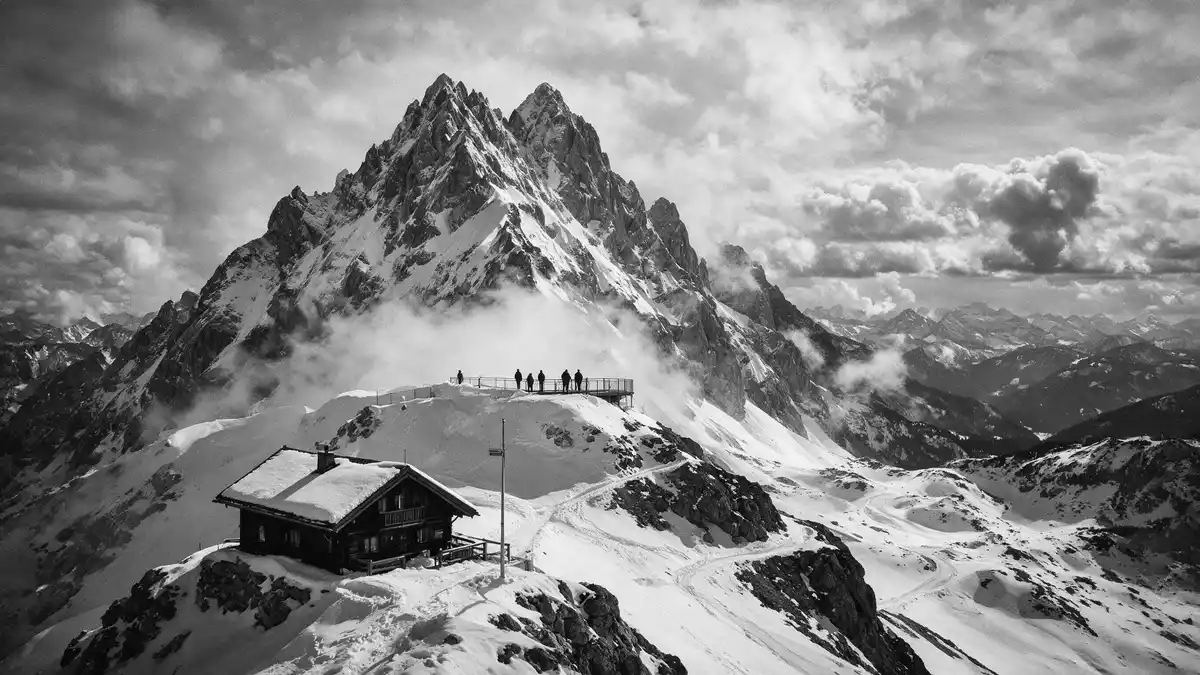
Zugspitze rises above Garmisch-Partenkirchen as Germany’s highest mountain, reaching 2,962 m (9,718 ft). Its summit sits on the border with Austria, and the Wetterstein range frames its profile.
Zugspitze above the Wetterstein ridge
The mountain belongs to the Wetterstein Mountains in the Bavarian Alps, a limestone range that gives the summit ridge a hard, pale look. The border runs over the western summit, while the eastern summit carries the highest point.
The first documented ascent took place on 27 August 1820, when Josef Naus reached the summit with Johann Georg Tauschl and Maier. That date places Zugspitze within the long history of Alpine surveying and climbing.
Railways, ridges and the summit plateau
Visitors meet Zugspitze through mountain transport rather than a single road. The Bavarian Zugspitze Railway climbs from Garmisch-Partenkirchen, and aerial tramways connect the valley and the summit area.
Above the upper stations, the mountain opens into a broad summit setting with observation spaces and weather-related facilities. The scale is clear at once: a high ridge, exposed rock, and views across several Alpine states.
2,962 m summit and border mountain in Germany are the two facts that define the place most clearly. 27 August 1820 gives it a historical anchor that remains part of its identity.
Stone, ice and borderland light
The summit landscape is made of rock, snow and ice, with the massif carrying glaciers on its upper slopes. The contrast between steep limestone faces and the level summit area is visible from the ridges and from the approaches.
Zugspitze has long stood as a mountain of measurement as well as a mountain of height. Its name belongs to a peak that is both physical and symbolic, tied to the Bavarian borderland and the wider Alps.
Visiting Zugspitze: what travellers from Western Europe should know
- The mountain lies south of Garmisch-Partenkirchen in Bavaria. The Bavarian Zugspitze Railway and the cable-car system provide the main access.
- The summit area stands high above the valley, and the terrain is alpine rock with exposed edges. Warm clothing and sturdy footwear suit the altitude and the open ground.
- The German and Austrian sides meet on the ridge. That border setting is part of the place’s geographical character.
- The Wetterstein Mountains form the backdrop. Their limestone structure is visible in the pale cliffs and sharp lines around the summit.
Searching for Zugspitze on social platforms
These links open searches for Zugspitze on each platform.
Frequently asked questions about Zugspitze
Where is Zugspitze?
Zugspitze stands south of Garmisch-Partenkirchen in Bavaria, on the border between Germany and Austria. It belongs to the Wetterstein Mountains.
What does a visit involve?
The mountain is reached by rail and cable car, then by summit paths and viewing areas. The setting is high, open and exposed.
What makes Zugspitze distinctive?
Its height, border location and long Alpine history define it. The 27 August 1820 first ascent and the 2,962 m summit give it lasting prominence.


