Zona Arqueologica de Tulum and its cliff-top walls
Published on 09/14/2026 at 19:44 | Editorial responsibility: Rafael Müller, Editor-in-Chief AD HOC NEWS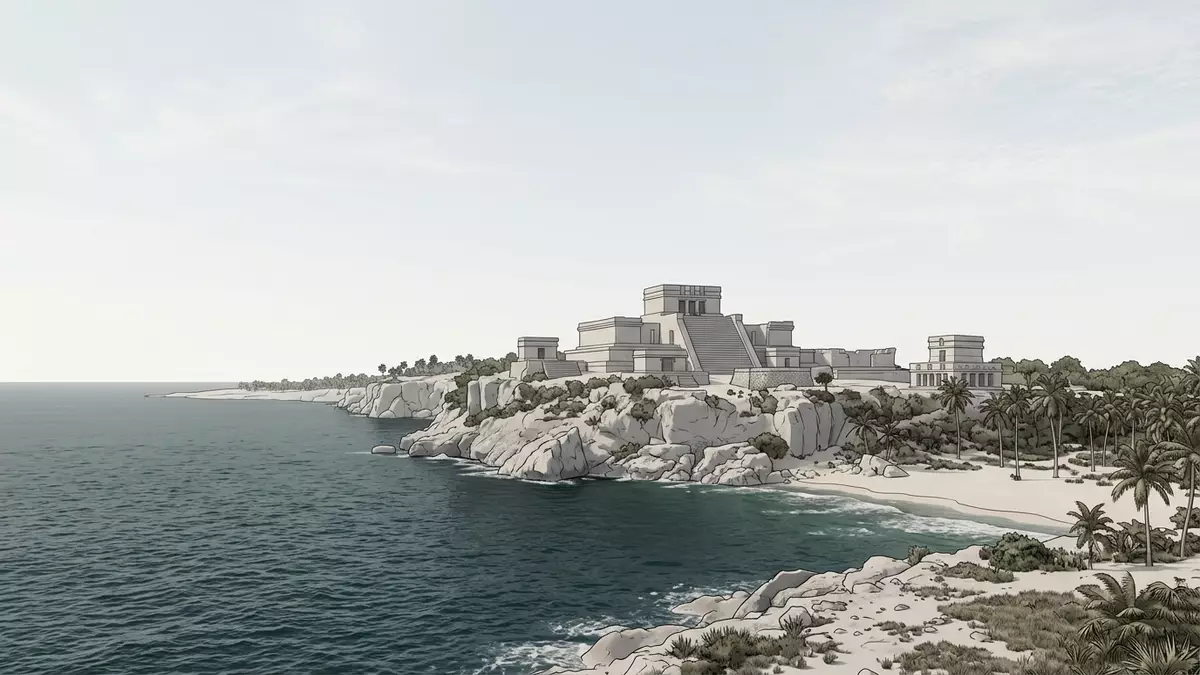
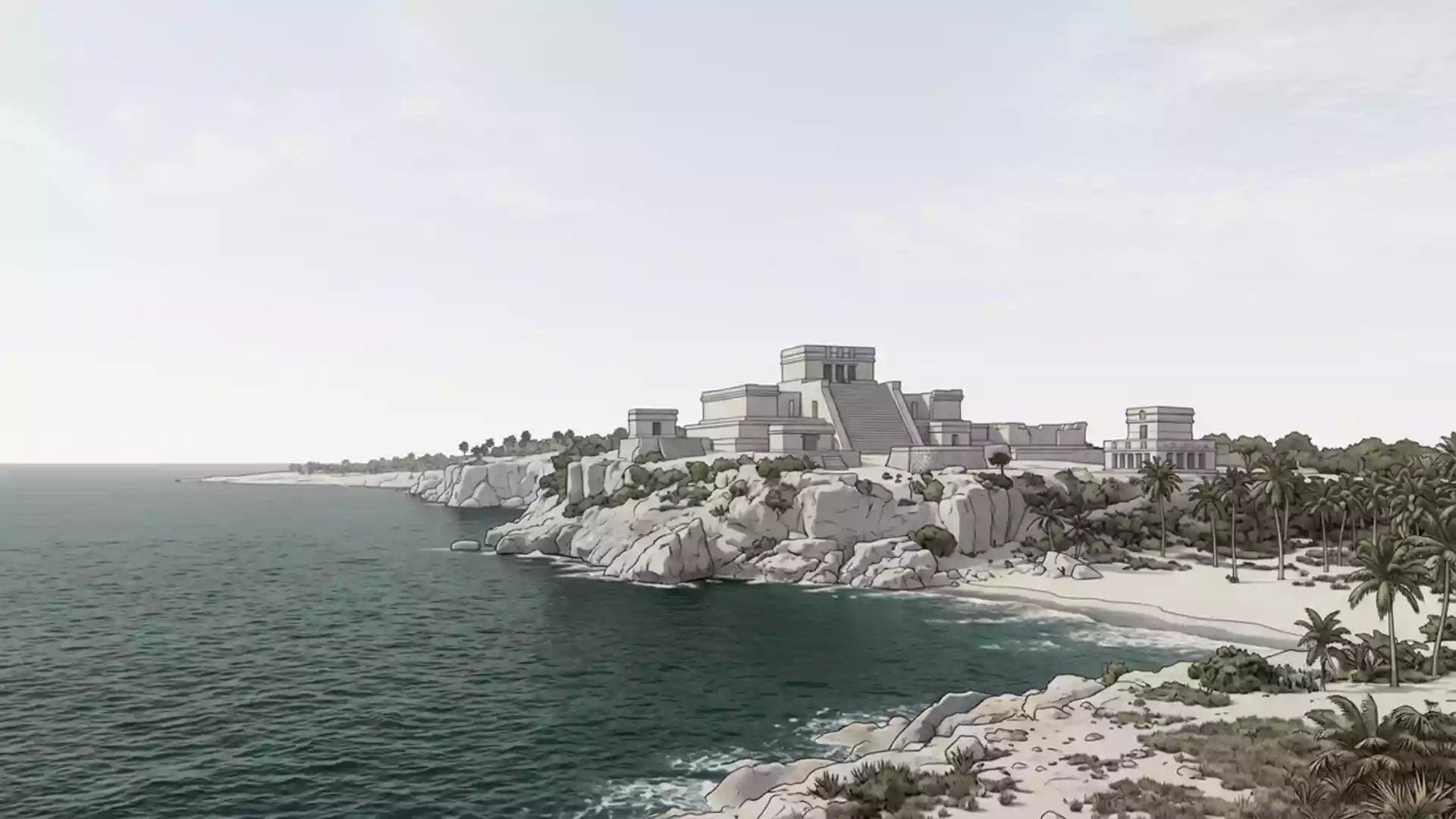
Zona Arqueologica de Tulum is a pre-Columbian Maya site on the Caribbean coast of Quintana Roo, near Tulum in Mexico. Its strongest visual feature is the long stone wall that frames the settlement while the sea forms its eastern edge.
Cliff-edge walls above the Caribbean
The site belongs to the late Postclassic world of Maya settlement on the Yucatán Peninsula, and its standing buildings date to the Middle and Late Postclassic. El Castillo rises above the cliff line and remains the most prominent structure in the enclosure.
The walls, platforms and temples create a compact coastal complex rather than a sprawling city. The name Tulum is linked with the idea of a wall, while the earlier name Zamá survives in historical sources and local explanation.
El Castillo and the temple group
Inside the enclosure, the buildings sit close together on low platforms, with narrow stairways, small chambers and ceremonial spaces. The Temple of the Frescoes and the Temple of the Descending God are among the best-known structures, and both keep the focus on masonry, decoration and height above ground.
The arrangement gives the site a clear profile: a fortified perimeter, a sea-facing edge and a cluster of temples inside it. A federal heritage listing identifies it as Zona Arqueológica de Tulum, while the INAH guide places its formal opening to the public in 1939.
Tulum in the Maya coast
Tulum was a coastal centre within the broader Maya network of the peninsula. It stood near routes that linked the shoreline with inland settlements, and its position above the sea made the cliff edge part of its identity.
The site is also associated with the older name Zamá and with the broader historical span of the Postclassic period. A site guide places the settlement within the late Postclassic phase and identifies its masonry townscape as a notable example of eastern coastal urban form.
Visiting Zona Arqueologica de Tulum: what travellers from Western Europe should know
- The archaeological zone stands near the town of Tulum, south of Cancún on Federal Highway 307. Access from the road leads into a coastal site inside the wider Tulum area.
- The terrain combines low platforms, stone steps and uneven masonry surfaces. The cliff edge and the enclosed plan give the place a compact layout.
- Spanish is the official language and the currency is the Mexican peso. Entry requirements depend on your nationality; UK travellers can check the FCDO travel advice at gov.uk/foreign-travel-advice, Irish travellers the Department of Foreign Affairs at ireland.ie.
- The site is linked with the names El Castillo, the Temple of the Frescoes and the Temple of the Descending God. Those names help separate the main structures from the wall that surrounds them.
Searching for Zona Arqueologica de Tulum on social platforms
These links open searches for Zona Arqueologica de Tulum on each platform.
Frequently asked questions about Zona Arqueologica de Tulum
Where is Zona Arqueologica de Tulum?
It stands near the town of Tulum in Quintana Roo, on Mexico’s Caribbean coast. The site sits above the sea on low cliffs.
What does a visit there involve?
Visitors move through walls, platforms, temples and small stairways on a compact coastal site. The setting is archaeological rather than landscaped, with masonry and open sky dominating the view.
What makes it distinct?
The combination of a walled Maya settlement, sea-facing cliffs and El Castillo gives the place a strong coastal profile. Zamá and Tulum also link it to different layers of Maya naming.