
Zona Arqueologica de Tulum and its Caribbean-facing Maya walls
Published on 09/23/2026 at 17:36 | Editorial responsibility: Rafael Müller, Editor-in-Chief AD HOC NEWS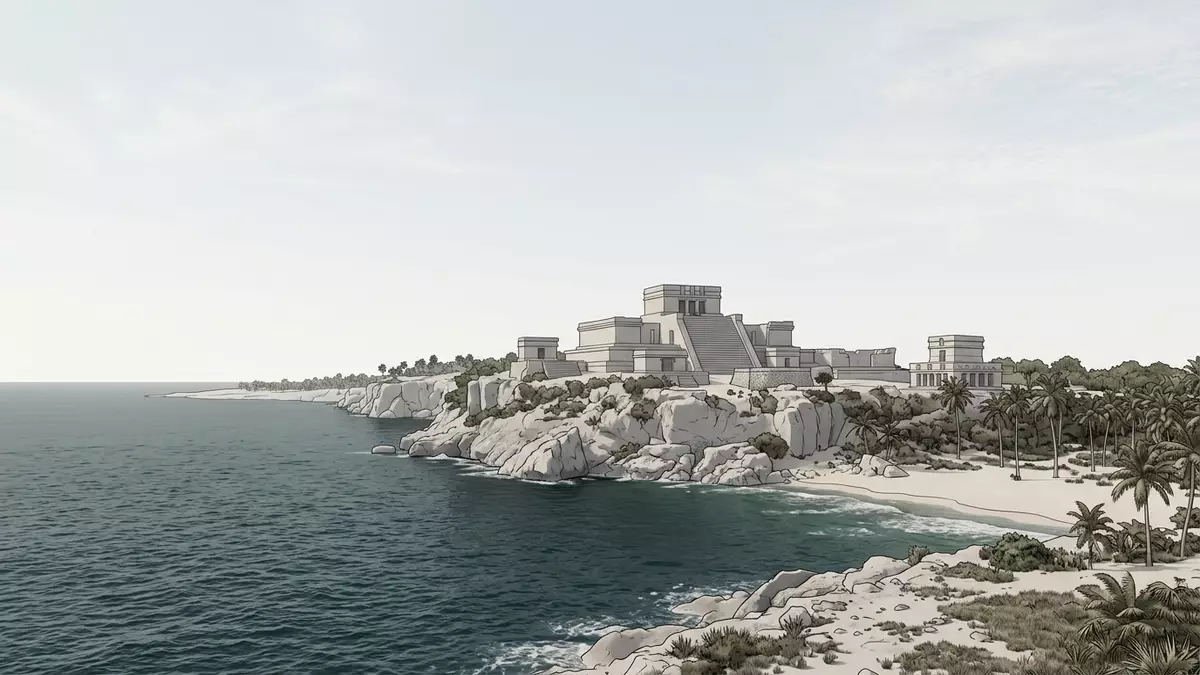
Zona Arqueologica de Tulum is a Maya walled city on the Caribbean coast of Tulum, Mexico. Its limestone buildings occupy ground above the sea, while a surviving defensive wall encloses the principal monuments and gives the site its defining visual form.
Zona Arqueologica de Tulum: a walled city above the Caribbean
The settlement belongs chiefly to the Middle and Late Postclassic, the final pre-Hispanic occupation period of the Yucatán Peninsula. The buildings visible across the archaeological zone date mainly from 1250 to 1550, while Stela 1 carries a date of 564 and records an earlier phase connected with the site.
The name Tulum means wall, enclosure or palisade in Maya. Sixteenth-century sources used the name Zamá, associated with morning or dawn. The later name refers directly to the masonry that surrounds the monuments and remains a central feature of the landscape.
East Coast architecture in limestone and stucco
Zona Arqueologica de Tulum presents the architectural style known as East Coast. Its buildings include flat roofs, colonnades, miniature temples, inner shrines and smooth exterior surfaces. These forms differ from the vaulted coverings associated with earlier Maya architecture elsewhere.
El Castillo occupies the coastal side of the settlement and is the most prominent structure in the group. The Temple of the Descending God and the Temple of the Frescoes add carved and painted detail to the architectural ensemble. Niches above door lintels contain stucco images of the descending deity, a recurring motif at Tulum.
Painted decoration once covered more of the buildings than survives today. The murals use human and animal figures shown in profile, while objects appear frontally. Their subjects include religious and cosmological imagery associated with the Maya world of the Postclassic period. Tulum’s East Coast style is visible in the combination of flat-roofed structures, colonnades, shrines and painted surfaces.
From coastal port to archaeological landscape
Tulum was a principal Maya city during the thirteenth and fourteenth centuries. Its position on the coast of Quintana Roo connected the walled settlement with marine resources and long-distance exchange across the region.
The city remained occupied until the period of Spanish arrival. In 1518, Juan Díaz, chaplain and chronicler of Juan de Grijalva’s expedition, recorded a large coastal city that may have been Tulum. By 1579, the Relaciones de Yucatán described the settlement as ruined.
The archaeological zone forms part of a wider pre-Hispanic settlement associated with Tancah to the north. The visible monuments preserve a concentrated group of temples, palaces, painted surfaces and defensive masonry. The final occupation period of the buildings belongs to the Middle and Late Postclassic, dated from 1200 to 1550 in the protected coastal landscape.
The setting joins architecture and the Caribbean shoreline within one compact archaeological view. Limestone walls, open courtyards, temple façades and the sea-facing edge remain visible together. The walled Maya port is therefore read through both its buildings and its coastal position.
Visiting Zona Arqueologica de Tulum: what travellers from Western Europe should know
- Zona Arqueologica de Tulum lies beside the town of Tulum in Quintana Roo, south of Cancún, within Parque Nacional Tulum. The Federal Highway 307 connects the town and the archaeological area with the wider Riviera Maya.
- The site stands on limestone terrain above the Caribbean. The approach crosses open archaeological ground, with uneven surfaces, exposed stone and steps around some structures.
- El Castillo, the Temple of the Descending God and the Temple of the Frescoes form the principal architectural landmarks. The sea-facing edge and the enclosing wall are visible from the monument area.
- The official language is Spanish and the currency is the Mexican peso.
Searching for Zona Arqueologica de Tulum on social platforms
These links open searches for Zona Arqueologica de Tulum on each platform.
Frequently asked questions about Zona Arqueologica de Tulum
Where is Zona Arqueologica de Tulum?
It is beside the town of Tulum in Quintana Roo, Mexico, within Parque Nacional Tulum on the Caribbean coast.
What can visitors see at the archaeological zone?
The monuments include El Castillo, the Temple of the Descending God, the Temple of the Frescoes, courtyards, colonnades and the surviving wall.
What makes the site distinctive?
Its Maya buildings, painted decoration, defensive masonry and coastal limestone setting appear together within one archaeological landscape.


