
Zion National Park and its sheer canyon walls
Published on 09/01/2026 at 22:53 | Editorial responsibility: Rafael Müller, Editor-in-Chief AD HOC NEWS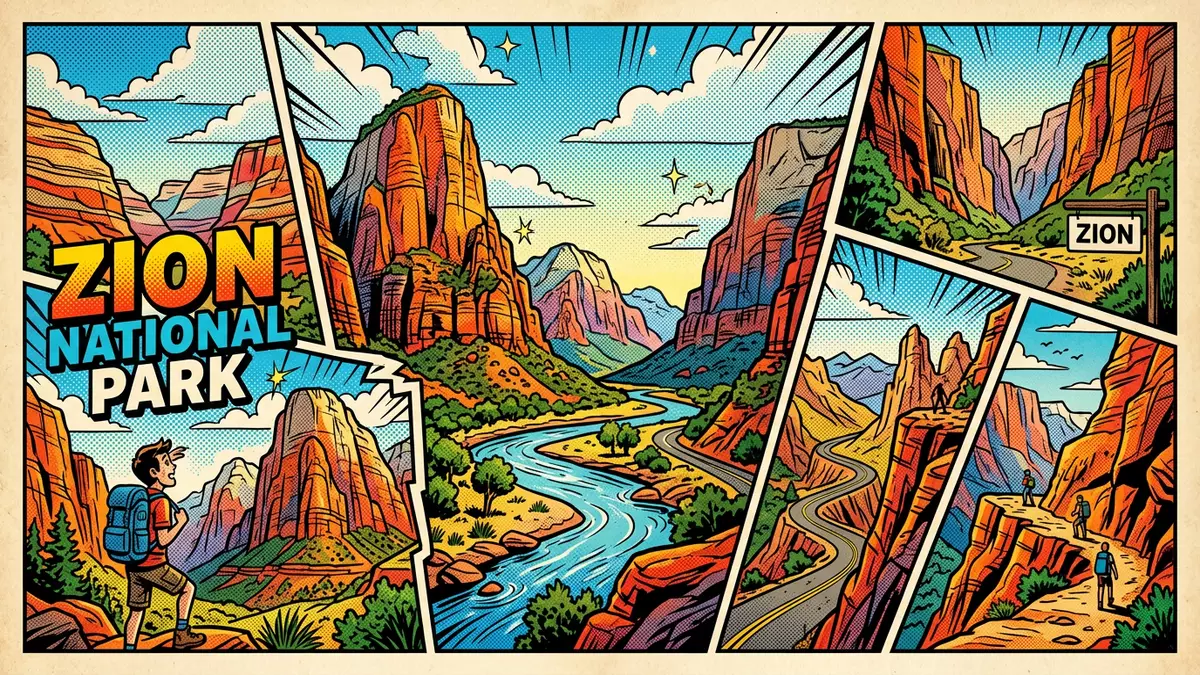
Zion National Park rises above Springdale in southern Utah, where the Virgin River has cut a broad canyon through layers of sandstone. The park’s scale comes from its walls as much as from its open floor, and the rock is the first thing that defines it.
Sandstone walls above the Virgin River
The canyon is framed by pale and red stone faces, with Navajo Sandstone among the most visible layers. The geology of Zion belongs to the Colorado Plateau, and the rock bands record long stretches of deposition and erosion.
That layered look is part of the park’s identity. The cliffs, benches and narrow side canyons show different rock units in stacked bands, so the landscape reads almost like a section through deep time.
From monument to national park
The site first received federal protection in 1909 as Mukuntuweap National Monument, under President William Howard Taft. It became Zion National Park by an Act of Congress on 19 November 1919, and that date marks the park’s formal establishment.
The 1919 Act and the later park history fix Zion’s legal identity as well as its name. The modern park grew from an area already known for its canyon landscape, with Zion Canyon as its best-known corridor.
Kolob Canyons and the wider park
Zion is not limited to the main canyon near Springdale. The park also includes Kolob Canyons, a separate district to the north-west, with its own ridges, cliffs and rock layers.
That wider reach gives the park more than one face. One part is a tight canyon reached from the main valley; another opens into a broader set of cliffs and mesas on the Colorado Plateau.
Visiting Zion National Park: what travellers from Western Europe should know
- Zion National Park lies beside Springdale in south-western Utah. The main approach is by road, and the park is also linked to Springdale by shuttle connections in the valley.
- The terrain includes steep canyon walls, narrow passages and long stretches of exposed rock. The Virgin River runs through the main canyon.
- The park sits in desert country, so the landscape is open, dry and strongly shaped by sunlight on sandstone. Rock colour and shadow change the look of the walls through the day.
- English is the official language and the currency is the United States dollar.
Searching for Zion National Park on social platforms
These links open searches for Zion National Park on each platform.
Frequently asked questions about Zion National Park
Where is Zion National Park?
Zion National Park is in south-western Utah, beside Springdale and along the Virgin River corridor. It lies on the edge of the Colorado Plateau.
What does a visit to Zion National Park involve?
The park presents a canyon landscape with high walls, exposed sandstone and river-cut passages. Its main areas can be explored from the valley floor and by way of side canyons.
What makes Zion National Park distinctive?
The park is defined by its vertical sandstone walls and layered geology. Its legal history, from Mukuntuweap National Monument to national park status, is also part of its story.


