
Ziggurat of Ur, a stepped temple rising from the Mesopotamian plain
Published on 08/25/2026 at 14:39 | Editorial responsibility: Rafael Müller, Editor-in-Chief AD HOC NEWS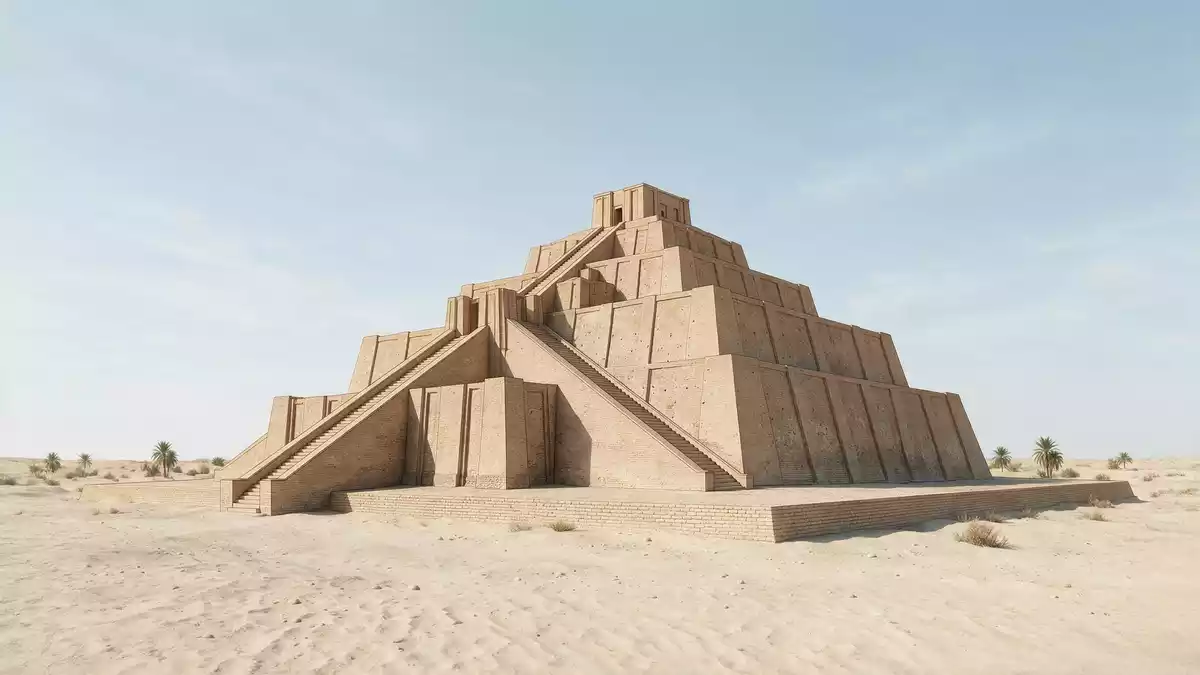
The Ziggurat of Ur rises from the flat plain near Nasiriya in southern Iraq as a massive stepped platform of brick, one of the clearest surviving shapes of ancient Mesopotamia. Built under the Third Dynasty of Ur in the late third millennium BC, it formed the monumental heart of the Sumerian city of Ur and still anchors the archaeological landscape around it.
A stepped mountain for the moon god
The Ziggurat of Ur is a Neo-Sumerian temple platform dedicated to Nanna, also known as Sîn, the moon god who served as the patron deity of the city of Ur.Neo-Sumerian temple platform Its Sumerian ceremonial name, Etemenniguru, is often translated as “the house whose foundation creates awe”, a phrase that captures the intent behind its sheer scale.Etemenniguru
The structure was begun by King Ur-Nammu, founder of the Third Dynasty of Ur, around 2100 BCE and completed by his son Shulgi as part of a wider programme of building in the city.built around 2100 BCE In form it is a solid stepped mass, not a hollow interior space, built with a mud-brick core and an outer facing of baked bricks set in bitumen, giving the monument both bulk and a hard protective shell.mud-brick core and burnt bricks
Architecture on the edge of the desert
The ziggurat stands within the ruins of the ancient city of Ur, identified with the mound of Tell el-Muqayyar in the Dhi Qar Governorate of Iraq, a short distance west of Nasiriya.Tell el-Muqayyar in the Dhi Qar Governorate From the surrounding plain, the stepped mass rises above low archaeological mounds, its surviving stage forming a clear horizontal platform that once supported a temple to Nanna.
In plan the base of the ziggurat forms a large rectangle, measuring about 64 m in length and 45 m in width, with the surviving height reaching around 15 m (about 49 ft), and reconstructions suggest that the original structure rose to a considerably greater height.base of the ziggurat Monumental staircases climb the front face, meeting at a gate on the first terrace before a further stair continues upward, creating a sequence of ascending platforms that emphasise the vertical journey towards the former summit shrine.monumental staircases
From royal city to archaeological landscape
Ur itself was one of the principal cities of Sumer, flourishing in the late third and early second millennia BC as a centre of administration, trade and religious life in southern Mesopotamia.principal cities of Sumer Excavations in the twentieth century under Sir Leonard Woolley brought large parts of the ziggurat to light, revealing the stepped form and the brick construction that define the monument.brought large parts of the ziggurat to light
The ziggurat forms part of a wider archaeological zone associated with the Ahwar of Southern Iraq and the remains of the ancient cities of the region, which were inscribed as a UNESCO World Heritage Site in 2016.inscribed as a UNESCO World Heritage Site in 2016 Around the ziggurat lie the foundations of temples, administrative buildings and residential quarters, making the visit a walk through a structured cityscape laid out in mud brick.
Visiting Ziggurat of Ur: what travellers from Western Europe should know
- The Ziggurat of Ur lies in the Dhi Qar Governorate of southern Iraq, west of Nasiriya, on the archaeological site identified with ancient Ur.
- The monument stands on a low rise surrounded by excavation trenches and uneven ground, and the staircases involve a sustained climb over exposed brick steps.
- The official language is Arabic and the currency is the Iraqi dinar.
- Entry requirements depend on your nationality; UK travellers can check the FCDO travel advice at gov.uk/foreign-travel-advice, Irish travellers the Department of Foreign Affairs at ireland.ie.
Searching for Ziggurat of Ur on social platforms
These links open searches for Ziggurat of Ur on each platform.
Frequently asked questions about Ziggurat of Ur
Where is the Ziggurat of Ur located?
The Ziggurat of Ur stands on the archaeological site of ancient Ur, identified with Tell el-Muqayyar near Nasiriya in southern Iraq.
What should a visitor expect when exploring the site?
Visitors encounter a stepped brick monument with broad staircases and surrounding mud-brick ruins, set on uneven ground exposed to the open sky.
What makes the Ziggurat of Ur distinctive among ancient structures?
Its combination of massive stepped form, dedication to the moon god Nanna and association with the Third Dynasty of Ur gives it a clear identity within Mesopotamian architecture.


