
Ziggurat of Ur, a stepped temple above the Mesopotamian plain
Published on 09/08/2026 at 08:18 | Editorial responsibility: Rafael Müller, Editor-in-Chief AD HOC NEWS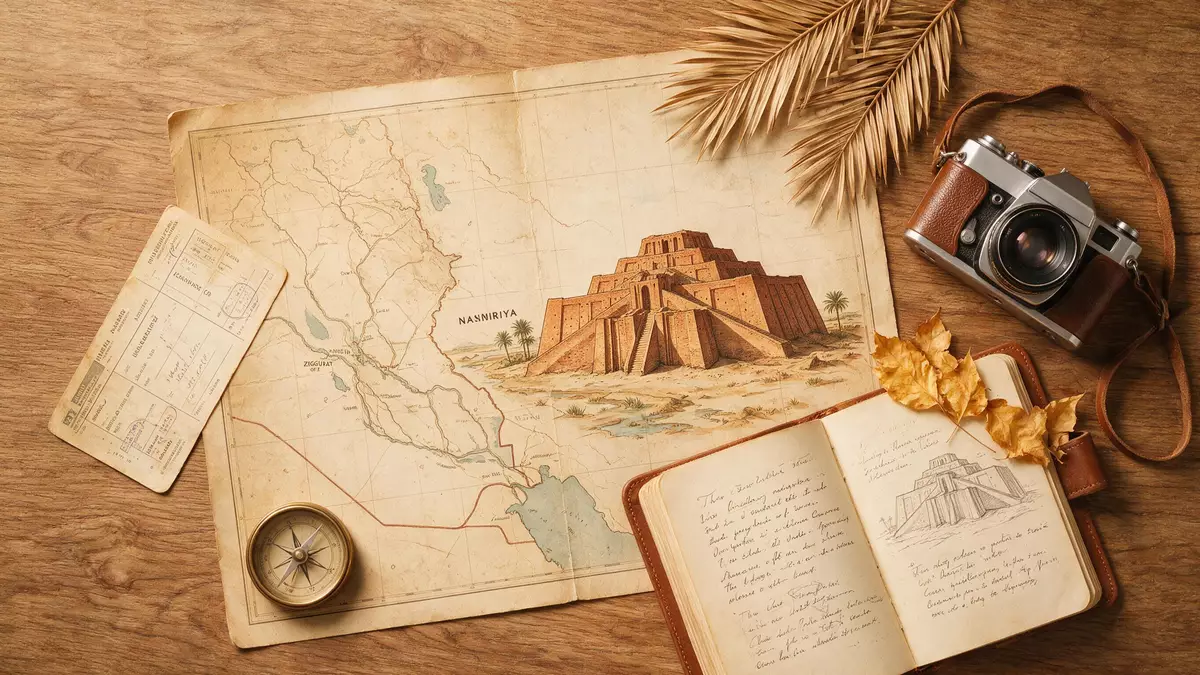
The Ziggurat of Ur near Nasiriya in southern Iraq is a massive stepped temple tower of mud brick rising above the flat Mesopotamian plain, marking the sacred heart of the ancient city of Ur in the early Bronze Age.ancient city of Ur Built under the Third Dynasty of Ur in the twenty-first century BC and dedicated to the Sumerian moon god Nanna, it remains one of the clearest surviving outlines of a Mesopotamian ziggurat.
A Neo-Sumerian temple tower for the moon god Nanna
The Ziggurat of Ur stands on the archaeological mound of Tell el-Muqayyar in Dhi Qar Governorate, west of modern Nasiriya, where the city of Ur flourished as a major Sumerian centre in the third millennium BC.Tell el-Muqayyar in Dhi Qar Its Sumerian ceremonial name, Etemenniguru, is commonly translated as “house whose foundation creates awe”, underscoring the link between the towering mass of brick and the cult of the moon god.
Construction of the ziggurat is attributed to King Ur-Nammu, founder of the Third Dynasty of Ur, around 2100 BC, with completion and elaboration by his son Shulgi.built in 2100 BC by King Ur-Nammu Centuries later, in the sixth century BC, the Neo-Babylonian king Nabonidus undertook major restoration works on the temple tower, reinforcing its role as a shrine to Nanna during a later phase of Mesopotamian religion.reconstructed in the sixth century BC
Stepped geometry, mud-brick mass and monumental stairways
In form the Ziggurat of Ur is a broad, rectangular mass of mud brick, built as a series of superimposed platforms that step upwards from a large base towards a summit where a temple once stood.rectangular pyramidal structure Archaeological measurement records a footprint in the order of 64 m by 46 m (approximately 210 ft by 150 ft), giving the structure a horizontal presence that dominates the surrounding plain even though only the lower stages survive.
The original ziggurat rose through three main levels, each receding from the one below, with the temple of Nanna set above them; later Assyrian and Neo-Babylonian phases added further stages, though the three principal terraces remain the core of reconstructions.three layers and summit temple Monumental stairways climb the eastern side of the ziggurat, forming processional routes towards the cult chamber that once crowned the structure, and the whole complex shows careful orientation to the cardinal directions that reflects Mesopotamian concern with cosmic alignment.oriented to true north
Ur in Mesopotamia and the ziggurat’s archaeological setting
The ziggurat formed the centrepiece of a larger temple precinct at Ur, which combined religious functions with administrative and economic roles for the city and its hinterland along the lower Euphrates.centre piece in a temple complex Around it lay courtyards, subsidiary shrines and service buildings whose foundations outline a dense sacred quarter, though they stand much lower in the archaeological record than the rebuilt faces of the ziggurat itself.
Excavations led in the twentieth century by Leonard Woolley exposed the lower terraces of the ziggurat and parts of the surrounding city, revealing the stepped brick mass under layers of wind-blown sediment and later occupation.excavations by Leonard Woolley The site lies west of Nasiriya in Dhi Qar Province and continues to attract archaeological work and careful conservation of the mud-brick fabric, which is vulnerable to erosion in the climate of southern Iraq.located west of the city of Nasiriyah
Visiting Ziggurat of Ur: what travellers from Western Europe should know
- The Ziggurat of Ur stands on the archaeological site of Tell el-Muqayyar in Dhi Qar Governorate, west of the city of Nasiriya in southern Iraq, reached by road across the flat plain from Nasiriya and other settlements.
- The monument rises from compacted earth, with stairways and terraces formed in mud brick; approaches in the temple precinct involve walking on uneven ground and climbing exterior steps without shade.
- The surrounding landscape is open desert plain, with low archaeological mounds and limited shelter; summer temperatures in southern Iraq can be high, and exposure on the terraces is prolonged.
- The official language is Arabic and the currency is the Iraqi dinar.
- Entry requirements depend on your nationality; UK travellers can check the FCDO travel advice at gov.uk/foreign-travel-advice, Irish travellers the Department of Foreign Affairs at ireland.ie.
Searching for Ziggurat of Ur on social platforms
These links open searches for Ziggurat of Ur on each platform.
Frequently asked questions about Ziggurat of Ur
Where is the Ziggurat of Ur located?
The Ziggurat of Ur stands on the archaeological site of Tell el-Muqayyar in Dhi Qar Governorate in southern Iraq, west of the modern city of Nasiriya.
What can visitors expect when they reach the ziggurat?
Visitors encounter a large stepped mass of mud brick with exposed terraces and stairways rising from the plain, surrounded by low archaeological mounds of the ancient city.
What makes the Ziggurat of Ur distinctive among ancient monuments?
Its combination of early Bronze Age date, association with the moon god Nanna and the survival of its stepped brick geometry make it a particularly clear example of a Mesopotamian ziggurat.


