
Ziggurat of Ur: a stepped temple above the Mesopotamian plain
Published on 08/20/2026 at 20:32 | Editorial responsibility: Rafael Müller, Editor-in-Chief AD HOC NEWS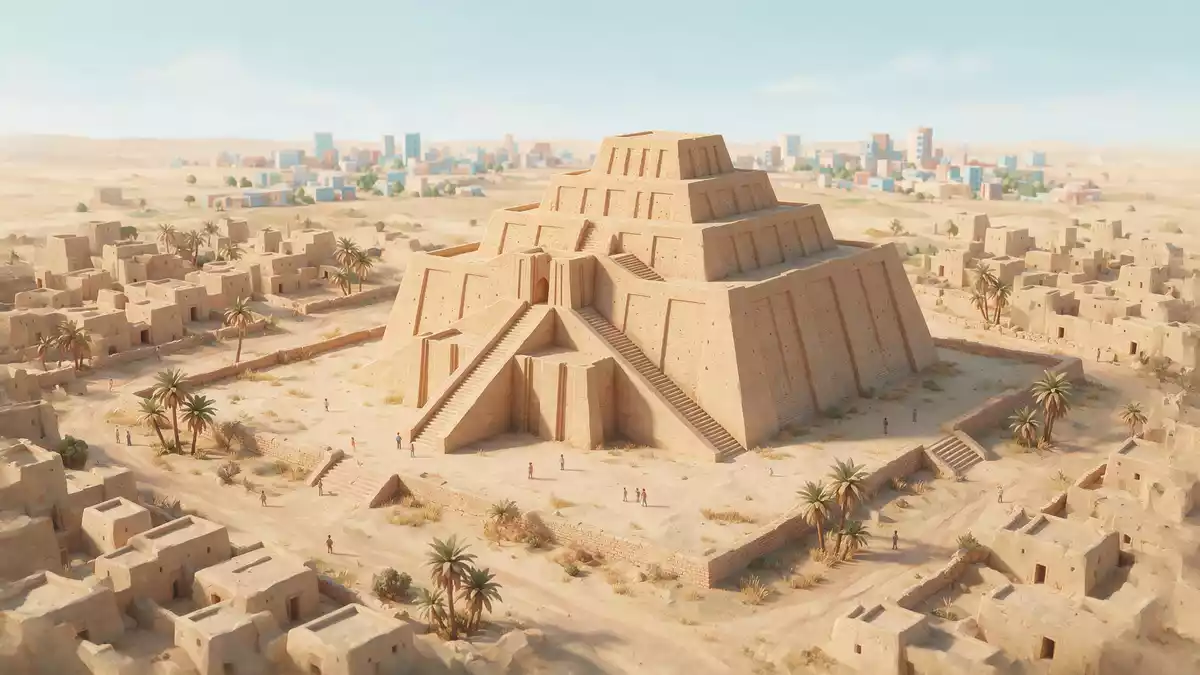
The Ziggurat of Ur rises from the flat plain of southern Iraq like a man?made mesa, its stepped profile dominating the low landscape near Nasiriya. Built in the late third millennium BC as a temple platform in the ancient city of Ur, it brings together mud brick engineering, monumental staircases and a long history of excavation and restoration that continues to shape how visitors experience this Mesopotamian landmark.
A stepped mountain for the moon god
The Ziggurat of Ur stands on the archaeological site of Ur, near the modern city of Nasiriya in Dhi Qar Governorate in southern Iraq. The monument is a massive, rectilinear platform built from mud bricks and faced in fired brick, with a broad flight of steps leading up through a monumental gateway to higher terraces.The ziggurat at Ur was dedicated to Nanna, also known as Sin, the Sumerian moon god and patron deity of the city.
Archaeological and textual evidence links the construction of the Ziggurat of Ur to King Ur?Nammu of the Third Dynasty of Ur in the late twenty?first century BC.The structure was part of a larger sacred precinct that included other temples and administrative buildings within the city. Its earliest bricks date to around 2100 BCE, placing it among the major state projects of the Neo?Sumerian period and tying it to a moment when southern Mesopotamian cities consolidated power through monumental architecture.The ziggurat at Ur later drew attention from Babylonian rulers such as Nabonidus, who undertook restoration work in the sixth century BC.
Form, dimensions and layers of brick
The Ziggurat of Ur takes the form of a stepped pyramid composed of superimposed platforms, each slightly smaller than the one below, giving the structure its characteristic terraced silhouette. Excavations by Leonard Woolley in the twentieth century documented a base measuring about 64 m by 46 m, constructed with three levels of terraces rising to a height estimated between 21 and 30 m when complete.Woolley’s measurements describe a first stage about 65 m long and 43 m wide, with upper stages stepping back in plan.
The core of the ziggurat consists of sun?dried mud bricks laid in thick horizontal courses, while the outer faces were clad in kiln?fired bricks set in bitumen mortar.The surviving lower stages rise to around 17 m (about 56 ft), giving visitors a clear impression of the scale of the original building even though the uppermost level and temple have not survived. Three broad staircases meet at a gateway on the first terrace, creating a dramatic approach that aligns the structure with the cardinal directions and reinforces its role as a bridge between the city below and the divine space above.
Ur, the Ahwar and a layered landscape
The ziggurat forms part of the wider archaeological landscape of Ur, whose ruins sit at Tell el?Muqayyar in the floodplain of the Euphrates.The ancient city of Ur lay near channels of the river and the wetlands of southern Mesopotamia, a landscape that shaped Sumerian urban life. In 2016 the site was inscribed on the UNESCO World Heritage List as part of “The Ahwar of Southern Iraq: Refuge of Biodiversity and the Relict Landscape of the Mesopotamian Cities”, recognising both its cultural significance and its connection to the surrounding marshes.The UNESCO inscription links the ziggurat to other nearby archaeological sites and natural areas.
Standing at the base of the Ziggurat of Ur, travellers see the relationship between the stepped platform and the relatively flat plain that stretches towards the horizon. The monument rises near the remains of city walls, residential quarters and royal tombs, allowing a visit to combine the compact geometry of the temple tower with the more irregular traces of everyday urban life. The juxtaposition of the restored brickwork on the ziggurat and the lower, more eroded mounds around it makes clear which parts of the site have been stabilised and which preserve the raw texture of an excavated tell.
Visiting Ziggurat of Ur: what travellers from Western Europe should know
- The Ziggurat of Ur stands west of Nasiriya in southern Iraq, near the archaeological site of Tell el?Muqayyar, which is reached by road from the city.
- The approach from the car park crosses compacted earth and low archaeological mounds before reaching the base of the monument, where broad exterior staircases climb the lower terraces.
- The terrain around the ziggurat is exposed and largely without shade, and the brick steps and platforms form open, elevated surfaces above the surrounding plain.
- The official language is Arabic and the currency is the Iraqi dinar.
- Entry requirements depend on your nationality; UK travellers can check the FCDO travel advice at gov.uk/foreign-travel-advice, Irish travellers the Department of Foreign Affairs at ireland.ie.
Searching for Ziggurat of Ur on social platforms
These links open searches for Ziggurat of Ur on each platform.
Frequently asked questions about Ziggurat of Ur
Where is the Ziggurat of Ur?
The Ziggurat of Ur stands at Tell el?Muqayyar in Dhi Qar Governorate in southern Iraq, near the modern city of Nasiriya.
What can visitors expect when they arrive?
Visitors encounter a stepped brick monument rising above low archaeological mounds, with broad staircases, open platforms and expansive views across the surrounding plain.
What makes the Ziggurat of Ur distinctive?
Its combination of a third?millennium BC Sumerian temple platform, substantial surviving brickwork and a setting within a UNESCO?listed ancient city and wetland landscape gives it a particular character.


