Zamek w Malborku and the scale of Teutonic brickwork
Published on 08/30/2026 at 13:05 | Editorial responsibility: Rafael Müller, Editor-in-Chief AD HOC NEWS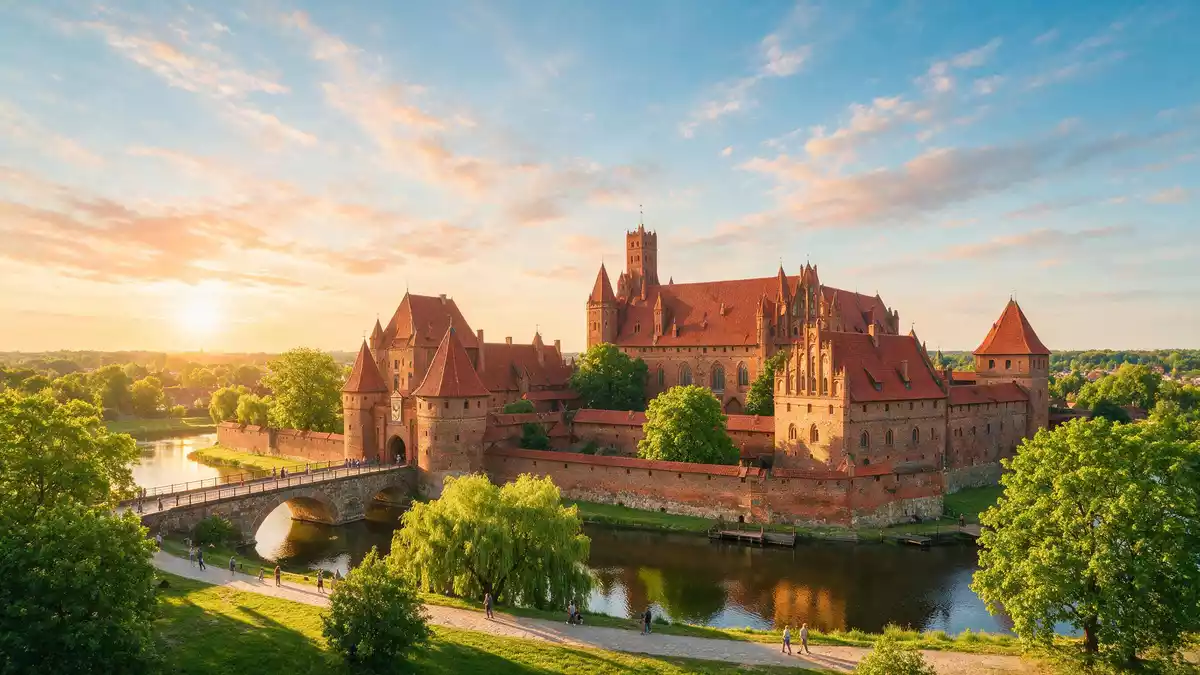
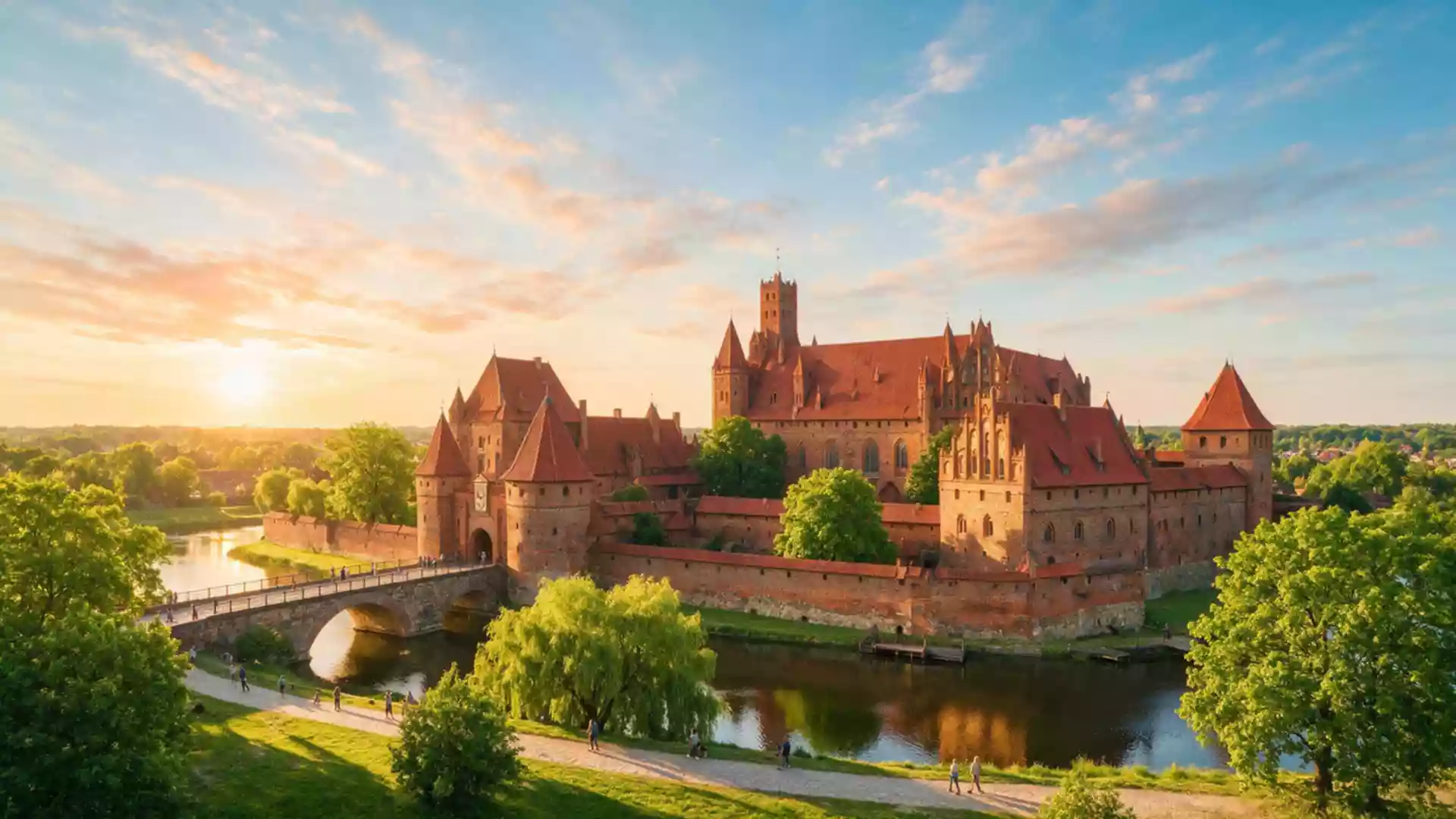
Zamek w Malborku rises as a vast Brick Gothic complex in Malbork, on the right bank of the Nogat. Built by the Teutonic Order, it is tied to the thirteenth century and the name of Siegfried von Feuchtwangen.
A fortress in red brick
The castle complex is built of brick rather than stone, and that material gives it a severe, warm tone across the walls and towers. Its massing is spread across fortified sections that grew into a layered medieval complexBrick Gothic castle complex.
The Teutonic Knights began work in the 1270s, and the castle developed through the later Middle Ages. The site became the headquarters of the Order’s Grand Master in 1309, which places Malbork at the centre of Teutonic political and religious powerGrand Master in 1309.
From convent house to royal residence
The castle’s history is visible in its changing use. It served the Teutonic Order, later became a Polish royal residence, and eventually took on a museum functionPolish royal residence.
That long sequence leaves the place with a mixed character: military, monastic, princely and memorial at once. UNESCO inscribed the Castle of the Teutonic Order in Malbork in 1997, giving the complex formal recognition for its historical and architectural valueinscribed in 1997.
Malbork’s layered medieval plan
The complex is larger than a single keep or courtyard. It reads as a sequence of fortified parts, with the high castle, middle castle and low castle forming a medieval ensemble that grew in stageshigh castle, middle castle.
The Nogat gives the site a clear geographical setting, and the castle sits on the riverbank rather than on a hill. That position keeps the fortress closely tied to the landscape of northern Poland and to the town of Malbork itselfRiver Nogat.
Visiting Zamek w Malborku: what travellers from Western Europe should know
- The castle stands in Malbork, in northern Poland, and the town is reached by rail on the main route between Gda?sk and the south of the region.
- The complex is large and spread out, with brick walls, towers and broad courtyards. It is a place for walking rather than a compact single hall.
- The official language is Polish and the currency is the Polish z?oty.
- The castle sits beside the Nogat, so the river is part of the setting as soon as the fortress comes into view.
- Entry requirements depend on your nationality; UK travellers can check the FCDO travel advice at gov.uk/foreign-travel-advice, Irish travellers the Department of Foreign Affairs at ireland.ie.
Searching for Zamek w Malborku on social platforms
These links open searches for Zamek w Malborku on each platform.
Frequently asked questions about Zamek w Malborku
Where is Zamek w Malborku?
It stands in Malbork, in northern Poland, on the east bank of the Nogat. The town lies on an important rail corridor through the region.
What does a visit involve?
The castle complex is large and made for walking across several fortified parts. Brick walls, courtyards and towers dominate the experience.
What makes it distinctive?
Its scale, brick construction and association with the Teutonic Order set it apart. The UNESCO inscription from 1997 adds formal recognition to that identity.