
Zamek w Malborku: a brick fortress on the Nogat
Published on 09/05/2026 at 12:26 | Editorial responsibility: Rafael Müller, Editor-in-Chief AD HOC NEWS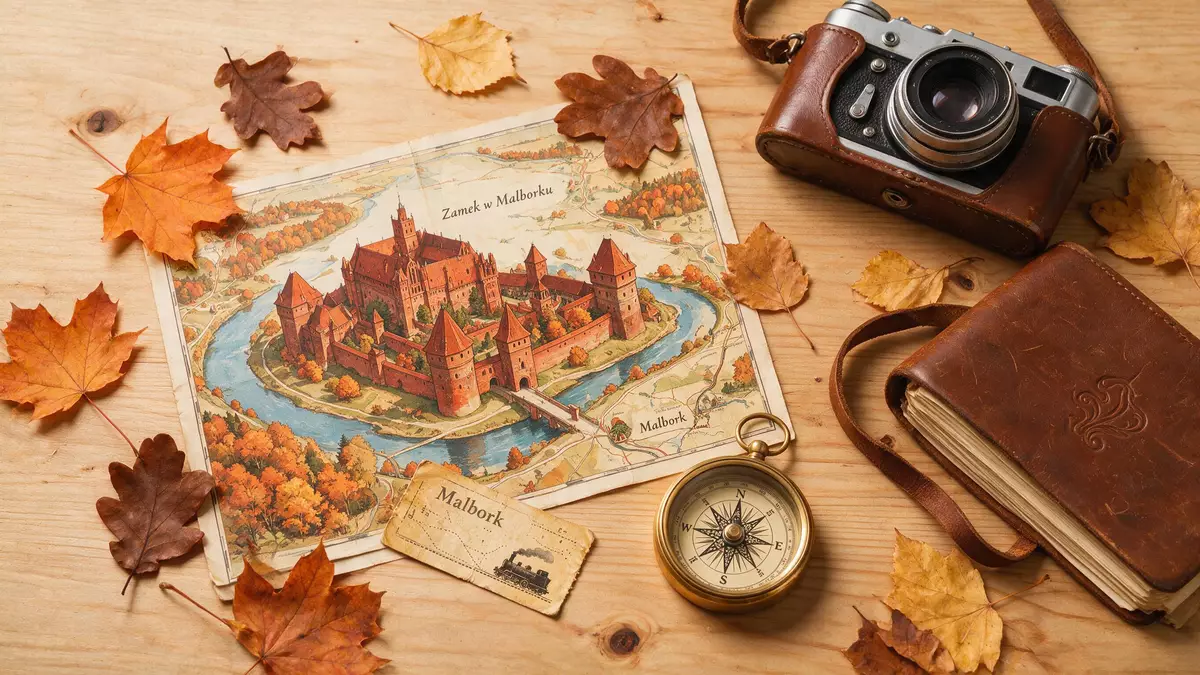
Zamek w Malborku in northern Poland is a vast Brick Gothic fortress of the Teutonic Order whose red walls and stepped gables still dominate the banks of the River Nogat. Built from the late thirteenth century and enlarged in the fourteenth century, the castle grew into a multi-part stronghold that served as the headquarters of the Order’s Grand Master and later as a royal residence of the Polish Crown.Brick Gothic castle Today Zamek w Malborku is a carefully restored castle museum and a UNESCO World Heritage Site, known formally as the Castle of the Teutonic Order in Malbork.World Heritage inscription in 1997
A fortress of brick on the Nogat
The defining feature of Zamek w Malborku is its construction in brick on the east bank of the River Nogat, a distributary of the Vistula in the Pomeranian region.location on the river The Teutonic Knights began building the conventual core of the castle in the thirteenth century, creating a fortified monastic complex whose tall curtain walls, towers and cloistered ranges rise from a platform above the water.thirteenth-century fortress The use of red brick gives the entire ensemble a uniform colour, with details such as patterned façades, pointed arches and sculpted portals standing out against the masonry.
The castle is organised into three principal parts, each enclosed by its own fortifications and separated by gateways and courtyards.division into High, Middle and Low Castle The High Castle forms the monastic heart, with a square plan wrapped around an inner courtyard; the Middle Castle extends the complex with representative halls and service buildings; the Low or Outer Castle spreads towards the river with granaries, workshops and armouries. Seen from the riverbank, the stacked roofs, turrets and defensive walls create a tiered silhouette, giving a clear sense of the castle’s layered expansion over several centuries.
Seat of the Teutonic Order and royal residence
Zamek w Malborku is closely tied to the history of the Teutonic Order in eastern Europe. In 1309 the Grand Master Siegfried von Feuchtwangen transferred his seat from Venice to Malbork, elevating the castle to the capital of the Order’s monastic state on the southern Baltic coast.move of the Grand Master in 1309 For around a century and a half the complex housed the Order’s leadership, with ceremonial spaces, administrative rooms and defensive infrastructure clustered within its walls.headquarters of the Order
Following the defeat of the Teutonic Order in the fifteenth century, the castle entered a new phase as a residence of the Polish kings.Polish royal residence Over the early modern period its role shifted and parts of the complex fell into disrepair, but the scale of the brick structure remained apparent in the surviving wards and walls. In the nineteenth century extensive restoration works were undertaken, reflecting changing attitudes to conservation and medieval architecture.nineteenth-century restoration These campaigns, together with post-war reconstruction, left Zamek w Malborku as a major case study in both medieval fortress design and modern restoration practice.
A museum castle and World Heritage site
Since the mid-twentieth century Zamek w Malborku has housed the Castle Museum, presenting the history of the fortress, the Teutonic Order and the region through permanent and temporary exhibitions.Castle Museum since 1961 Visitors move through vaulted refectories, chapels, armouries and storage halls, where collections of amber, armour, artworks and historic furnishings are displayed within the restored interiors.museum collections The combination of original fabric, carefully reconstructed elements and curated exhibitions makes the castle both an architectural monument and a museum of medieval material culture.
In 1997 the Castle of the Teutonic Order in Malbork was inscribed on the UNESCO World Heritage List under cultural criteria (ii), (iii) and (iv, recognising it as an outstanding example of a medieval brick castle and of restoration practice.UNESCO criteria and inscription year The listing emphasises both the scale and coherence of the fortress and its significance for understanding crusading architecture along the southern Baltic. For travellers from Western Europe, Zamek w Malborku offers a direct encounter with the built world of the Teutonic Knights, set within a town that has grown around the castle’s massive perimeter.
Visiting Zamek w Malborku: what travellers from Western Europe should know
- Zamek w Malborku stands on the eastern side of Malbork, on the right bank of the River Nogat in northern Poland; the town lies south-east of Gda?sk.castle location in Malbork
- The complex covers a substantial area with separate castle wards linked by gateways, bridges and courtyards, so a visit involves extended walking over cobbled surfaces and through stairways.
- The official language is Polish and the currency is the Polish z?oty.
- Entry requirements depend on your nationality; UK travellers can check the FCDO travel advice at gov.uk/foreign-travel-advice, Irish travellers the Department of Foreign Affairs at ireland.ie.
Searching for Zamek w Malborku on social platforms
These links open searches for Zamek w Malborku on each platform.Frequently asked questions about Zamek w Malborku
Where is Zamek w Malborku located?
Zamek w Malborku stands in the town of Malbork in northern Poland, on the right bank of the River Nogat in the Pomeranian region.castle position on the Nogat
What should visitors expect inside the castle?
Visitors encounter a large brick fortress with multiple castle wards, restored medieval interiors and museum exhibitions displaying amber, armour, artworks and historic furnishings.collections and interiors
What makes Zamek w Malborku distinctive?
Zamek w Malborku is a major Brick Gothic castle of the Teutonic Order, built from the thirteenth century and inscribed as a UNESCO World Heritage Site in 1997 for its scale and restoration history.UNESCO recognition


