
Zamek Krolewski na Wawelu: Poland’s layered royal residence
Published on 09/16/2026 at 07:07 | Editorial responsibility: Rafael Müller, Editor-in-Chief AD HOC NEWS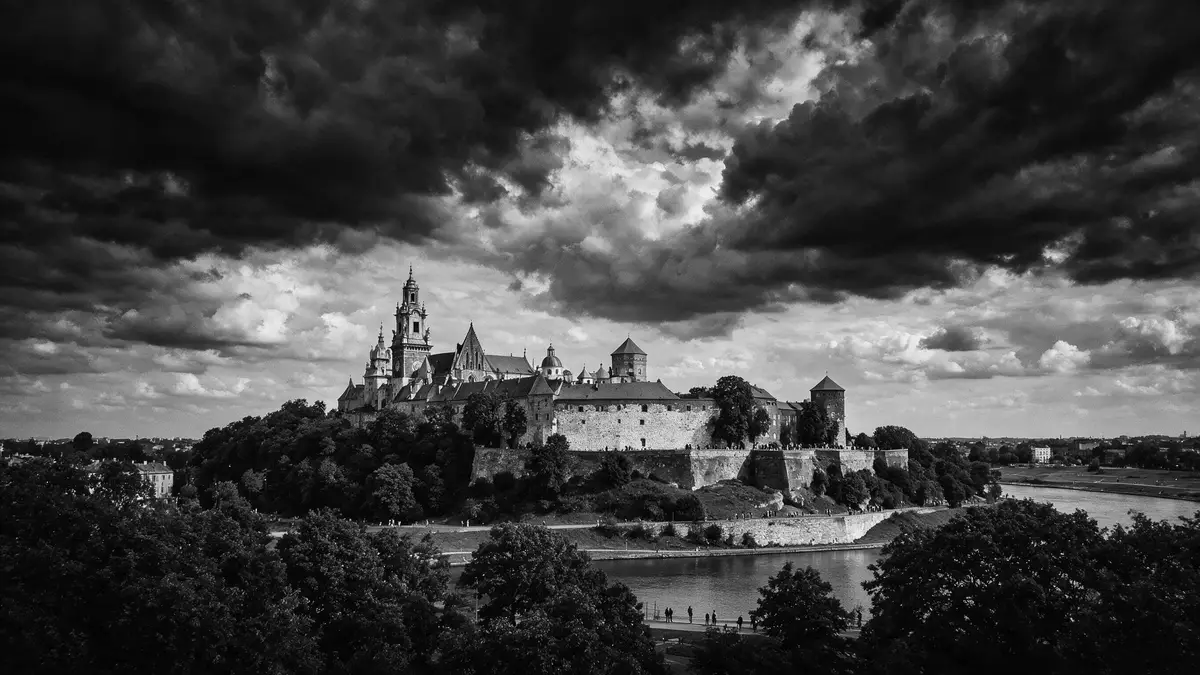
Zamek Krolewski na Wawelu, known in English as Wawel Royal Castle, rises on Wawel Hill above the Vistula River in Krakau and has served for centuries as the principal seat of Polish rulers.Wawel Royal Castle The residence traces its origins to an early stone complex from the mid-eleventh century and grew over the medieval and Renaissance periods into a vast palace wrapped around an inner courtyard.the history of the royal palace
A hilltop palace shaped by successive Polish dynasties
The earliest documented residence for Poland’s rulers on Wawel Hill was a Romanesque stone building from the mid-eleventh century, known as the palatium, whose remains sit in the northern part of the present complex.Romanesque stone building from mid-11th century In the fourteenth century the site was considerably enlarged under King Ladislaus I the Short and his son Casimir III the Great, who established a major Gothic residence grouped around a courtyard on the eastern side of the hill.expanded by Ladislaus I the Short and Casimir III the Great
The character visitors encounter today owes much to a major rebuilding ordered in the early sixteenth century by King Sigismund I the Old, when Italian architects such as Francesco Fiorentino and Bartolomeo Berrecci reshaped the medieval stronghold into a Renaissance palace.spectacular Renaissance palace residence Over later centuries further work under rulers including Sigismund III Vasa introduced Baroque elements, so the complex now brings together Romanesque fragments, Gothic walls and towers, Renaissance galleries and later classical details in a single layered ensemble.architectural evolution over successive monarchs
Arcaded courtyard and residential wings around Wawel Hill
Zamek Krolewski na Wawelu occupies the crest of Wawel Hill, a limestone prominence above a bend in the Vistula, and forms part of a wider fortified complex with defensive walls and towers.renesansowa rezydencja królewska na Wzgórzu Wawelskim The palace itself is arranged around an internal courtyard framed by arcaded galleries, where slender columns support open walkways on several levels and façades carry regular window patterns punctuated by portals and projecting bays.arcaded galleries and open courtyard
Residential wings line the edges of the hilltop, creating sequences of chambers and halls that once housed Polish kings and their families, while the neighbouring Wawel Cathedral adds chapels and a soaring church interior to the ensemble.fortified residency on the Vistula River From the outer walls there are broad views over Krakau’s Old Town and the river corridor, underlining the strategic placement of the stronghold and its long-standing role in the city’s silhouette.symbol of Polish statehood on Wawel Hill
From royal residence to national museum
For many centuries Wawel served as the principal royal residence and a symbol of Polish statehood, hosting court life and state ceremonies in its representative chambers.multi-century seat of kings and symbol of statehood In the twentieth century the palace took on an additional role as a museum institution: in 1930 the castle was formally established as a museum housing important collections of paintings, tapestries, sculpture, furniture, metalwork and military artefacts.museum created in 1930 with major collections
Today Zamek Krolewski na Wawelu, operated as Pa?stwowe Zbiory Sztuki, functions as a museum with interiors arranged to evoke a historic residence while presenting artworks and objects that trace the story of Polish rule and cultural exchange.museum of the character of a historical residence Exhibitions occupy many rooms within the palace wings, and parts of the complex such as the armoury, treasury and representative chambers illustrate different facets of royal life on the hill.armoury, treasury and state rooms
Visiting Zamek Krolewski na Wawelu: what travellers from Western Europe should know
- Zamek Krolewski na Wawelu stands on Wawel Hill at address Wawel 4 in central Krakau, south of the Old Town, and is reached on foot from the surrounding streets.
- The complex sits on a limestone hill above the Vistula River, and access from street level involves a noticeable uphill walk along paved approaches and through gateways.
- The official language is Polish and the currency is the Polish z?oty.
- Entry requirements depend on your nationality; UK travellers can check the FCDO travel advice at gov.uk/foreign-travel-advice, Irish travellers the Department of Foreign Affairs at ireland.ie.
Searching for Zamek Krolewski na Wawelu on social platforms
These links open searches for Zamek Krolewski na Wawelu on each platform.Frequently asked questions about Zamek Krolewski na Wawelu
Where is Zamek Krolewski na Wawelu located?
Zamek Krolewski na Wawelu stands on Wawel Hill beside the Vistula River in Krakau, in southern Poland, a short walk from the historic Old Town.
What should visitors expect inside the complex?
Visitors encounter a Renaissance palace around an arcaded courtyard, with museum exhibitions in historic rooms, and neighbouring fortifications and the Wawel Cathedral forming a wider ensemble.
What makes Zamek Krolewski na Wawelu distinctive among castles?
The complex brings together Romanesque, Gothic, Renaissance and later architectural elements while serving both as former royal residence and as a national museum of art and statehood.


