
Zamek Krolewski na Wawelu and its hilltop courtyard world
Published on 09/10/2026 at 12:59 | Editorial responsibility: Rafael Müller, Editor-in-Chief AD HOC NEWS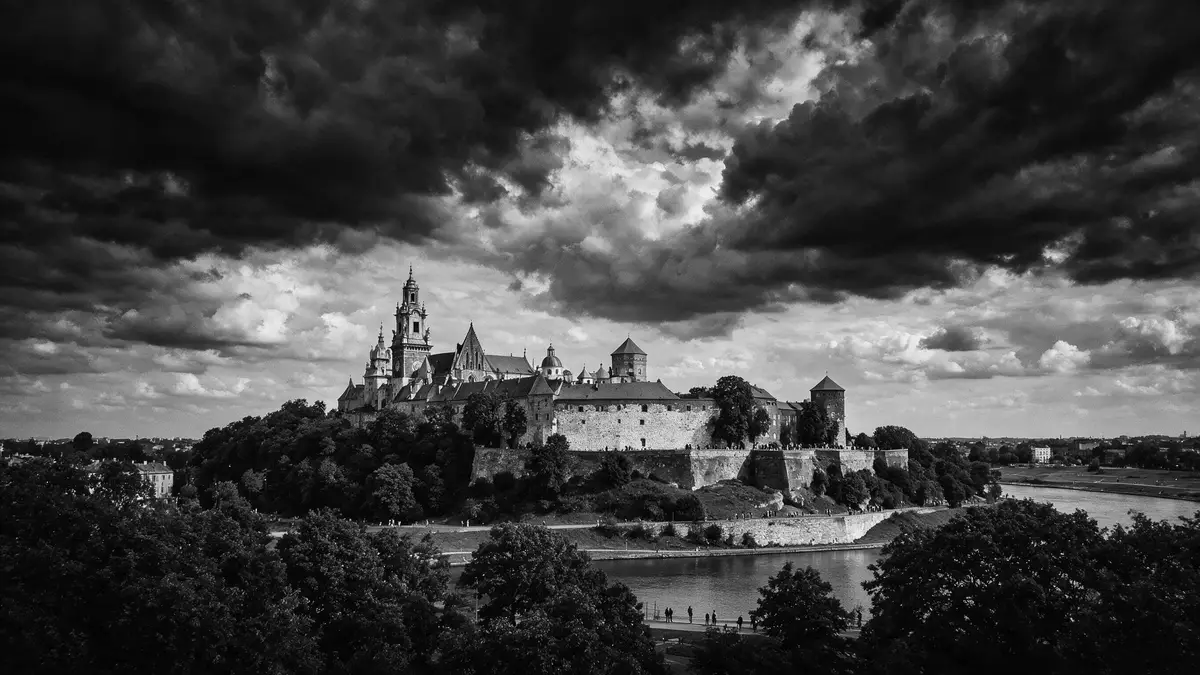
Zamek Krolewski na Wawelu, known in English as Wawel Royal Castle, crowns a limestone hill above the Vistula River in Krakau and forms a Renaissance courtyard world surrounded by fortified walls. Established as a royal residence under King Casimir III the Great in the fourteenth century, it later took on its present palace shape in the first half of the sixteenth century as the seat of the Jagiellonian dynasty.
A royal complex on Wawel Hill
Zamek Krolewski na Wawelu stands on Wawel Hill, a limestone outcrop rising above a bend of the Vistula on the southern edge of Krakau’s historic centre. The castle complex occupies the summit of this ridge, enclosed by fortifications that overlook the river and the streets below, with the royal palace forming one side of an internal courtyard and other wings closing the remaining sides.Wawel Hill and castle complex The position on the hill has been associated with power since at least the tenth century, when the area became a centre of the early Polish state, and the residence of Poland’s rulers developed here in the eleventh century.
The fortified character of Zamek Krolewski na Wawelu is still clear in the curtain walls and towers that protect the plateau and in the gateways that lead into the upper enclosure. Within these defences, the buildings around the main courtyard show a blend of styles: the palace wings are largely Renaissance in appearance, yet traces of Gothic and later Baroque alterations can be seen in façades, rooflines and interiors.Renaissance residence on Wawel Hill The courtyard itself is organised as an open, rectangular space ringed by arcades and galleries, creating a sense of an inward-facing palace world within the defensive shell.
From Romanesque roots to a Renaissance palace
The architectural story of Zamek Krolewski na Wawelu begins with an early Romanesque stone residence dating from the mid-eleventh century, known as the palatium, whose remains lie in the northern part of the present castle.Early Romanesque residence on Wawel Over the following centuries the hill saw successive expansions as monarchs reinforced and rebuilt their seat. A major phase came when Casimir III the Great, ruling in the fourteenth century, ordered the construction of a Gothic castle that established Zamek Krolewski na Wawelu as a substantial fortified residence with stone walls connected to Krakau’s city fortifications.Casimir III and Gothic reconstruction
The palace seen on Wawel Hill in its present form took shape in the first half of the sixteenth century, when King Sigismund I the Old commissioned a Renaissance residence in place of the earlier Gothic structures. Craftsmen from Italy and other parts of Europe worked on the courtyards, façades and interiors, giving the palace wings arcaded galleries, proportioned windows and decorative detail associated with the Renaissance. Life at Zamek Krolewski na Wawelu during this period centred on the representative rooms where royal family members lived and where court and political ceremonies took place, while other parts of the hill housed service buildings, armouries and treasuries.Renaissance rebuilding under Sigismund I Later fires and wars damaged sections of the castle, and its role as a primary royal residence diminished after the court moved to Warsaw in the seventeenth century, yet restoration campaigns in the twentieth century reinstated much of the Renaissance appearance of the courtyard wings.
Palace museum and cathedral sanctuary
Zamek Krolewski na Wawelu today houses State Art Collections in a national cultural institution that uses the palace interiors as museum spaces.State Art Collections at Wawel Castle Visitors move through suites of state rooms where tapestries, paintings, furniture and decorative arts are displayed, along with armoury and treasury spaces holding items associated with Polish royal and national history. In some sections, Gothic vaults and Renaissance ceilings frame these collections, while other rooms carry later finishes from Baroque and nineteenth-century refurbishments. The museum arrangement lets the palace function as both an architectural monument and an exhibition setting, with objects and interiors reinforcing each other.
On the same hill, immediately adjacent to the palace, stands Wawel Cathedral, formally the Archcathedral Basilica of Saint Stanislaus and Saint Wenceslaus, which has for centuries been the coronation and burial church of Polish monarchs.Wawel Cathedral on the hill The cathedral forms part of the wider Wawel complex and is recognised as a cultural UNESCO World Heritage Site within the Historic Centre of Kraków, inscribed in 1978. Chapels clustered around the main body of the church carry a range of architectural styles, including notable Renaissance and Baroque funerary chapels. Together, palace and cathedral make Wawel Hill a layered ensemble where secular and sacred architecture share the same elevated stone platform above the river.
Visiting Zamek Krolewski na Wawelu: what travellers from Western Europe should know
- Zamek Krolewski na Wawelu stands on Wawel Hill just south of Krakau’s historic Old Town, with approaches on foot from streets near the Vistula and from the main square area.
- The terrain on Wawel Hill includes sloping cobbled paths and stairways leading up from the riverbank and lower streets to the courtyards and palace entrances.
- Krakau is served by Kraków Airport west of the city and by mainline rail services to Kraków G?ówny station, from which local transport and walking routes lead towards Wawel Hill.
- The official language is Polish and the currency is the Polish z?oty.
- Entry requirements depend on your nationality; UK travellers can check the FCDO travel advice at gov.uk/foreign-travel-advice, Irish travellers the Department of Foreign Affairs at ireland.ie.
Searching for Zamek Krolewski na Wawelu on social platforms
These links open searches for Zamek Krolewski na Wawelu on each platform.
Frequently asked questions about Zamek Krolewski na Wawelu
Where is Zamek Krolewski na Wawelu located?
Zamek Krolewski na Wawelu is on Wawel Hill in Krakau in southern Poland, above a bend in the Vistula River close to the city’s historic Old Town.
What can visitors expect on a visit to Wawel Castle?
Visitors encounter a fortified hilltop complex with a Renaissance palace arranged around a courtyard, museum collections in historic interiors and the neighbouring cathedral sanctuary.
What makes Zamek Krolewski na Wawelu distinctive among European castles?
Its combination of Romanesque roots, Gothic and Renaissance palace wings, state art collections and the long-standing coronation role of Wawel Cathedral gives the hilltop ensemble a layered royal character.


