

Yulong Xueshan, the jade dragon massif above Lijiang
Published on 08/19/2026 at 16:42 | Editorial responsibility: Rafael Müller, Editor-in-Chief AD HOC NEWS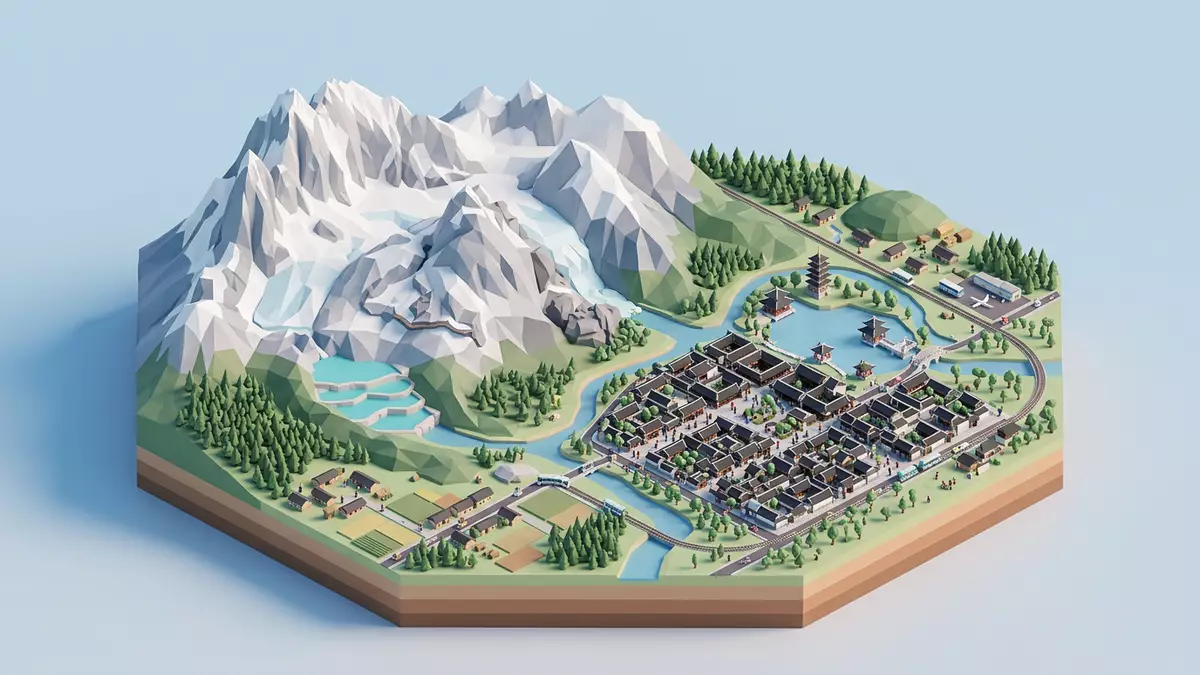
Yulong Xueshan, widely known in English as Jade Dragon Snow Mountain, is a compact mountain massif rising above Lijiang in Yunnan province and forming a jagged wall of rock, ice and alpine meadows along the northern horizon. Its highest summit, Shanzidou, reaches around 5,596 m (18,360 ft) above sea level, making the range a dominant feature of north-western Yunnan’s topography and a constant presence in the daily life of the Lijiang plain.
A serrated range of peaks and deep relief
Yulong Xueshan is more than a single summit; it is a short mountain chain running roughly north–south at the southern end of the Yunling Shan, itself part of the larger Hengduan Shan system that threads across western China. The massif extends for several tens of kilometres, with multiple peaks rising above 5,000 m and steep faces dropping towards river valleys that cut along its flanks.Yunling ranges context
The vertical difference between the summit region and the nearby Jinsha Jiang, an upper reach of the Yangtze River, is on the order of 3,000 m (9,843 ft), so the mountain appears as an abrupt barrier above the deep valley. Within the massif the highest point is Shanzidou, a peak recorded at 5,596 m (18,360 ft), and the broader range carries several other high summits that keep snow and ice well into the warmer months.Shanzidou at 5,596 m
Glaciers, rock and alpine meadows
The geology of Yulong Xueshan combines limestone and basalt formations, giving the slopes a mix of pale cliffs and darker outcrops that frame the permanent snowfields near the crest.limestone and basalt formations The massif carries glaciers that are recognised as some of the southernmost permanent ice in mainland Asia, and their tongues descend towards high plateaus where wooden walkways and viewing platforms have been installed.
Below the ice, large parts of the mountain are carpeted with coniferous forest and alpine meadow. Named areas within the scenic zone include Spruce Meadow and Yak Meadow, both sitting on gentler slopes with open grassland and scattered trees and providing broad views towards the main ridge.Spruce Meadow and Yak Meadow At lower elevations, Blue Moon Valley accommodates pools of clear turquoise water set against pale rock, so the transition from river to glacier can be traced in a single visit by moving through successive belts of vegetation and altitude.
Cultural landscape above Lijiang
Yulong Xueshan rises directly north of Lijiang Old Town, the historic centre of Lijiang City, and forms the mountain backdrop to the Naxi people’s traditional urban and agricultural landscape.north of Lijiang Old Town The old town itself lies on a plateau at around 2,400 m (7,874 ft), so the snow-covered crest stands far higher yet remains visually close, creating a pronounced contrast between tiled roofs, irrigated fields and the serrated skyline.
The massif is protected within the Yulong Xueshan Nature Reserve, a confirmed Key Biodiversity Area extending across more than 250 km² of terrain between about 2,415 m and 5,596 m above sea level.Yulong Xueshan Nature Reserve Within this protected landscape, cableways and marked paths reach viewing platforms at heights above 4,500 m, while the summit ridge itself remains closed to general mountaineering, preserving the upper slopes as a largely untouched high-alpine environment.
Visiting Yulong Xueshan: what travellers from Western Europe should know
- Yulong Xueshan lies just north of Lijiang in Yulong Naxi Autonomous County in north-western Yunnan; access is by road from Lijiang’s urban districts towards the mountain’s organised scenic area.
- The terrain rises rapidly from the Lijiang plateau to elevations above 4,000 m (13,123 ft), and paths on the upper plateaus include stepped wooden walkways and exposed sections at high altitude.
- The official language is Chinese and the currency is the yuan (renminbi).
- Entry requirements depend on your nationality; UK travellers can check the FCDO travel advice at gov.uk/foreign-travel-advice, Irish travellers the Department of Foreign Affairs at ireland.ie.
Searching for Yulong Xueshan on social platforms
These links open searches for Yulong Xueshan on each platform.
Frequently asked questions about Yulong Xueshan
Where is Yulong Xueshan located?
Yulong Xueshan stands just north of Lijiang in Yulong Naxi Autonomous County, in the north-west of Yunnan province in south-western China.
What can visitors expect when visiting Yulong Xueshan?
Visitors encounter a high-alpine landscape of glaciers, rocky ridges, coniferous forest, meadows and turquoise pools, linked by cableways and wooden walkways on elevated plateaus.
What makes Yulong Xueshan distinctive among Chinese mountain ranges?
The massif combines a compact chain of high peaks, permanent southern glaciers and a dramatic height difference above the Jinsha Jiang, all rising immediately above a historic plateau city.


