
Yokohama Chukagai: Japan’s largest Chinese quarter by the harbour
Published on 08/06/2026 at 20:13 | Editorial responsibility: Rafael Müller, Editor-in-Chief AD HOC NEWS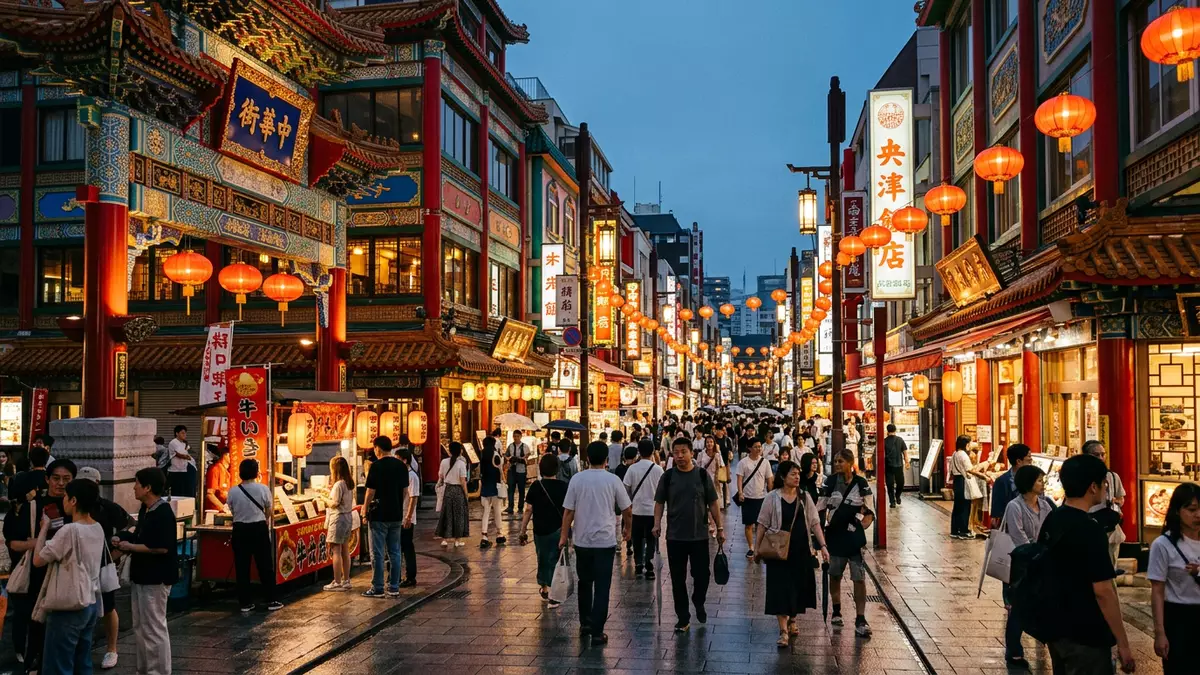
Yokohama Chukagai, known in English as Yokohama Chinatown, is the Chinese quarter close to the harbour of Yokohama in Japan. It grew from a nineteenth?century community of Chinese merchants after Yokohama opened as an international port in 1859, and it remains one of the largest Chinese districts in Japan. The area is a compact grid of streets marked by decorative gates, bright signboards and a dense mix of restaurants, shops and temples dedicated to Chinese deities.
Street grid, gates and harbour setting
Yokohama Chukagai lies a short distance inland from Yokohama’s waterfront, set within a regular grid of narrow streets and alleys packed between low and mid?rise buildings. Visitors first notice the elaborate paifang gates that mark the main approaches to the quarter, each built in painted timber and metal with tiled roofs and detailed carvings. These gates stand at key junctions and announce transitions from the surrounding city into streets where Chinese characters, lanterns and auspicious colours dominate.
The proximity to the harbour has shaped the way the district feels in relation to the rest of Yokohama. The sea is not directly visible from every corner, yet several roads lead towards wider thoroughfares that connect to the port area, giving a sense of the quarter as part of a broader waterfront zone that includes piers, promenades and shipping facilities. Walking through the neighbourhood, the visitor moves between streets framed by commercial facades and occasional open spaces where traffic routes intersect, creating small nodes that often host food stalls or festival activities.
Temples and cultural anchors
Among the most recognisable structures in Yokohama Chukagai are its Chinese temples, which act as cultural anchors as well as architectural highlights. The Kanteibyo temple, dedicated to the deity Guan Yu, traces its origins to the late nineteenth century and stands today as a richly decorated complex with layered roofs, stone lions at the entrance and vivid decorative panels. Another significant temple, a Mazu shrine honouring the sea goddess Mazu, was established to serve the community of sailors and merchants whose livelihoods were tied to maritime trade.
These temples follow Chinese architectural traditions while adapting to Japanese urban conditions, occupying plots within ordinary city blocks and rising above neighbouring buildings through their rooflines and ornamental detail. Inside the precincts, courtyards and halls create calmer pockets within the dense commercial environment outside. Incense burners, altars and hanging lanterns form part of the visual language of the temples, and they highlight the way religious practice remains woven into everyday life in this part of Yokohama. The presence of these structures, alongside community halls and schools, underlines the long?standing role of the Chinese community in the city’s history.
Food streets, shops and seasonal crowds
For many visitors, the main draw of Yokohama Chukagai is its concentration of food and retail along streets that run both parallel and perpendicular to one another. Restaurant fronts display large menus with photographs of dishes, and many venues specialise in dim sum, noodles or Cantonese?style preparations adapted to local tastes. Steam rises from baskets of buns at takeaway counters, and roasted meats hang behind glass at certain shopfronts, giving a sense of continuity with food markets in Chinese port cities.
Between the eateries, shops sell confectionery, tea, Chinese medicine, souvenirs and imported goods. Lanterns and banners overhead contribute to a layered streetscape in which colour and text overlap, and some facades use dragons, phoenixes or zodiac animals as decorative motifs. The district marks Chinese New Year and other festivals with additional adornments and performances, adding an extra dimension for travellers who time their visit to coincide with these occasions. Even outside festival periods, the density of venues within a small area makes it easy to sample several dishes, browse different shops and visit a temple within a single visit.
Visiting Yokohama Chukagai: what travellers from Western Europe should know
- Yokohama Chukagai is in the city of Yokohama, south of Tokyo, and is reached by urban rail and local buses that stop near the main gates.
- Admission arrangements and opening hours are set by the site's operator and change with the season; the official website is the only binding source.
- Many travellers choose to visit during the daytime to see the details of the temples and shopfronts, or after dusk when lanterns and signboards are lit.
- The streets are mostly level but can be busy, with paving that includes kerbs and occasional steps between building thresholds and the roadway; restrictions may apply on site.
- Japanese is the main language of the wider city, but Chinese and English appear widely in menus and signs, and payment is generally by cash and card.
- Entry requirements depend on your nationality. UK travellers should check the FCDO travel advice at gov.uk/foreign-travel-advice; Irish travellers the Department of Foreign Affairs at ireland.ie; EU and EEA citizens their own national foreign ministry.
Searching for Yokohama Chukagai on social platforms
These links open searches for Yokohama Chukagai on each platform.Frequently asked questions about Yokohama Chukagai
Where is Yokohama Chukagai located?
Yokohama Chukagai is the Chinese quarter in the city of Yokohama in Japan, near the harbour and a short distance from central rail stations.
What can visitors expect on a typical visit?
Visitors encounter decorative gates, temples, food streets and shops within a compact grid of lanes, with plenty of places to eat, browse and sit.
What makes Yokohama Chukagai distinctive among Japanese city districts?
The district combines Chinese religious architecture and food culture with Japanese urban infrastructure, creating a concentrated Chinese environment within a Japanese port city.


