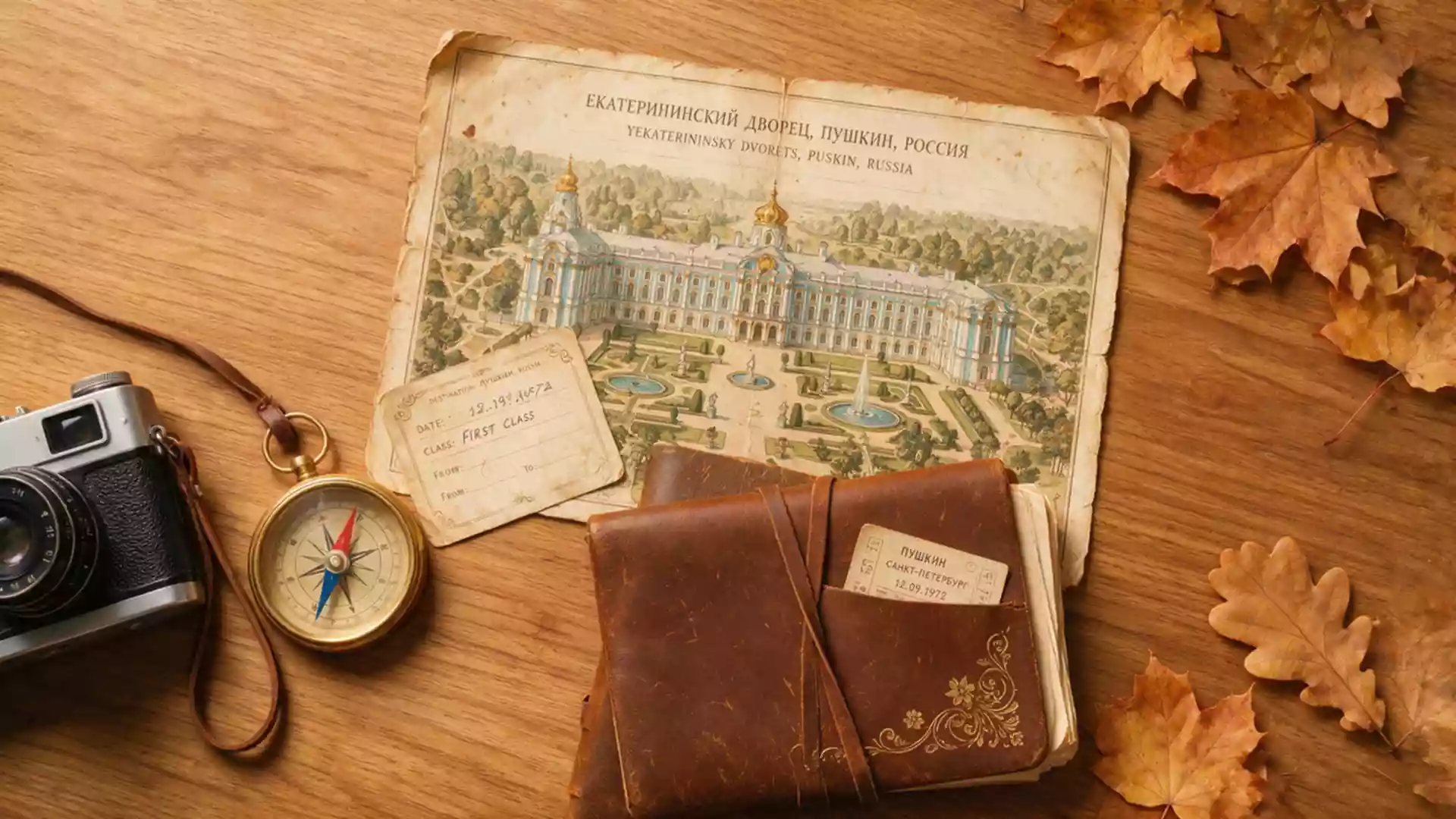
Yekaterininsky dvorets, a baroque palace in Puschkin
Published on 09/09/2026 at 13:30 | Editorial responsibility: Rafael Müller, Editor-in-Chief AD HOC NEWS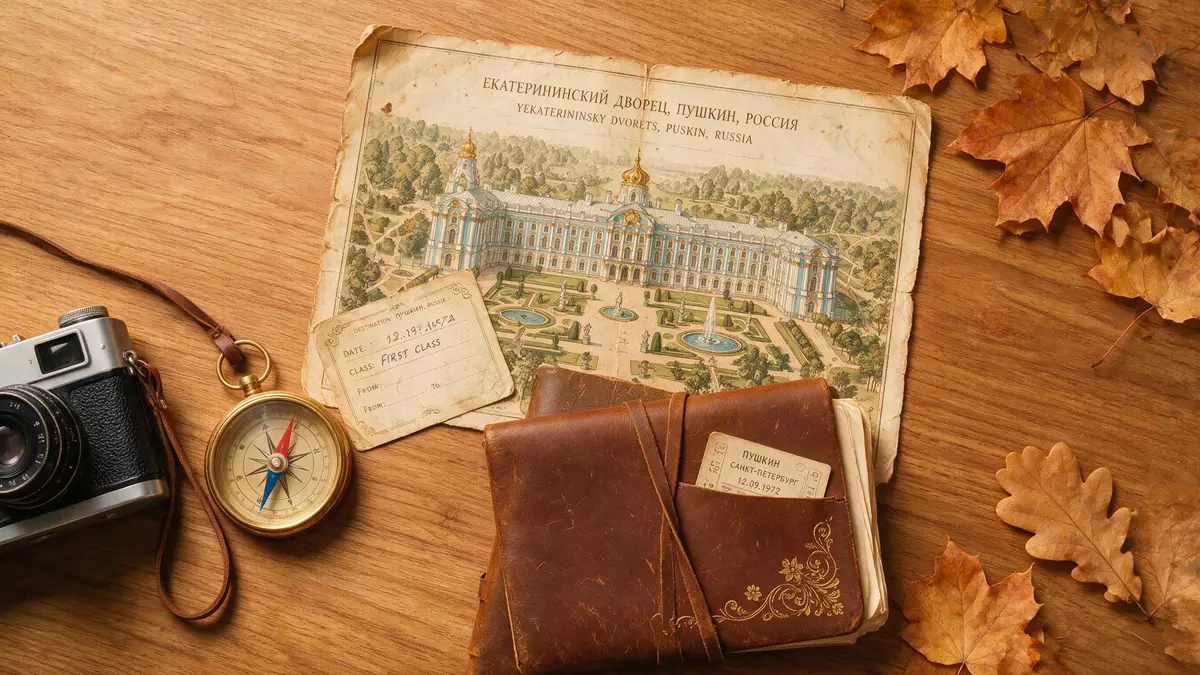
Yekaterininsky dvorets, known in English as the Catherine Palace, is a sprawling baroque residence in Puschkin south of Saint Petersburg, built as an imperial summer palace in the eighteenth century.
Azure facades and gilded baroque
The most striking first impression of Yekaterininsky dvorets is its elongated main facade, painted in a strong azure tone and articulated by white columns, pilasters and projecting bays that run along the palace front facing the formal park.elongated baroque Sculptural decoration in stucco frames tall windows, while gilded cartouches, capitals and figures pick out the rhythm of the architecture against the coloured background.Russian Baroque style
The palace stands within Tsarskoye Selo, the “Tsar’s village”, a planned ensemble of residences and landscaped parkland that later became part of the Saint Petersburg World Heritage listing linking imperial sites around the city.World Heritage Site The exterior composition emphasises length, with an enfilade of state rooms behind the facade, and more restrained secondary fronts facing service courts and subsidiary wings that connect the main block to the wider grounds.
From Catherine I to Elizabeth and Rastrelli
The origins of Yekaterininsky dvorets lie in the early eighteenth century, when Catherine I of Russia commissioned a summer residence at Tsarskoye Selo between 1717 and 1723, engaging the German architect Johann Friedrich Braunstein to design the first palace on the site.Catherine I commission This initial building was relatively modest compared with what stands there now, a compact residence set within an estate that was still developing.
The palace acquired its familiar Russian Baroque form in the reign of Empress Elizabeth, when Bartolomeo Francesco Rastrelli was asked in the 1750s to rebuild and enlarge the structure, creating the long, gilded facade and richly decorated state rooms that define the building today.Rastrelli rebuilding Later in the eighteenth century, Catherine II, known as Catherine the Great, introduced neoclassical elements into parts of the interior with the Scottish architect Charles Cameron, so that Rococo ornament and more restrained classical detailing sit side by side within the same palace.Charles Cameron interiors
Imperial residence and museum ensemble
Yekaterininsky dvorets served as a principal summer residence of the Russian imperial family for much of the eighteenth and nineteenth centuries, anchoring a wider ensemble of palaces, pavilions and parkland at Tsarskoye Selo that reflected the tastes and aspirations of successive rulers.summer residence of the tsars Formal gardens, ornamental lakes and smaller buildings extend from the main palace, forming a landscape setting where the long facade reads as a backdrop to lawns and tree-lined avenues.
After the October Revolution of 1917, the palace ceased to function as a royal residence and was reorganised as a museum, becoming part of a cultural complex devoted to the history and art of the former imperial estate.museum after the Revolution Yekaterininsky dvorets and the surrounding ensemble suffered damage and looting during the Second World War, but extensive restoration work in the later twentieth century reconstructed major interiors and reinstated the decorative schemes, including high-profile rooms such as the amber-decorated chamber that draws many visitors.UNESCO World Heritage
Visiting Yekaterininsky dvorets: what travellers from Western Europe should know
- Yekaterininsky dvorets stands in Puschkin, a town south of Saint Petersburg that developed from the former Tsarskoye Selo around the imperial residences and parkland.
- The approach from the town into the palace grounds involves walking through landscaped park paths and formal avenues, and the palace interior includes long corridors and staircases.
- The official language is Russian and the currency is the rouble.
- Entry requirements depend on your nationality; UK travellers can check the FCDO travel advice at gov.uk/foreign-travel-advice, Irish travellers the Department of Foreign Affairs at ireland.ie.
Searching for Yekaterininsky dvorets on social platforms
These links open searches for Yekaterininsky dvorets on each platform.
Frequently asked questions about Yekaterininsky dvorets
Where is Yekaterininsky dvorets located?
Yekaterininsky dvorets stands in the town of Puschkin, within the historical estate of Tsarskoye Selo south of Saint Petersburg in Russia.
What can visitors expect on a visit to the palace?
Visitors encounter an extensive baroque facade in azure and gold, state rooms arranged in sequence, and landscaped parkland with formal avenues and ornamental water.
What makes Yekaterininsky dvorets distinctive among Russian palaces?
The palace combines Rastrelli’s richly gilded Russian Baroque architecture with later neoclassical interiors in a single ensemble, set within a planned imperial park.