
Yakushima’s ancient cedar forests and steep island mountains
Published on 08/31/2026 at 06:59 | Editorial responsibility: Rafael Müller, Editor-in-Chief AD HOC NEWS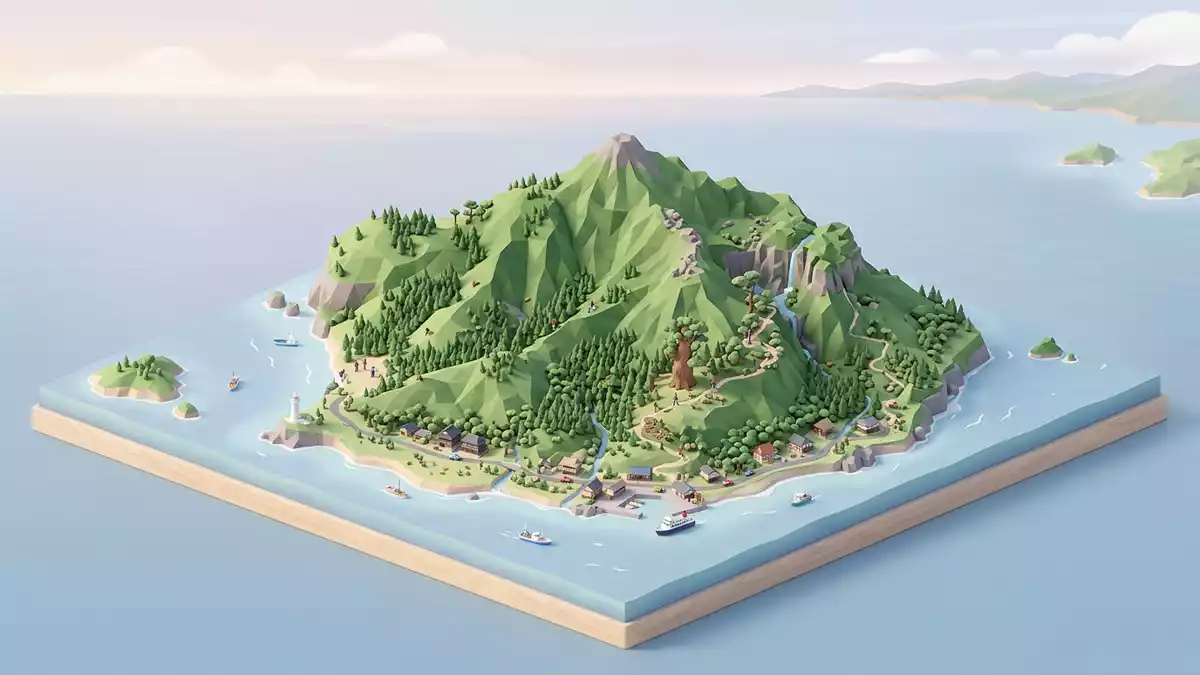
Yakushima, off the southern tip of Kyushu in Japan, is a steep, round island where temperate rainforest climbs from rocky shores to high mountains. Its ancient cedar forests, protected as a World Natural Heritage site since 1993, give the island a distinctive, layered landscape of sea, dense woodland and exposed summits.
Yakushima’s World Heritage rainforest core
The heart of Yakushima is recognised as a World Heritage property that covers a large mountainous core of the island and reaches towards the western coast.The World Heritage property includes high ridges and deep valleys where temperate rainforest remains largely intact. This inscription was made in December 1993, when Yakushima and Shirakami-Sanchi became Japan’s first World Natural Heritage sites, recognised for natural beauty and the integrity of their ecosystems.Japan’s first World Natural Heritage
The protected area forms part of a wider conservation mosaic that also includes the Yakushima Biosphere Reserve designated in 1980 under UNESCO’s Man and the Biosphere Programme.Yakushima Biosphere Reserve Within this mosaic lies the Yakushima Wildlife Area, national park zones and forest ecosystem reserves, each contributing to the long-term protection of the island’s forests, rivers and coastal habitats. The World Heritage site itself covers 10,747 ha of Yakushima’s interior, representing a substantial share of the island’s land area and preserving a continuous band of forest from near sea level to the highest peaks.Area of 10,747 hectares
Ancient cedar trees and layered vegetation
Yakushima is best known for its ancient Japanese cedar, locally called Yakusugi, which form dense stands within the mountain forests. These evergreen trees can grow to great height and thickness, and individual specimens have lived for over 1,000 years, giving the island some of East Asia’s most remarkable examples of long-lived temperate trees.Primeval forest of Japanese cedar The cedar groves sit within a broader remnant of warm-temperate ancient rainforest, an ecosystem that has largely disappeared elsewhere in the region but survives here on steep slopes and ridges.
The flora of Yakushima is unusually rich for an island of its size, with around 1,900 species and subspecies recorded in the forests and coastal areas.Rich flora with some 1,900 species Vegetation zones stack one above another from sea level to the upper slopes, creating a pronounced gradient from coastal forest to subalpine communities. This vertical layering, together with the presence of ancient cedar stands, makes Yakushima an important natural site for studying vegetation succession, ecological processes between lowland and upland systems and the dynamics of warm-temperate ecosystems on a compact island.Warm-temperate ecosystem processes
A steep, round island at the edge of Kyushu
Yakushima lies in the ?sumi Islands of Kagoshima Prefecture, in the far south of Japan’s main archipelago.Located in the ?sumi Islands The island is broadly round in plan, with an area of about 504 km2 and a circumference of roughly 132 km, and it rises steeply from the surrounding sea to central summits that reach nearly 2,000 m (6,562 ft).Round-shaped island of 504 km2 It sits about 60 km south of Cape Sata at the southern tip of Kyushu, between the East China Sea and the Pacific Ocean, at the interface of the Palearctic and Oriental biotic regions.Situated between the East China Sea and the Pacific
This combination of maritime setting, steep relief and biogeographical position underpins the diversity of Yakushima’s landscapes. Rocky shores give way quickly to deeply incised valleys and forested slopes, and the central mountains hold a compact cluster of peaks that dominate views across the island. Coastal areas include sandy beaches such as Nagata-hama on the north-western side, which serves as an important nesting ground for the endangered loggerhead sea turtle in the North Pacific.Largest nesting ground for loggerhead turtle Inland, rivers and streams run down from the higher ridges through dense forest, linking mountain habitats with the sea.
Visiting Yakushima: what travellers from Western Europe should know
- Yakushima lies south of Kyushu in Kagoshima Prefecture and is approached across the sea from the Osumi Peninsula and nearby ports by ferry or high-speed vessel.
- The island’s terrain is steep, with forested slopes rising from the coast and long paths in the mountains that can involve extended ascents and descents on foot.
- Coastal plains are limited, so roads and settlements tend to follow narrow strips of flatter ground around the island’s circumference, while interior areas remain dominated by forest and ridges.
- The official language is Japanese and the currency is the yen.
- Entry requirements depend on your nationality; UK travellers can check the FCDO travel advice at gov.uk/foreign-travel-advice, Irish travellers the Department of Foreign Affairs at ireland.ie.
Searching for Yakushima on social platforms
These links open searches for Yakushima on each platform.
Frequently asked questions about Yakushima
Where is Yakushima and how large is the island?
Yakushima is in Kagoshima Prefecture south of Kyushu, in the ?sumi Islands, with an area of about 504 km2 and a roughly round outline.
What should visitors expect on a trip to Yakushima?
Visitors encounter steep, forested mountains rising from rocky coasts, ancient cedar stands within protected rainforest, and compact settlements along the narrow coastal belt.
What makes Yakushima distinctive among Japan’s natural sites?
Yakushima combines long-lived cedar forests, a warm-temperate ancient rainforest, marked elevation gradients and World Heritage protection focused on a single, compact island.


