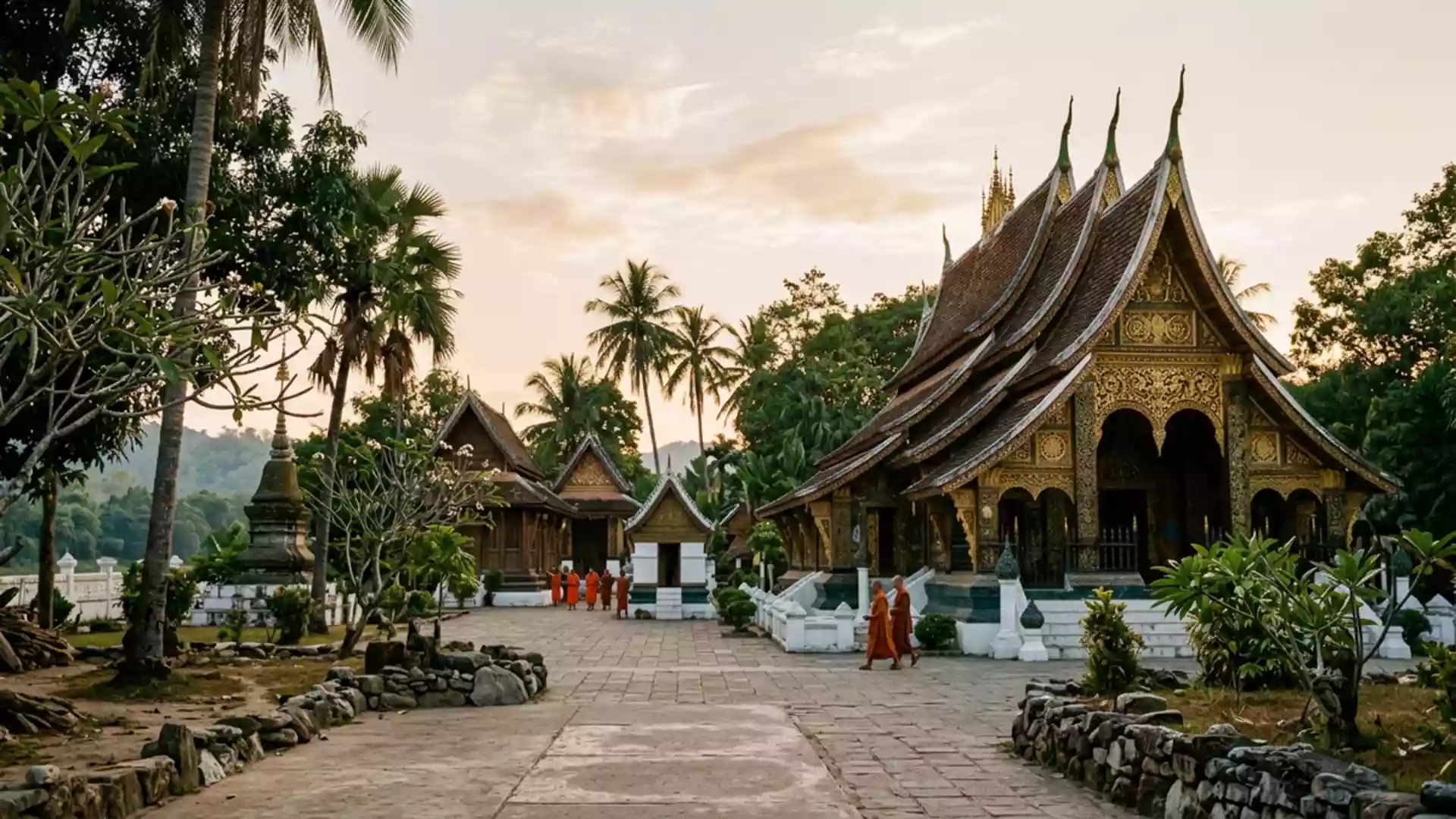
Xieng Thong Temple changes visitor terms on 15 November
Published on 11/07/2026 at 14:50 | Editorial responsibility: Rafael Müller, Editor-in-Chief AD HOC NEWSVisitor terms change in November
- Luang Prabang tourism authorities set new visitor terms for Xieng Thong Temple from 15 November 2026.
- The temple stands at the Mekong and Nam Khan junction on Luang Prabang's peninsula.
- King Setthathirath founded the temple around 1560 during the history of the Lane Xang kingdom.
- Luang Prabang entered the UNESCO World Heritage List on 9 December 1995.
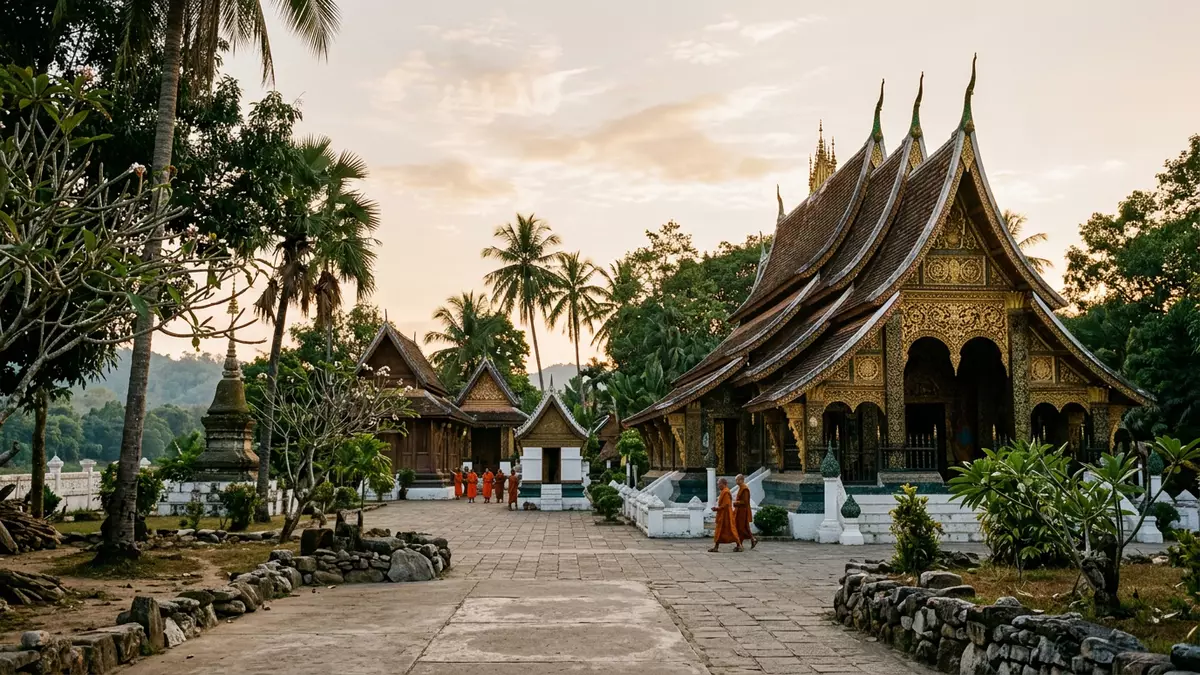
Xieng Thong Temple (Vat Xieng Thong) in Luang Prabang will apply revised visitor terms from 15 November 2026, giving travellers a current access change to note at one of Laos's best-known Buddhist monasteries. The temple stands at the northern end of the peninsula, close to the meeting point of the Mekong and Nam Khan rivers.
Xieng Thong Temple changes access terms on 15 November
The official Tourism Luang Prabang website lists new visitor terms taking effect on 15 November 2026. Its page names the temple and gives the effective date in the same entry, making the change relevant to visits planned from the middle of November onwards.
The update concerns entry conditions for visitors rather than a closure or a change to the buildings. The site remains a functioning religious complex with a main chapel, smaller chapels, monastic buildings and the Royal Funerary Chariot Hall. Travellers should therefore check the current arrangements before setting out, particularly if their visit falls on or after 15 November 2026. The official visitor information records the new effective date.
A 1560 foundation beside Luang Prabang's rivers
King Setthathirath founded the monastery around 1560, when Luang Prabang was associated with the Lane Xang kingdom. The building is a classic example of Luang Prabang architectural style, with a low, sweeping multi-tiered roof and glass mosaics on the walls and chapels.
The main chapel, known as the sim, has a central nave and two side aisles. Its roof rises towards a seventeen-segment finial, while the rear wall carries a stained-glass image of a large tree. The complex also includes a chapel with a reclining Buddha and a hall containing the royal funerary carriage and urns. The access change from 15 November 2026 therefore affects a site whose visitor route includes several distinct historic structures, not simply a single hall.
Luang Prabang was inscribed on the UNESCO World Heritage List on 9 December 1995. UNESCO describes the town as an exceptional fusion of Lao traditional architecture and European colonial buildings from the nineteenth and twentieth centuries, and identifies the sixteenth-century temple as a notable example of the area's religious architecture. The World Heritage assessment places the monastery within that wider historic townscape.
What the November change means for visitors
The revised terms begin on 15 November 2026, so an itinerary should distinguish visits before and after that date. The change does not announce a restoration closure, a restricted chapel or a cancellation of access to the temple grounds.
- Date: The revised visitor terms take effect on 15 November 2026 at Xieng Thong Temple in Luang Prabang.
- Access: The official tourism listing identifies the site on the main road at the end of the peninsula. It advises visitors to cover shoulders and knees and to remove hats and shoes.
- Location: The monastery stands above the Mekong near the junction with the Nam Khan. It can be reached on foot from the Luang Prabang Tourism Information Centre along the peninsula.
- Site conditions: The complex contains religious buildings, chapels, stupas and the Royal Funerary Chariot Hall. Visitors should expect a working Buddhist site rather than a purely secular museum.
- Language and money: Lao is the official language of Laos, and the national currency is the Lao kip.
- Entry requirements depend on your nationality; UK travellers can check the FCDO travel advice at gov.uk/foreign-travel-advice, Irish travellers the Department of Foreign Affairs at ireland.ie.
Searching for Xieng Thong Temple on social platforms
These links open searches for Xieng Thong Temple on each platform.
Frequently asked questions about Xieng Thong Temple
When do the revised visitor terms start at Xieng Thong Temple?
The revised terms take effect on 15 November 2026, according to the official Tourism Luang Prabang listing.
What is Xieng Thong Temple?
It is a Buddhist monastery founded by King Setthathirath around 1560, with a main chapel, glass mosaics, smaller chapels and a royal funerary hall.
Where is Xieng Thong Temple and how do you get there?
The monastery is at the northern end of Luang Prabang's peninsula, above the Mekong near the Nam Khan junction, and is reachable on foot from the town's tourism information centre.