
Xi Hu, the layered lake landscape of Hangzhou
Published on 09/19/2026 at 09:31 | Editorial responsibility: Rafael Müller, Editor-in-Chief AD HOC NEWS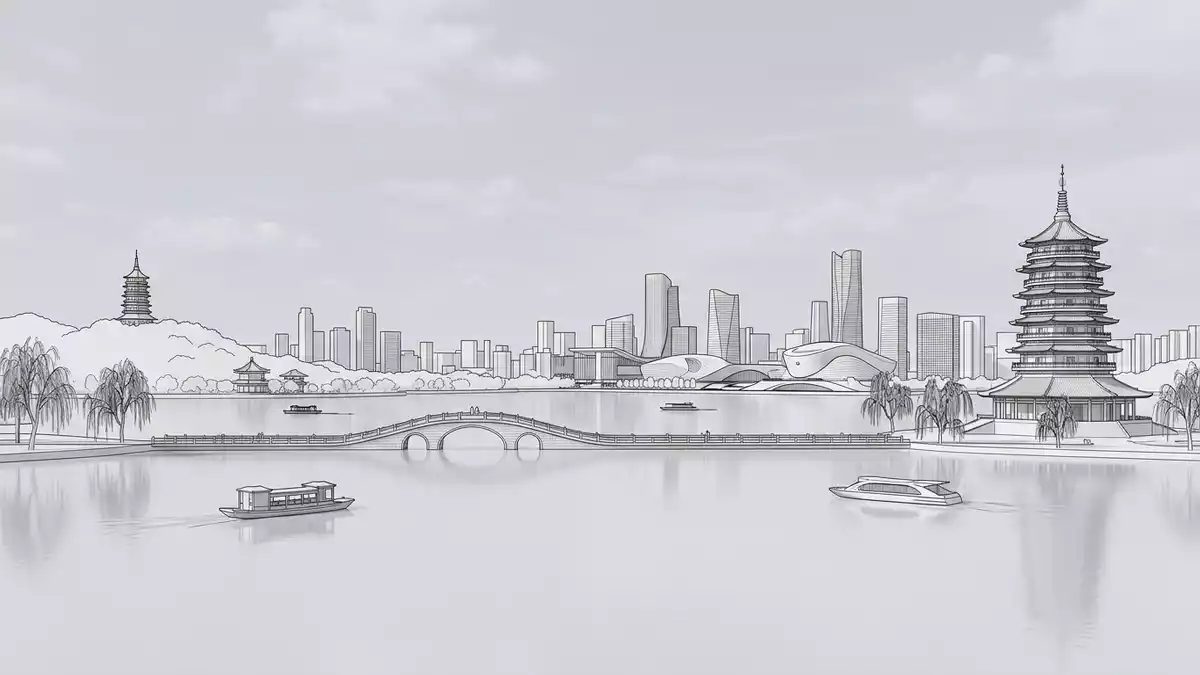
Xi Hu in Hangzhou, known in English as West Lake, is a freshwater lake where water, wooded hills and built edges form a single shaped landscape. The lake lies within the Xihu District of Hangzhou in Zhejiang, eastern China, and has been a cultural reference point for garden design since at least the ninth century.West Lake Cultural Landscape of Hangzhou was inscribed on the UNESCO World Heritage List in 2011, recognising the lake and the surrounding hills as one cultural landscape.
Water, hills and a shaped shoreline
Xi Hu is a freshwater lake lying just west of Hangzhou’s historic urban core, with the city spreading along its eastern shore and hills rising around the other sides.The lake’s English name West Lake reflects that position beside the city. The surface of the lake stretches several kilometres from north to south and from east to west, giving it a scale that reads as broad water rather than an enclosed pond.
Mountains and hills embrace Xi Hu on three sides, forming a green backdrop that frames views across the water and gives the lake a sense of enclosure from the wider landscape.Descriptions of West Lake emphasise how the hills, the lake and the city edge interlock, with urban streets reaching the waterfront and footpaths continuing into wooded slopes. The lake itself is divided into a series of connected basins by long, narrow strips of land that read as causeways, turning one expanse of water into several linked scenes.
Causeways, islands and classic views
One of the defining features of Xi Hu is the pattern of causeways and islands that run across and within the water, shaping how people move through the landscape and how views unfold. Long embankments such as the Su Causeway and Bai Causeway cut across parts of the lake, carrying footpaths and trees while keeping the water visible on both sides.Historic lists of scenic spots pick out views from these causeways as part of the lake’s classic repertoire. Artificial islands set within the lake add further layers, with built structures, gardens and small lakes on their own surfaces.
Pagodas, pavilions, bridges and temples stand at intervals around Xi Hu, often aligned with particular viewpoints that have been named in poetic fashion since the thirteenth century. The group sometimes referred to as the “Ten Scenes of West Lake” includes views such as “Three Pools Mirroring the Moon” and “Autumn Moon over the Calm Lake”, each tied to a specific combination of water, built element and seasonal effect.UNESCO documentation of the cultural landscape highlights how these named scenes form part of the lake’s designed character rather than casual labels. Walking along the lake edge or across the causeways, the visitor passes through these framed scenes without a sharp boundary between everyday waterfront and composed view.
A cultural landscape shaped over centuries
Xi Hu is not only a piece of water but a cultural landscape that has been shaped over centuries of attention from officials, designers, monks and local communities. Written records trace its influence at least back to the Tang dynasty, and by the Song dynasty the lake had become a central image in southern Chinese landscape painting.West Lake as a painted landscape is a recurring theme in accounts of Chinese art. The patterns of embankments, islands and waterfront temples are the result of deliberate landscape design rather than a purely natural shoreline.
When the West Lake Cultural Landscape of Hangzhou was inscribed on the UNESCO World Heritage List in 2011, the listing recognised several elements: the natural lake water, the spatial relationship between city and lake, the system of causeways and islands, the named scenic views, cultural and historic sites and characteristic lake flora.The summary of the West Lake Cultural Landscape sets out this six-part structure. Together, these elements show how Xi Hu became a model for classical East Asian garden and lake design, with its mixture of open water, framed views and accessible shoreline.
Visiting Xi Hu: what travellers from Western Europe should know
- Xi Hu lies in Hangzhou, in Zhejiang province in eastern China, with the lake forming part of the city’s Xihu District and the urban streets reaching its eastern shore.
- The lakeside paths and causeways around Xi Hu involve extended walks on level ground, with additional steps and slopes on routes that climb into the surrounding hills or up to pagodas.
- The West Lake area is integrated into the city fabric, and public transport in Hangzhou, including metro services such as Line 1 to Longxiangqiao, brings visitors within walking distance of the waterfront.
- The official language is Chinese and the currency is the renminbi (yuan).
- Entry requirements depend on your nationality; UK travellers can check the FCDO travel advice at gov.uk/foreign-travel-advice, Irish travellers the Department of Foreign Affairs at ireland.ie.
Searching for Xi Hu on social platforms
These links open searches for Xi Hu on each platform.
Frequently asked questions about Xi Hu
Where is Xi Hu and what kind of place is it?
Xi Hu is a freshwater lake in Hangzhou, in Zhejiang province in eastern China, forming part of the city’s Xihu District and known in English as West Lake.
What should a visitor expect when walking around Xi Hu?
A visitor finds broad water edged by paths, trees and built structures, with long causeways across the lake and hills rising on three sides, creating varied views at short intervals.
What makes Xi Hu distinctive compared with other lakes?
Xi Hu is distinctive for its recognised cultural landscape: a combination of shaped shorelines, historic causeways, islands, pagodas and named scenic views that has influenced classical East Asian garden and lake design.


