
Xi Hu: a lake shaped by causeways, hills and art
Published on 09/23/2026 at 00:23 | Editorial responsibility: Rafael Müller, Editor-in-Chief AD HOC NEWS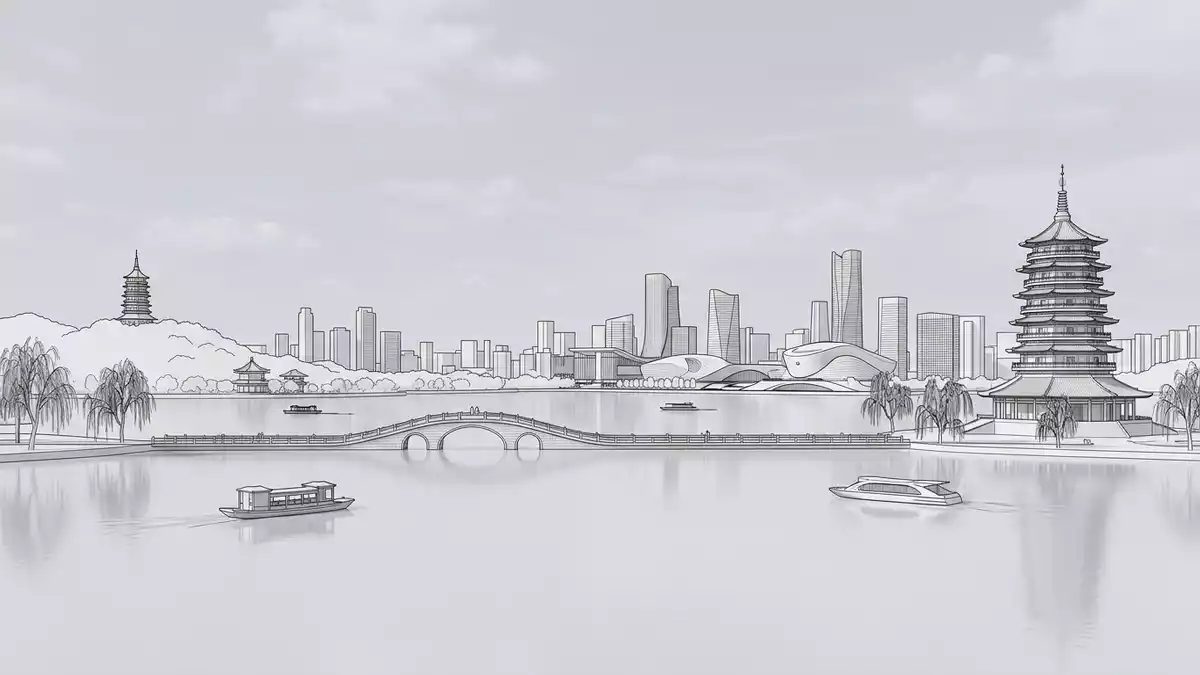
Xi Hu, also known as West Lake, lies beside the historic centre of Hangzhou in Zhejiang, China. Its open water is divided by causeways and framed by hills, pavilions, gardens and temples, creating a landscape that is both lake and composed cultural setting.
Xi Hu between water, city and hills
The lake covers just over 6 km² and extends about 3.2 km from north to south and 2.8 km from east to west. Its western and southern shores meet wooded hills, while Hangzhou occupies the eastern side. The relationship between water, city and hills is part of the West Lake cultural landscape.
Xi Hu is not an untouched lake landscape. Causeways cross the water, islands sit within it, and historic buildings appear among trees and planted spaces. The principal landscape elements include the Bai Causeway, the Su Causeway, the Three Pools Mirroring the Moon, and a sequence of named views associated with poetry and painting.
Causeways and islands across the lake
The lake’s visible divisions come from landscape works carried out across several centuries. Bai Juyi, a Tang-dynasty poet and administrator, is associated with the causeway later named Bai Causeway. Su Shi, the Song-dynasty poet and administrator, is associated with Su Causeway, completed in the 1090s.
The historic causeways and islands divide the broad surface into bays and linked views. Bridges, willow-lined paths, lotus planting and water create changing relationships between shore and open lake. The Three Pools Mirroring the Moon is marked by stone lanterns in the water, with a celebrated view connected to the Mid-Autumn Moon tradition.
From Tang poetry to World Heritage
Writers and artists have celebrated Xi Hu since the Tang dynasty, from AD 618 to 907. During the Southern Song dynasty, when Hangzhou was known as Lin’an, ten scenic views became a recognised poetic framework for the lake.
These views connect particular places with images such as autumn moonlight, lotus flowers, evening bells and distant hills. They belong to a wider tradition in which gardens, temples, pagodas, ornamental trees and water are arranged as parts of a cultural landscape. The World Heritage property area covers 3,322.88 hectares, including the lake and surrounding historic landscape.
Xi Hu entered the UNESCO World Heritage List in 2011 as the West Lake Cultural Landscape of Hangzhou. The designation includes the lake, surrounding hills, causeways, islands, historic sites, characteristic plants and the city-lake relationship. The 2011 cultural landscape inscription places these elements within China’s long history of landscape design.
Visiting Xi Hu: what travellers from Western Europe should know
- Xi Hu lies west of Hangzhou’s former walled city. Hangzhou railway stations and the city’s public transport connect the lake with the wider urban area.
- The lakeshore includes paved promenades, bridges, planted sections and causeways. Walking routes vary between open waterfront, shaded paths and steps around historic sites.
- The lake is surrounded by hills on three sides. Trails and viewpoints rise from the waterfront into wooded terrain.
- The official language is Mandarin Chinese and the currency is the Chinese yuan.
- Entry requirements depend on your nationality; UK travellers can check the FCDO travel advice at gov.uk/foreign-travel-advice, Irish travellers the Department of Foreign Affairs at ireland.ie.
Searching for Xi Hu on social platforms
These links open searches for Xi Hu on each platform.
Frequently asked questions about Xi Hu
Where is Xi Hu?
Xi Hu lies in Hangzhou, Zhejiang province, in eastern China. The lake is west of the city’s historic centre and forms part of a wider cultural landscape.
What can visitors expect at Xi Hu?
Visitors encounter lakeside paths, causeways, bridges, islands, wooded hills, temples, gardens and pavilions. Walking routes combine open water views with historic sites and planted landscapes.
What makes Xi Hu distinctive?
Its identity comes from the close relationship between water, hills, city and designed landscape. Tang and Song literary traditions, the Ten Views and the 2011 World Heritage inscription connect the scenery with Chinese cultural history.


