

Xcaret’s underground rivers and Maya echoes near Playa del Carmen
Published on 08/18/2026 at 14:06 | Editorial responsibility: Rafael Müller, Editor-in-Chief AD HOC NEWS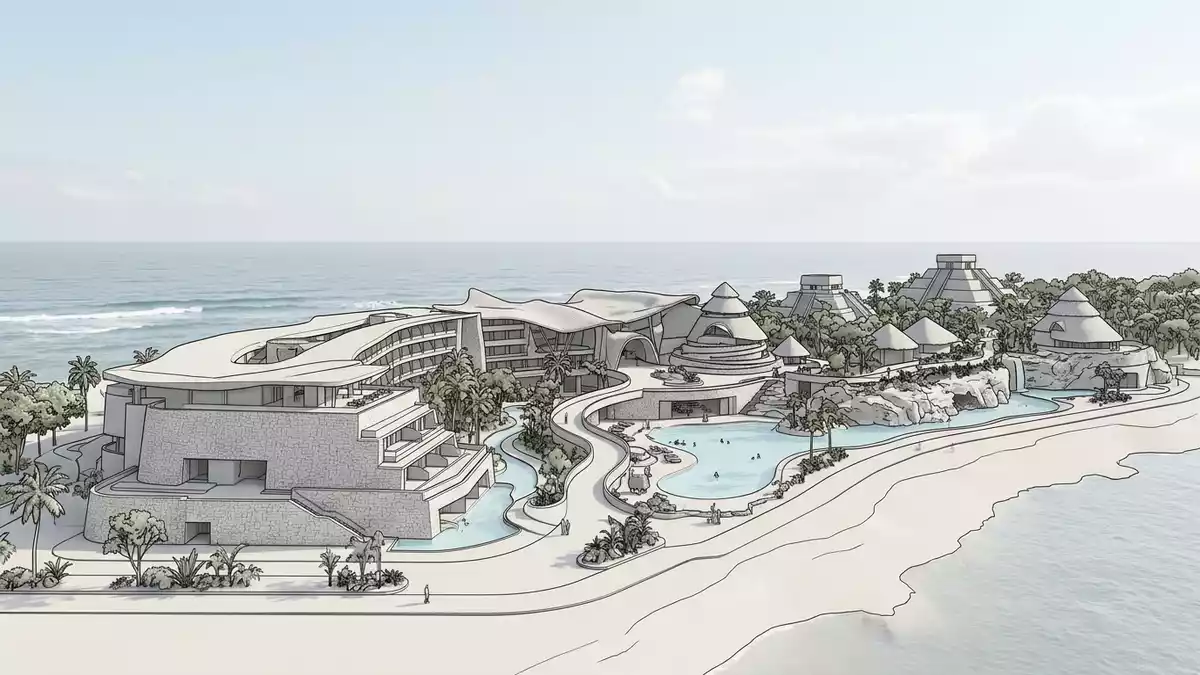
Xcaret near Playa del Carmen is a sprawling eco-archaeological park where underground rivers, Caribbean shoreline and traces of Maya settlement run through the same landscape. Opened in 1991 on the Riviera Maya coast of Quintana Roo, it takes its name from the nearby archaeological site, weaving pre-Columbian structures into a modern park laid out across about 81 ha (200 acres) of limestone and jungle.Opened in 1991
From Maya port to eco-archaeological park
The modern Xcaret park sits alongside, and partly around, an archaeological zone where the Maya settled close to the sea between about AD 1200 and 1500.Maya building at Xcaret dates from around AD 1200 to 1500 The ancient settlement served as a small port and ceremonial centre, its stone structures now standing within the grounds as low platforms, walls and temples in various states of preservation.Some Maya structures lie within the park’s 81 ha
Walking through Xcaret, these remains form one layer in a place that otherwise feels like a contemporary park: paths lead past reconstructed cultural areas, planted gardens and animal habitats before opening onto clusters of ruins framed by vegetation and the pale rock of the peninsula.Interpretation areas and pre-Hispanic ruins share the same grounds The coexistence of archaeological fragments and modern infrastructure gives Xcaret a distinctive character compared with sites where ruins stand in isolation, and helps make the Maya period a visible part of a wider day in the park.
Underground rivers and coastal limestone
The most striking physical feature at Xcaret is its network of underground rivers cut into the porous limestone of the Yucatán peninsula. Visitors follow marked routes through channels where fresh water flows between rock walls, sometimes under low ceilings and at other points in open trenches, using lifejackets to float along sections of the course.Underground river swimming is a core attraction These rivers connect to cenotes and lagoons in places, underlining how much of the site’s drama comes from geology rather than built structures.
Above ground, Xcaret stretches from jungle clearings down towards the Caribbean Sea, with small beaches and inlets where the limestone coast meets salt water.Xcaret stands beside the Caribbean Sea with underground rivers and cenotes Paths thread through areas of dense planting, over bridges and along edges of water, passing exhibits such as an aviary, butterfly pavilion and coral reef aquarium that use the local terrain and climate as a backdrop.Animal and plant exhibits sit within the wider landscape The variation between shaded river corridors, open coastal views and enclosed gardens means that a day here involves moving through distinct types of space within one continuous park.
Mexican culture staged on a Riviera Maya canvas
Beyond its landscape, Xcaret is known for how it stages Mexican culture, using performance, architecture and daily demonstrations to bring traditions into the park environment.Xcaret presents Mexican history, traditions and folklore Reconstructions of village streets, chapels and rural structures sit alongside spaces used for shows, including a large evening production that traces Mexican history from pre-Hispanic times through colonial and modern periods with music and dance.A nightly song and dance show covers Mexican history
During the day, specific traditions appear in focused settings: Papantla Flyers perform their ritual descent around a high pole, while other areas host equestrian displays or regional dances and music.Cultural performances include Papantla Flyers Together with the Maya archaeological zone, these elements turn Xcaret into a place where the visitor moves repeatedly between nature-focused areas and cultural presentations, all framed by the same Riviera Maya setting.
Visiting Xcaret: what travellers from Western Europe should know
- Xcaret lies on the Riviera Maya coast of Quintana Roo at kilometre marker 282 on the Chetumal–Puerto Juárez highway, about 6.5 km (4 mi) south of Playa del Carmen and roughly 75 km (47 mi) south of Cancún.The park’s location on Highway 307 south of Playa del Carmen
- The terrain combines paved paths with stretches of jungle track, stairways, bridges and long underground river routes in water; time in the park involves substantial walking and periods spent in rivers where swimming ability is helpful.The park is a full-day attraction with underground rivers
- Xcaret sits at sea level on the Caribbean coast, with humid tropical conditions and shade from vegetation in many areas; some exhibits, such as the aviary and butterfly pavilion, are enclosed or semi-enclosed spaces within this wider outdoor environment.Natural settings include jungle, rivers and coastal zones
- The official language is Spanish and the currency is the Mexican peso.
- Entry requirements depend on your nationality; UK travellers can check the FCDO travel advice at gov.uk/foreign-travel-advice, Irish travellers the Department of Foreign Affairs at ireland.ie.
Searching for Xcaret on social platforms
These links open searches for Xcaret on each platform.Frequently asked questions about Xcaret
Where is Xcaret and how is it situated in relation to Playa del Carmen?
Xcaret lies on the Riviera Maya in Quintana Roo, about 6.5 km (4 mi) south of Playa del Carmen along Highway 307 at kilometre marker 282.Location relative to Playa del Carmen and Cancún
What can a visitor expect on a day at Xcaret?
A visit typically involves swimming or floating along underground rivers, walking through jungle paths, visiting exhibits such as an aviary and coral reef aquarium, and seeing staged cultural performances and an evening show.Natural and cultural attractions fill a full day
What makes Xcaret distinctive among parks on the Riviera Maya?
Xcaret combines a substantial archaeological zone with underground river swims, coastal scenery and large-scale cultural presentations, all within one integrated park created in 1991 on the Riviera Maya coast.Nature, culture and multiple attractions in one park


