
Wudang Shan’s Taoist peaks and ancient temples above Shiyan
Published on 09/12/2026 at 14:54 | Editorial responsibility: Rafael Müller, Editor-in-Chief AD HOC NEWS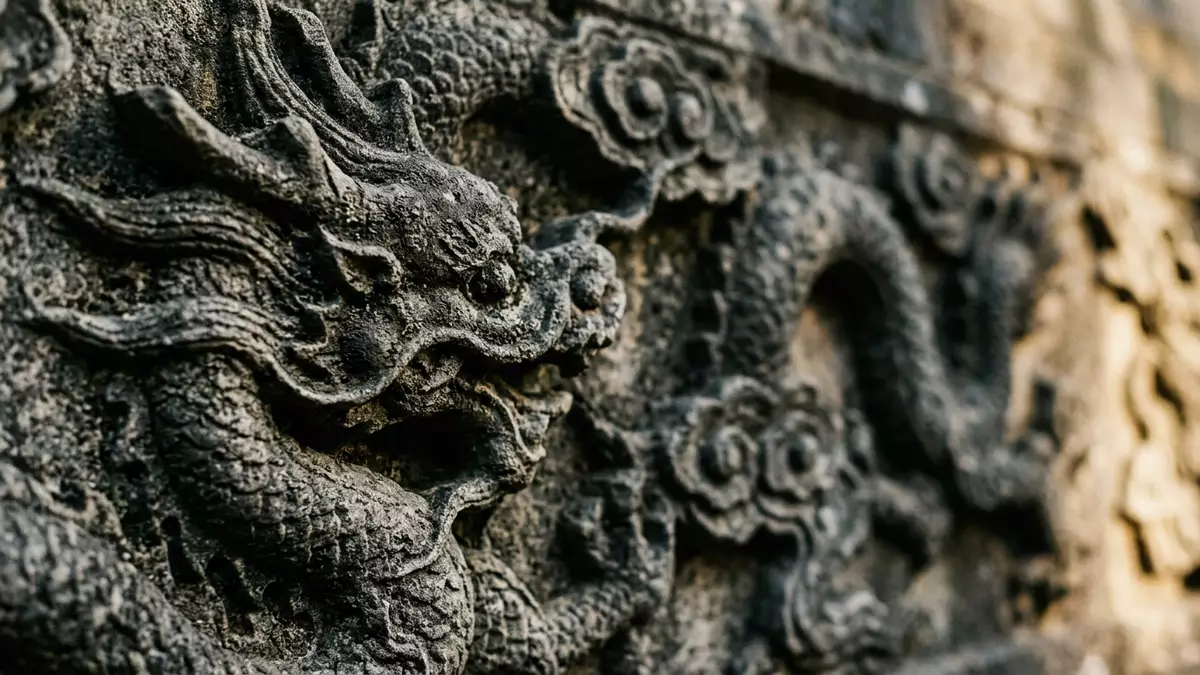
Wudang Shan in Shiyan, Hubei Province, is a Taoist sacred mountain range where steep forested peaks carry an extensive complex of palaces, temples and halls that trace China’s imperial history.
Ancient Taoist architecture on a sacred mountain
Wudang Shan forms a narrow mountain range in the north-west of Hubei, lying just south of Shiyan and along the southern edge of the Han River basin. The peaks within the Wudangshan subdistrict of Danjiangkou are the heart of the Taoist centre, rising sharply from valleys into ridges and summits with views across central China.Wudangshan subdistrict of Danjiangkou
The mountain is known in Taoism as one of China’s important sacred landscapes, and its building complex brings together palaces, temples and other structures whose origins reach back to the Tang dynasty, in the seventh century, with major later construction under Ming rule.origins reach back to the Tang dynasty Surviving elements include Taihe Palace on the main ridge, the Golden Summit with its hall of worship at the top of the mountain, and a series of temples set on terraces and ledges above steep slopes.
UNESCO recognition and key temple sites
The ensemble of historic buildings on Wudang Shan is formally recognised as the “Ancient Building Complex in the Wudang Mountains”, inscribed as a cultural World Heritage Site by UNESCO in 1994, under criteria that highlight religious significance and architectural achievement.Ancient Building Complex in the Wudang Mountains This inscription covers a wide scatter of structures along the ridges and slopes, linked by steps, stone paths and gateways.
Among the best-known surviving sites are the Golden Hall at the mountain’s summit, Taihe Palace, Zixiao Palace, Nanyan Palace and the remains of larger compounds such as Yuxu Palace and Yuzhen Palace.Golden Summit and Taihe Palace, Zixiao Palace The Zixiao Palace, also known as Purple Cloud Temple, stands on Zhanqi Peak as part of this network of Taoist temples in the north-west of Hubei.Purple Cloud Temple on Zhanqi Peak
Martial arts, heritage status and the surrounding landscape
Wudang Shan is closely associated with Chinese martial traditions, and styles such as Wudang Wushu from Shiyan have been recognised within China’s lists of intangible cultural heritage.Wudang-Wushu aus Shiyan Historical accounts and modern temple lore connect the mountain with internal martial arts and Tai Chi, reinforcing its role as a centre of Taoist practice rather than only a scenic range.mystical mountain of Tai Chi
Geographically, the mountains form a cordillera in north-western Hubei, crossing administrative divisions of Shiyan and covering an area that has been classified as a national park.classified as National Park The main peak, Tianzhu Peak, rises to around 1,612 m (5,289 ft), giving Wudang Shan a marked relief above the surrounding river valleys and plains.Tianzhu Peak rises to 1,612 meters Forested slopes, rocky outcrops and ridges form the backdrop to the tiled roofs and stone walls of the temple complex.
Visiting Wudang Shan: what travellers from Western Europe should know
- Wudang Shan lies in north-western Hubei Province in central China, near the city of Shiyan; access to the mountain area is commonly via Danjiangkou within Shiyan’s administrative region.
- The terrain on Wudang Shan involves steep gradients, long staircases and stone paths on slopes and ridges, and visiting the main temple sites requires climbing numerous steps and walking on uneven surfaces.
- The surrounding region is part of Hubei, where the official language is Chinese and the currency is the renminbi (yuan).
- Entry requirements depend on your nationality; UK travellers can check the FCDO travel advice at gov.uk/foreign-travel-advice, Irish travellers the Department of Foreign Affairs at ireland.ie.
Searching for Wudang Shan on social platforms
These links open searches for Wudang Shan on each platform.
Frequently asked questions about Wudang Shan
Where is Wudang Shan located?
Wudang Shan is a mountain range in north-western Hubei Province in China, near Shiyan and within the Danjiangkou area of Shiyan’s administrative region.
What can visitors expect on a visit to Wudang Shan?
Visitors encounter steep forested peaks, stone staircases and paths, and a network of Taoist palaces and temples such as Taihe Palace, Zixiao Palace and the Golden Summit hall.
What makes Wudang Shan distinctive among Chinese mountain ranges?
Wudang Shan combines a Taoist sacred landscape, a UNESCO-listed complex of historic buildings from Tang and Ming periods, and strong associations with internal martial arts and Tai Chi.


