
Wudang Shan above Shiyan: Taoist peaks, palaces and martial arts
Published on 09/16/2026 at 16:53 | Editorial responsibility: Rafael Müller, Editor-in-Chief AD HOC NEWS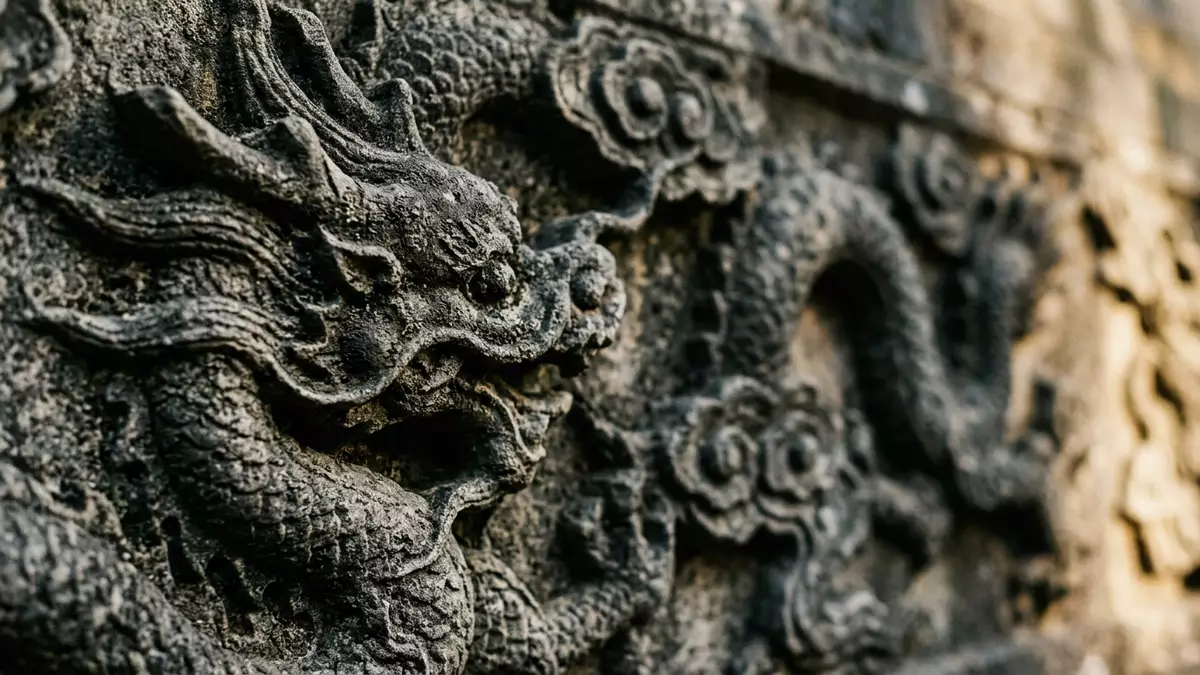
Wudang Shan in Shiyan, Hubei Province, is a narrow mountain range where steep forested peaks carry Taoist palaces, temples and monasteries that grew across many centuries of Chinese imperial history. Rising above the Han River basin in north-western Hubei, the mountains form a recognised sacred landscape, home to the Ancient Building Complex in the Wudang Mountains, a UNESCO World Heritage site since 1994.
Taoist sacred mountains and imperial palaces in Hubei
Wudang Shan forms a mountain range in the north-west of Hubei, lying near the city of Shiyan and within the administrative area of Danjiangkou. The range runs broadly east–west along the southern edge of the Han River basin, with ridges and valleys that accommodate terraces, stairways and temple courtyards. On Chinese maps, the name Wudang Shan is used both for the wider mountain range and for the central scenic area in Wudangshan subdistrict, the Taoist core of the massif.Wudang Mountains in Hubei
The cultural heart of Wudang Shan is the Ancient Building Complex in the Wudang Mountains, inscribed on the UNESCO World Heritage List in 1994. The complex lies in scenic valleys and on slopes where palaces and temples are set among peaks, ravines and gullies, forming an organised ensemble that was structured as a monumental complex during the Ming dynasty in the fourteenth to seventeenth centuries. Within this landscape, Taoist buildings trace back to the seventh century, spanning the Tang, Song and Yuan periods and later imperial eras.Ancient Building Complex in the Wudang Mountains
Temples, palaces and gates along the ridges
The World Heritage inscription records dozens of surviving structures in the Wudang Mountains, including palaces, temples, cliff temples and gateways. Among the most noted is the stone-walled Forbidden City on a summit ridge, completed in 1419 during the Ming dynasty as a walled enclosure of halls and courtyards. Nearby, prefabricated bronze structures known as the Golden Shrine and the Ancient Bronze Shrine are documented as having been made in 1307, forming metallic halls that stand out against the forested rock.Forbidden City and bronze shrines
Other named complexes punctuate the slopes. Purple Heaven Palace, first built in the twelfth century, was rebuilt in the fifteenth century and later extended in the nineteenth century, making it a layered record of changing architectural practice across several dynasties. Nanyang Palace dates to the twelfth and thirteenth centuries and Fuzhen Temple to the fifteenth and seventeenth centuries, while the stone Zhishi–Xuanyue Gateway marks a formal entrance to the Wudang Mountains and bears a date of 1522. Together these sites form a network of halls, courtyards, terraces and stairways that climb from lower valleys towards higher ridges.Purple Heaven Palace and gateways
Martial arts, Taoist practice and the Wudang landscape
Beyond their architecture, the Wudang Mountains are closely associated with Taoist religious practice and internal martial arts. Wudang Mountain is described as one of the major Taoist holy lands in China, alongside sites such as Mount Qingcheng and Mount Longhu, reflecting its long-standing role as a centre for ritual, meditation and training. The range is also widely recognised as the cradle of Wudang Kung Fu, sometimes called Wudang internal martial arts, which emphasise internal strength, balance and controlled movement in line with Daoist concepts.Taoist holy lands in Chinacradle of Wudang Kung Fu
The terrain of Wudang Shan helps frame this cultural role. The mountains are documented as covering about 312 square kilometres, with peaks reaching elevations of around 1,612 m (5,289 ft) above sea level. Slopes carry dense vegetation, rock outcrops and constructed stairways, and temple complexes often sit on terraces or ridges above steep drops. Courtyards open towards surrounding peaks, while cliff temples such as those described at South Cliff make use of ledges and overhangs to position halls above sheer rock faces.extent of Wudang Mountain scenic areaheight and area of Wudang Shan
Visiting Wudang Shan: what travellers from Western Europe should know
- Wudang Shan lies in north-western Hubei Province in central China, near the city of Shiyan. The main scenic and cultural area is administered within Danjiangkou, a county-level city under Shiyan, and road links run from the urban area into the mountain region.
- The terrain consists of steep forested slopes, ridges and valleys, with long stairways and stone paths connecting temple complexes. Visiting the higher palaces and cliff temples involves sustained climbing on stepped routes that follow the contours of the mountain.
- Wudang Shan is reached by public transport routes and roads from Shiyan and other parts of Hubei. The mountain area is served by stations and stops associated with Wudangshan, from which shuttle transport and mountain roads lead further into the scenic zone.
- The official language is Chinese and the currency is the yuan (renminbi).
- Entry requirements depend on your nationality; UK travellers can check the FCDO travel advice at gov.uk/foreign-travel-advice, Irish travellers the Department of Foreign Affairs at ireland.ie.
Searching for Wudang Shan on social platforms
These links open searches for Wudang Shan on each platform.
Frequently asked questions about Wudang Shan
Where is Wudang Shan located and what kind of landscape is it?
Wudang Shan is a mountain range in north-western Hubei Province in China, near Shiyan and within the Danjiangkou administrative area. It forms a steep, forested landscape of peaks and valleys.
What can visitors expect when exploring Wudang Shan?
Visitors encounter Taoist palaces, temples and gateways set on terraces, ridges and cliffs, connected by long stairways and paths through dense vegetation and rocky terrain.
What makes Wudang Shan distinctive among Chinese sacred mountains?
Wudang Shan combines a UNESCO-listed complex of imperial-period Taoist buildings with a documented role as a Taoist holy land and cradle of Wudang internal martial arts.


